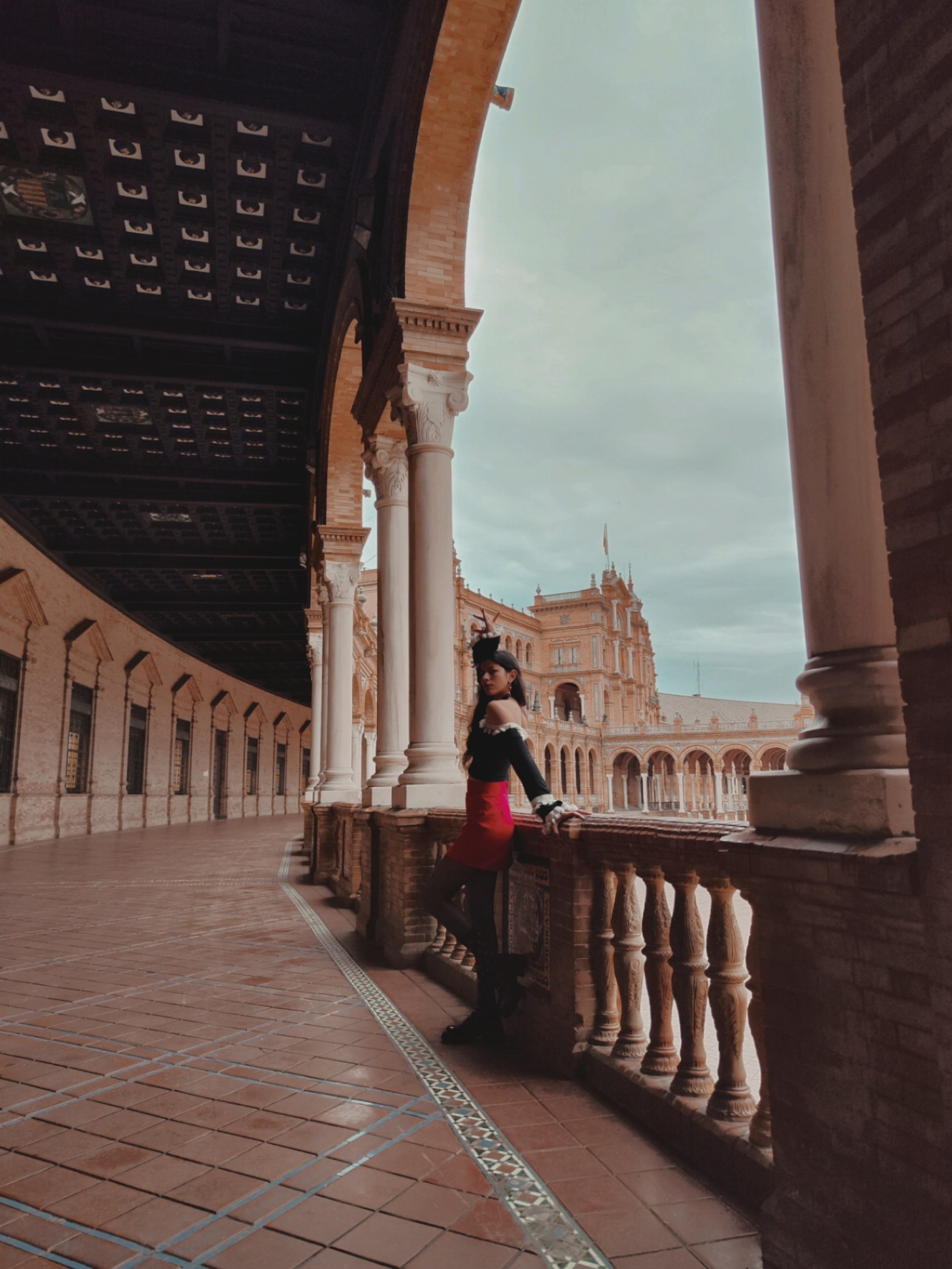
Happy New Year to everyone!!! May this year bring happiness, success, health and love in all your lives 🥂
As promised, We will take about day two in Sevilla.
Surely you’re wondering what did Gigliola wear this time? Don’t you worry, of course I’ll spare you the details 😌
As we are in the capital of Andalucía and one needs to preserve and show the flamenco spirit within it, I wore a black top with cute fluffy flamenco laces, a red tube skirt and of course, OF COURSE! My pantyhose obviously with little spots on 🥹. I brought also my flamenco shoes and my skirt as well for special pictures 😏
On day two, I visited the most awaited place on my list: Plaza de España. Obviously, we don’t have to forget the Park of Maria Luisa and Triana 💃
Plaza de España

It is a semicircular square with a large central building that houses the headquarters of the Army, galleries with structures that house monumental stairs and, at the ends, two buildings with towers that house state agencies. It has an estuary crossed by four bridges and a central fountain. It is decorated with 48 benches dedicated to the Spanish provinces, 52 medallions of illustrious figures in the history of Spain, and heraldic shields.
In July 2023 it was declared an asset of cultural interest.
The Plaza de España, designed by Aníbal González, was a principal building built on Maria Luisa Park’s edge to showcase Spain’s industry and technology exhibits. González combined a mix of 1920s Art Deco and Spanish Renaissance Revival, Spanish Baroque Revival and Neo-Mudéjar styles. The Plaza de España complex is a huge half-circle; the buildings are accessible by four bridges over the moat, representing Spain’s ancient kingdoms. In the centre is the Vicente Traver fountain.
Many tiled alcoves were built around the plaza, each representing a different province of Spain. The Plaza’s tiled Alcoves of the Provinces are frequent backdrops for visitors’ portrait photographs, taken in their own home province. Each alcove is flanked by a pair of covered bookshelves, now used by visitors in the manner of a “Little Free Library”. Each bookshelf often contains works with information about their province. Visitors have also donated favourite novels and other books for others to read.
Today the buildings of the Plaza de España have been renovated and adapted for use as offices for government agencies. The central government departments, with the sensitive adaptive redesign, are located within it. Toward the end of the park, the grandest mansions from the fair have been adapted as museums. The most distant museum contains the city’s archaeology collections. The main exhibits are Roman mosaics and artefacts from nearby Italica.
The Plaza de España has been used as a filming location, including scenes for Lawrence of Arabia (1962). The building was used as a location in the Star Wars movie series Star Wars: Episode II – Attack of the Clones (2002) — in which it featured exterior shots of the City of Theed on the Planet Naboo. It also featured in the 2012 film The Dictator. The 2023 Netflix series, Kaos, will feature scenes filmed at the Plaza.
The plaza was used as a set for the video of Simply Red’s song “Something Got Me Started“.
I went around 8 so I could spend more time taking pictures from different angles, it took me 2 years, fortunately, I got there early so it was not too crowded.
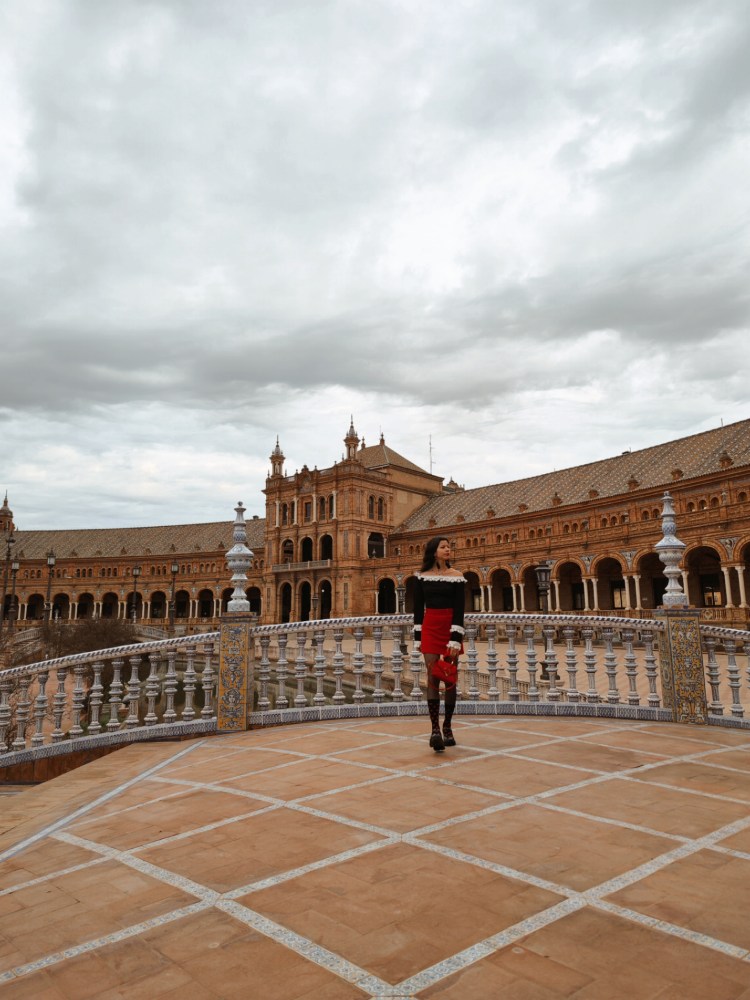
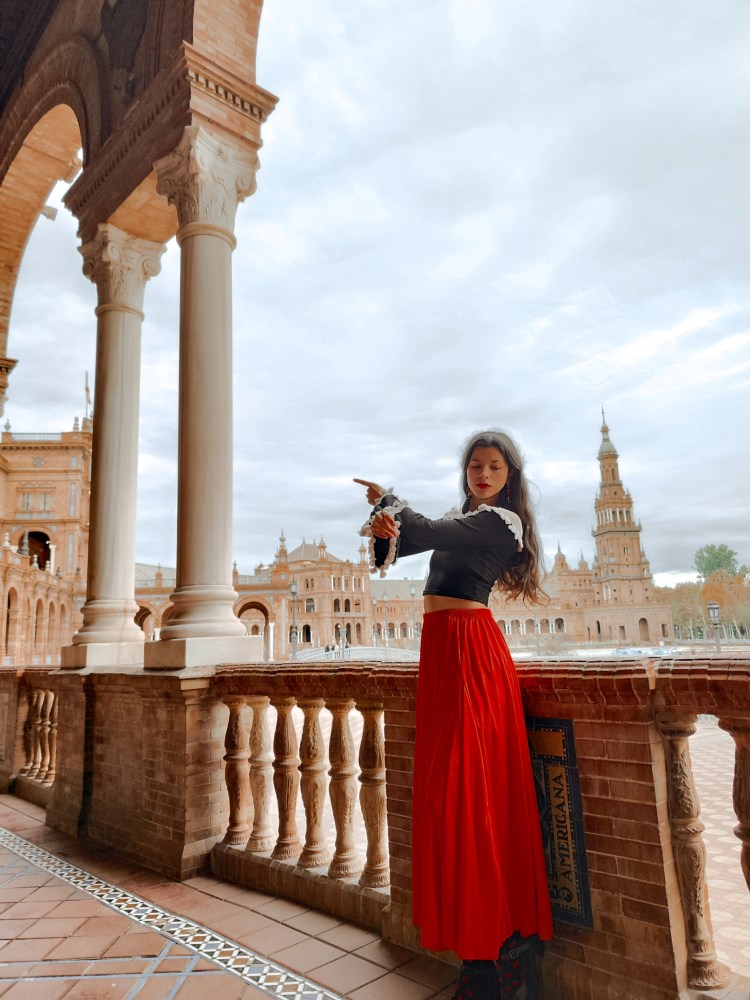
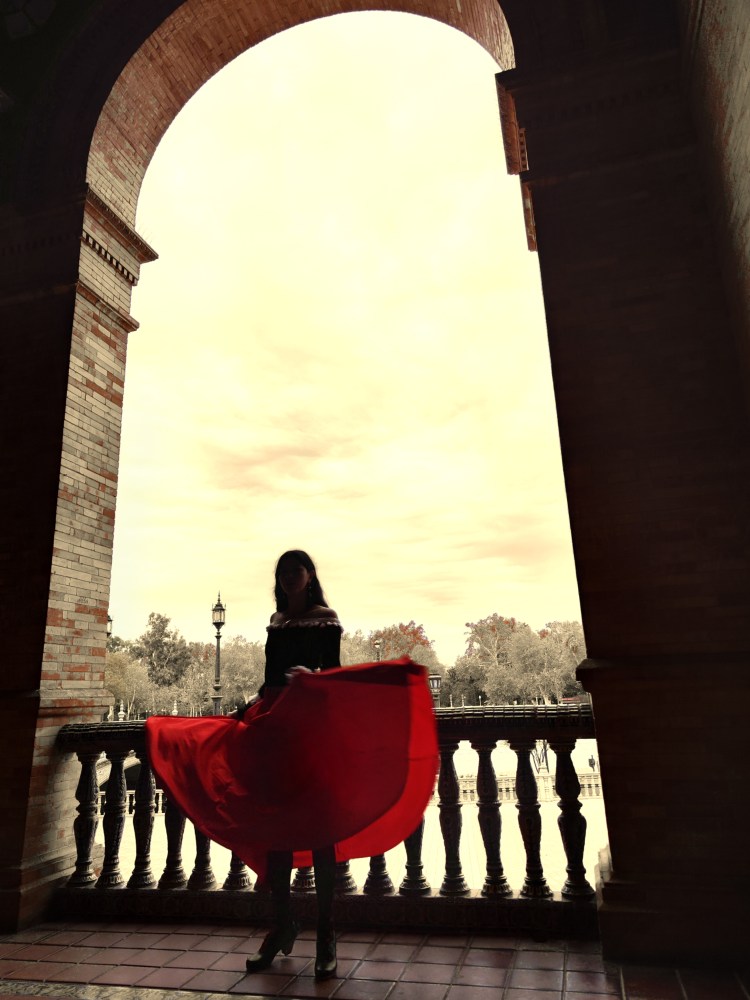
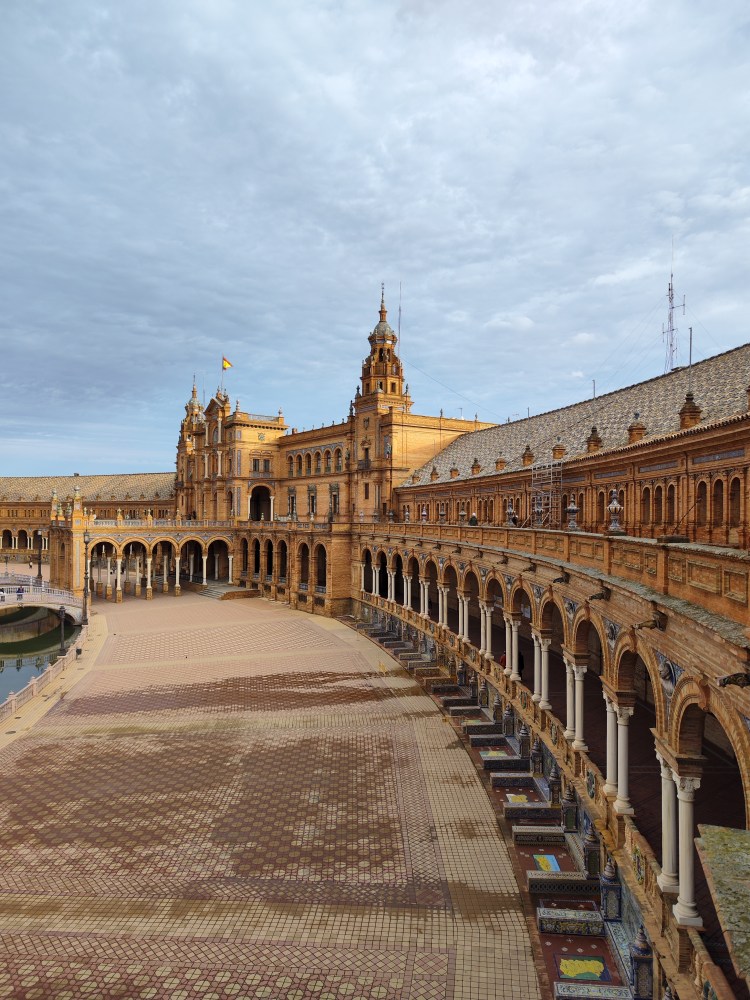
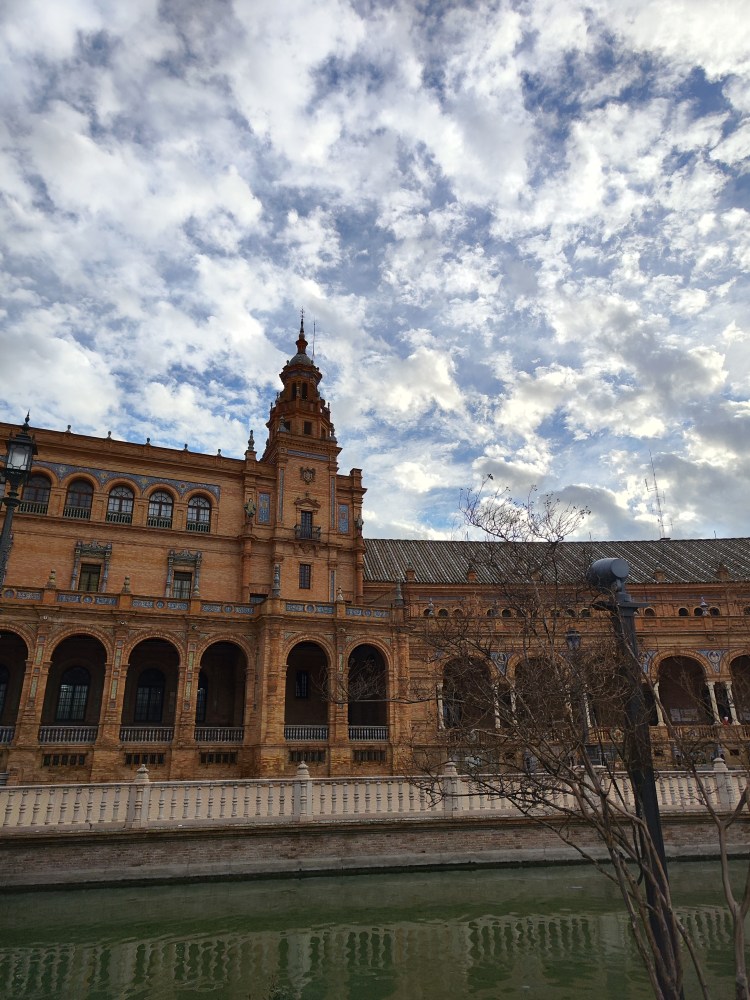
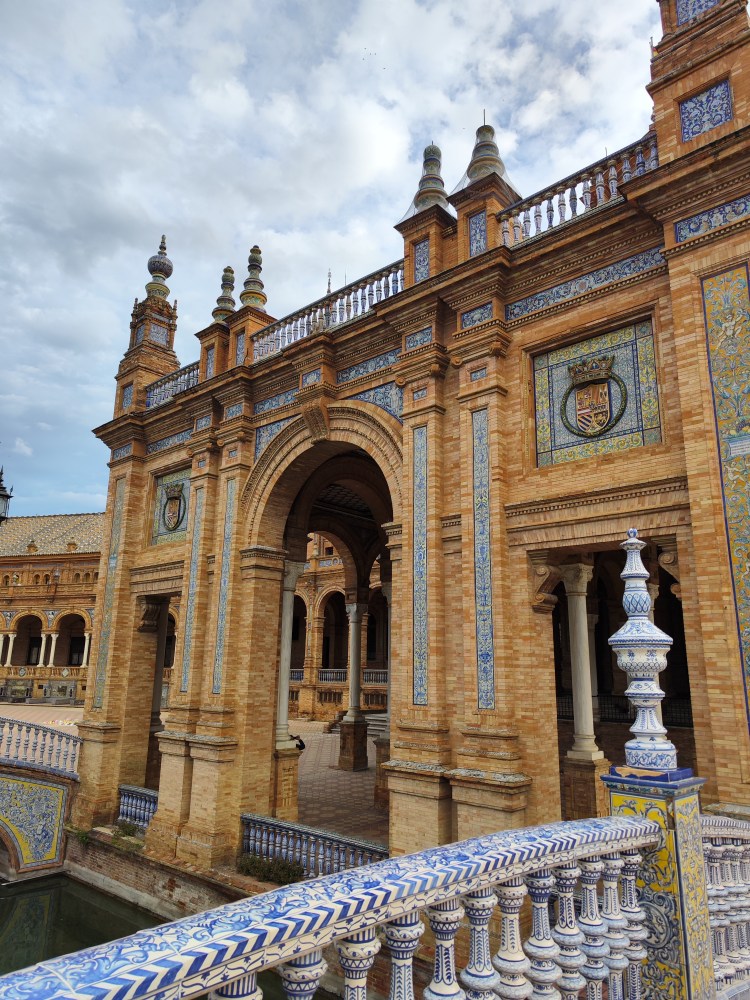
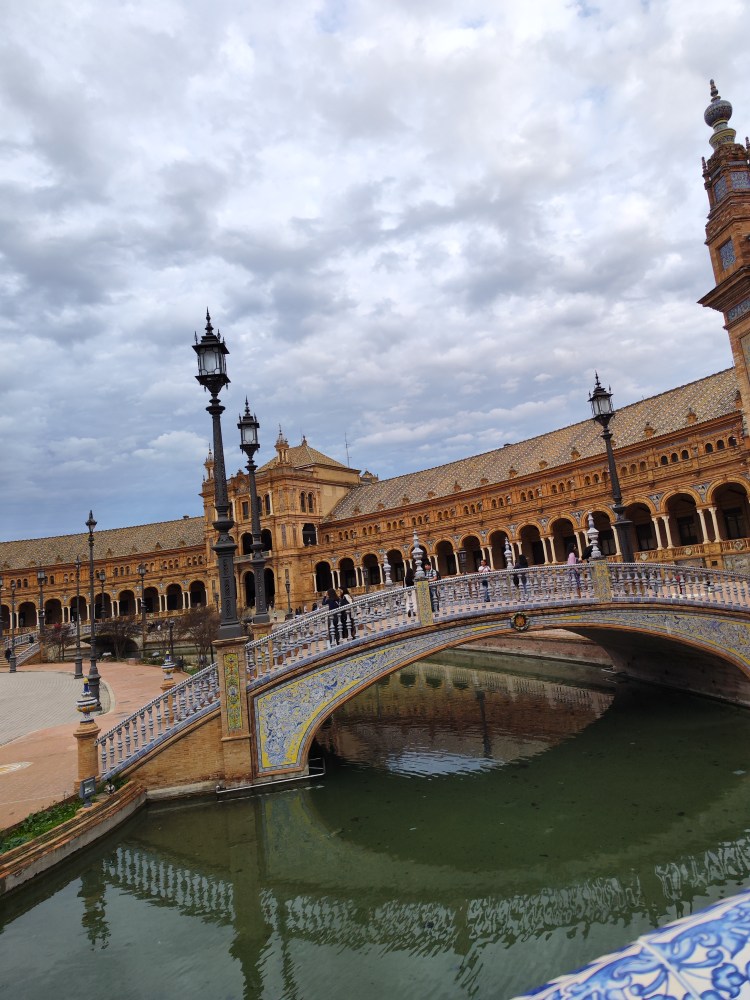
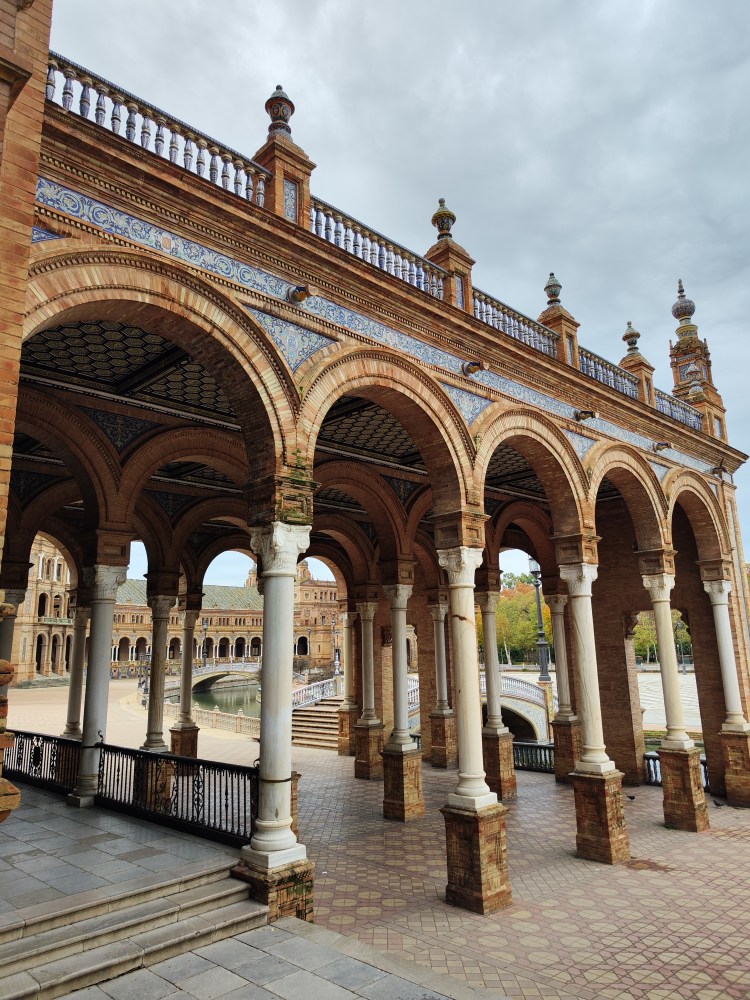
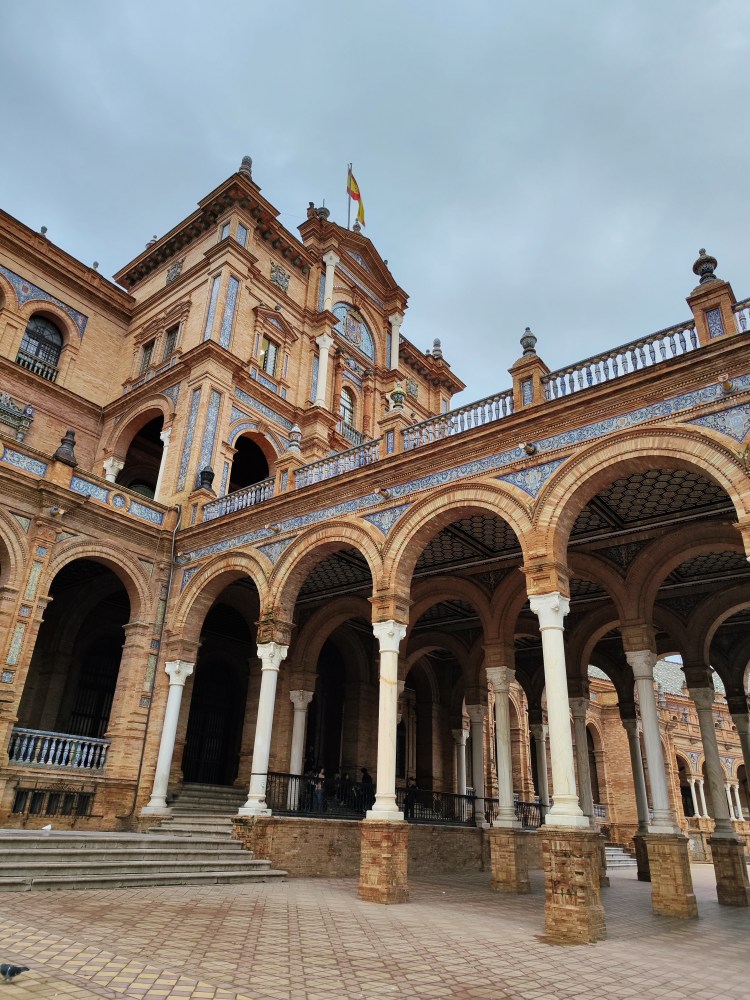

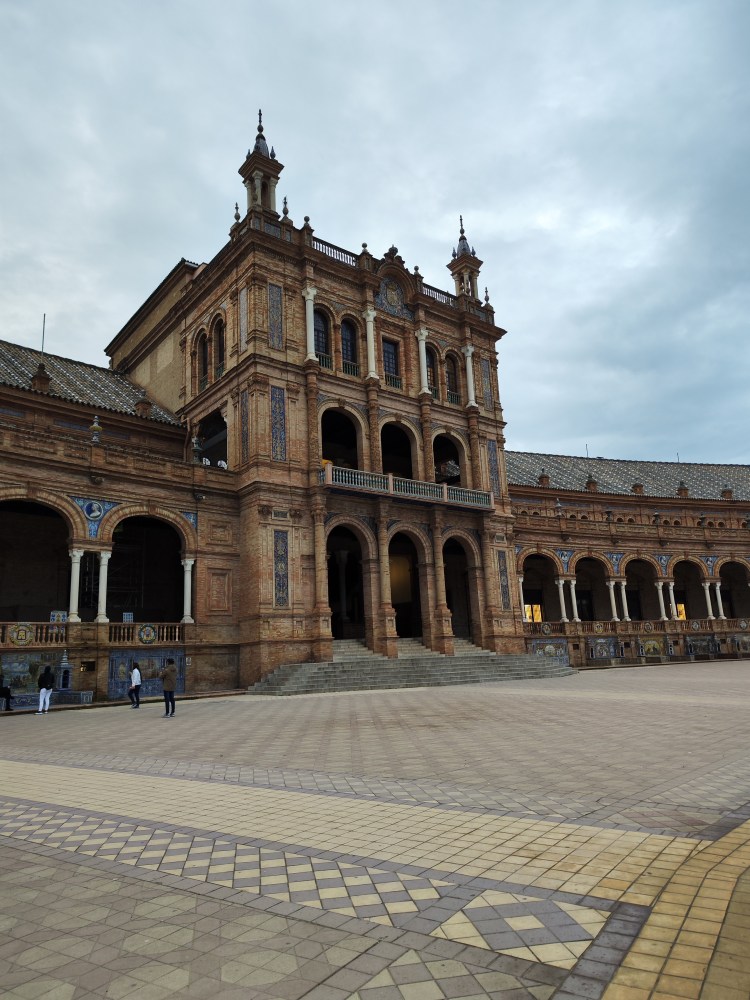

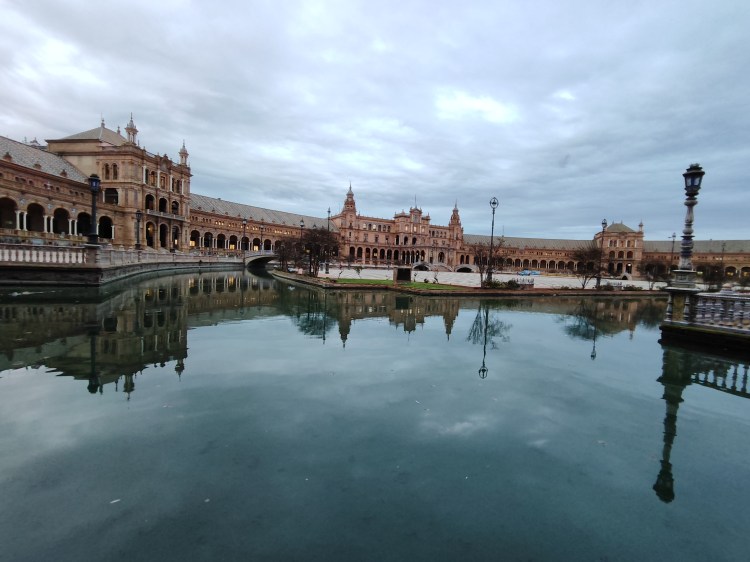
After this long flamenco-stylish self-photoshoot, I went straight to the Park.
Parque de Maria Luisa
You can reach the park by walking circa 6 Min from the Plaza de España.
María Luisa Park is the first urban park in Seville and one of its green lungs. In 1983 it was declared a Site of Cultural Interest in the Historical Garden category. It was inaugurated on April 18, 1914, as the Infanta María Luisa Fernanda urban park.
These spaces, which were initially part of the private gardens of the San Telmo Palace, were donated in 1893 by the Infanta María Luisa Fernanda de Borbón, wife of the Duke of Montpensier, to the city. The Plazas de España and de América, Built for the Ibero-American Exposition of 1929, they are integrated into the park as a public garden and constitute one of the main attractions.
There are different kinds of birds around the main fountains, it’s lovely, and a special place to rest, read a book, and even run.
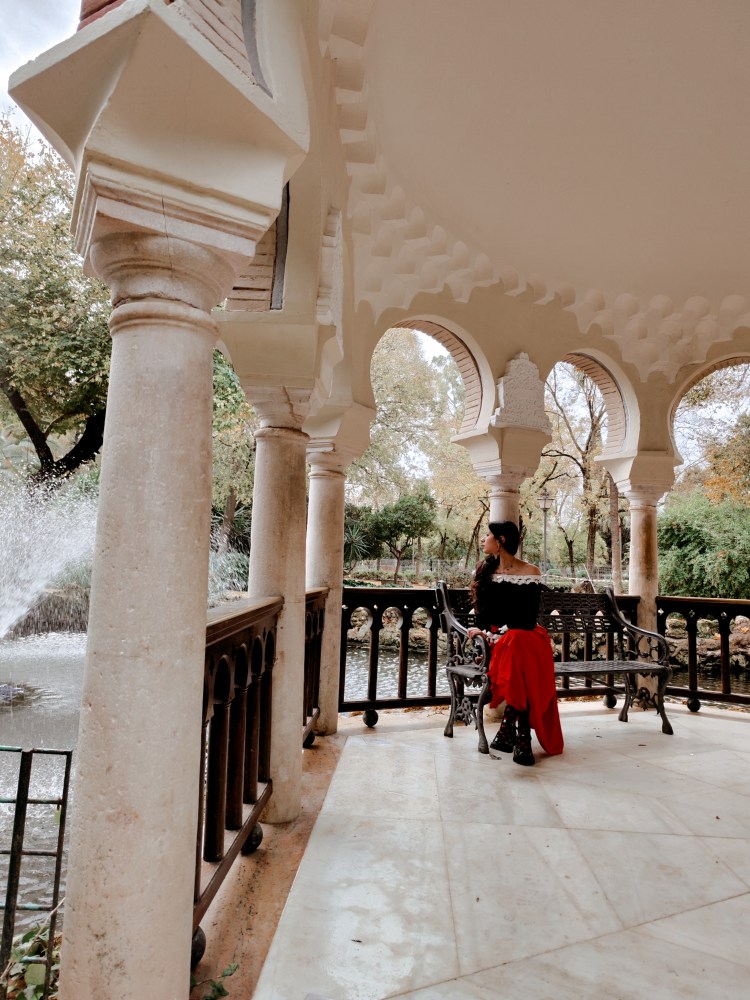
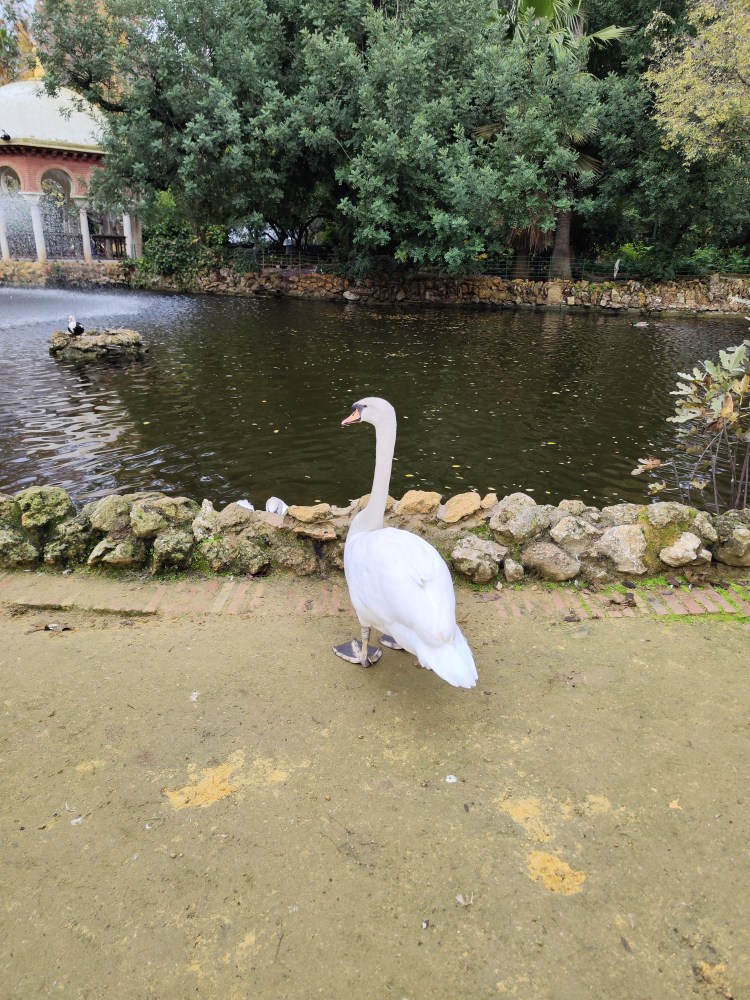
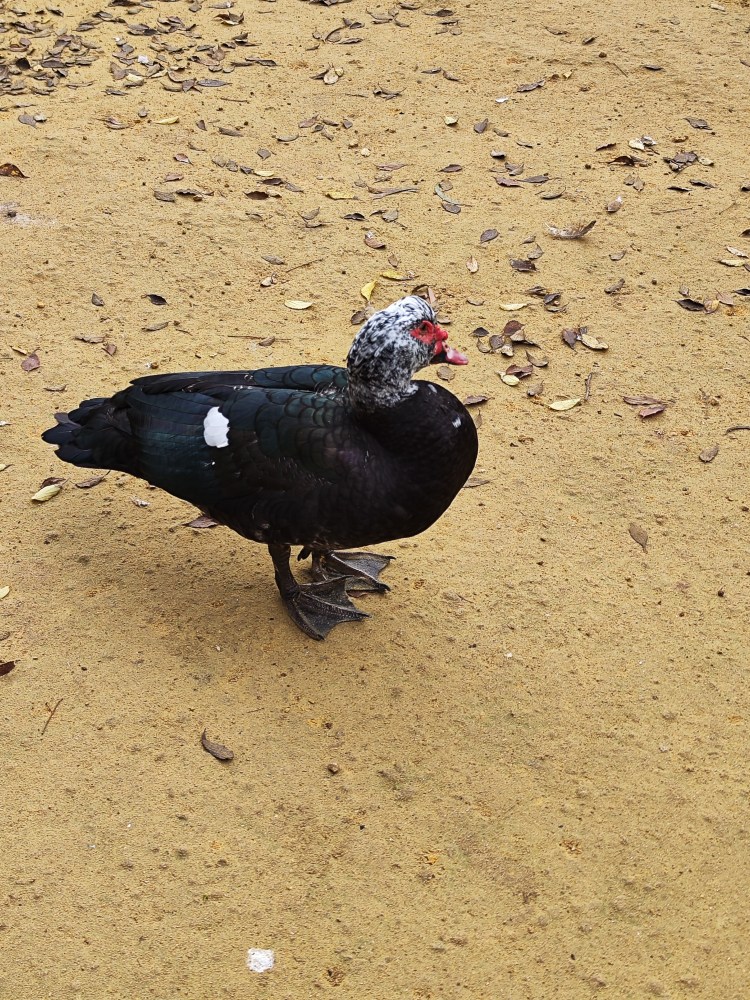
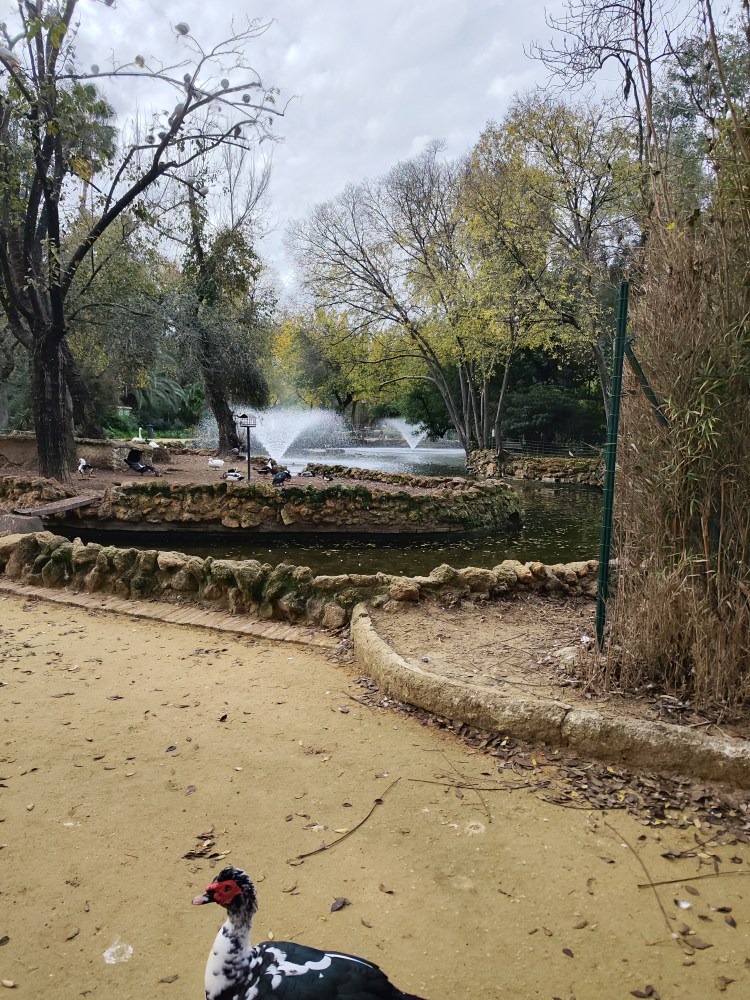
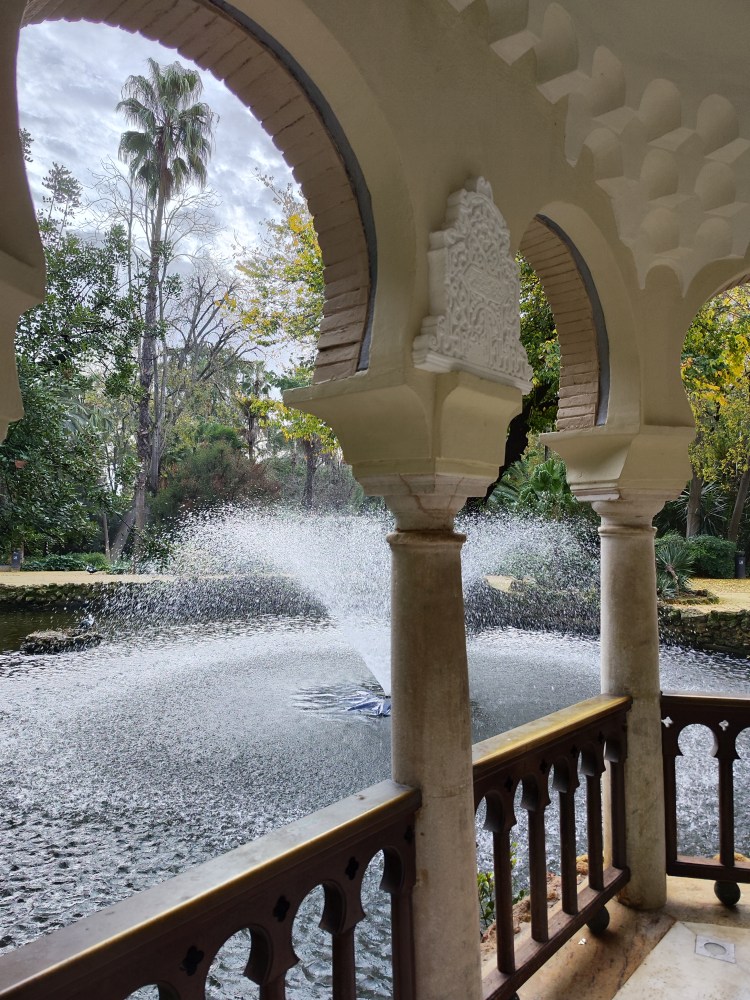

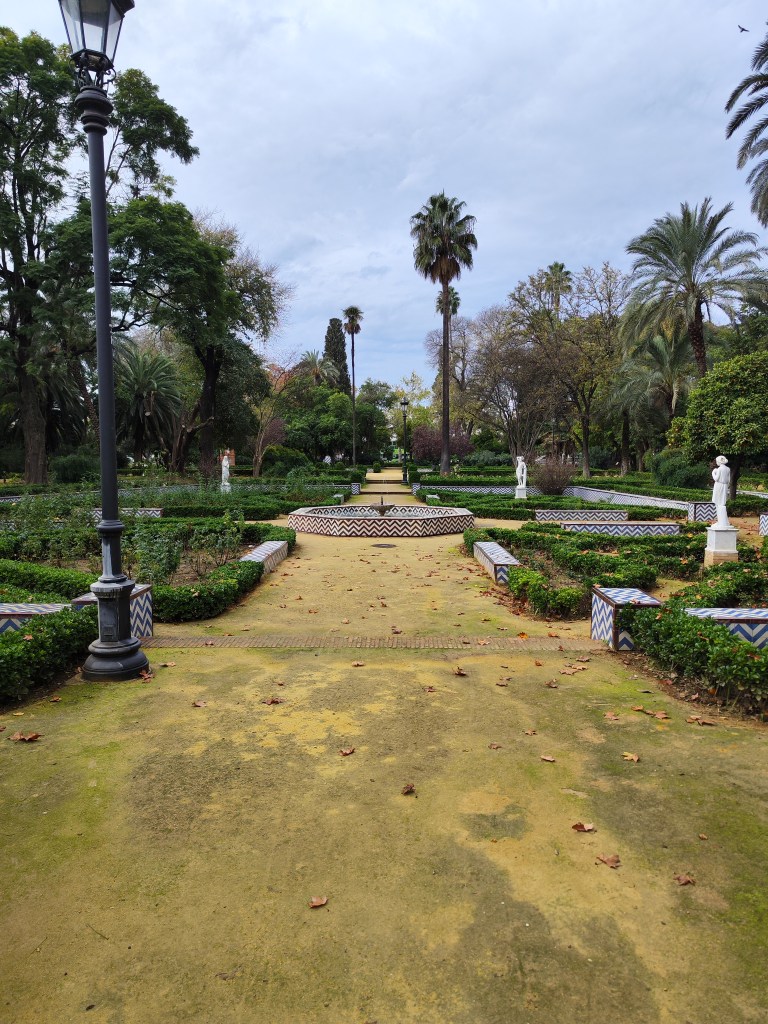
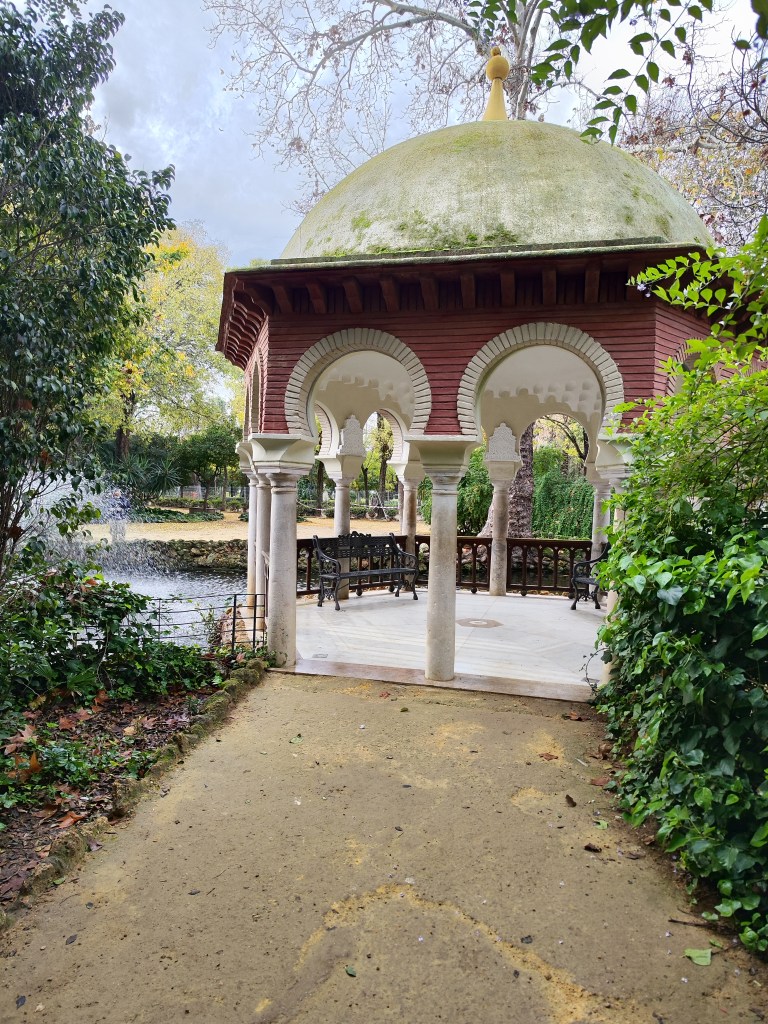
After visiting these two places (you can visit both for free), I went back to the hotel (needed to meet my hairdresser mate in Plaza de la Alfalfa) and then had lunch, because tonight I was going to visit Triana, and even better watch a tablao! with my wedding planner 🥰
Triana
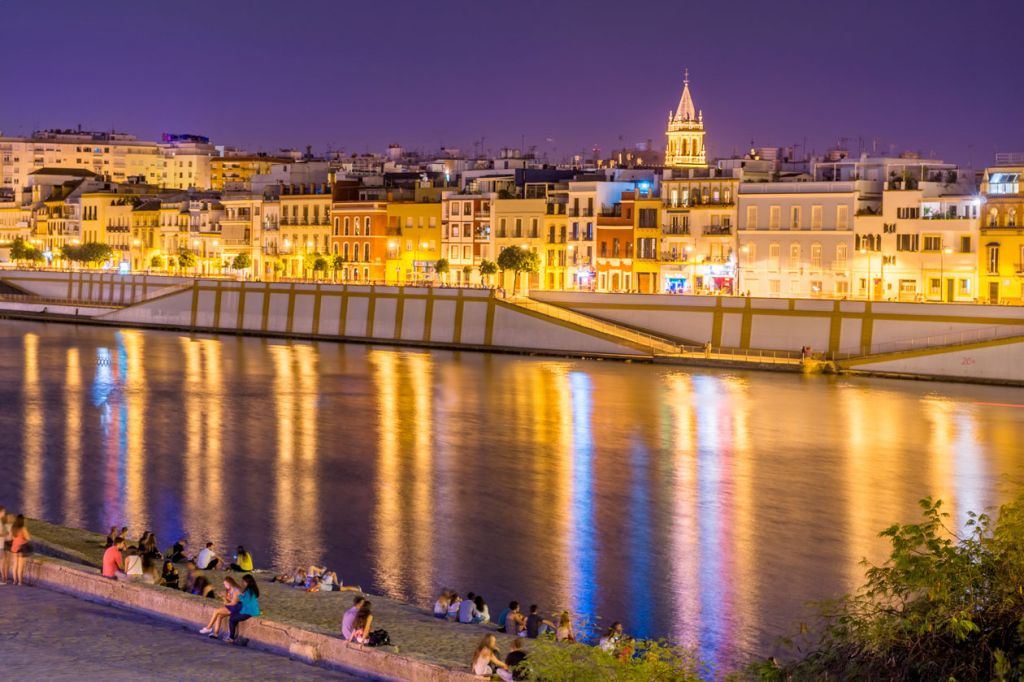
Triana is a neighbourhood of the Spanish city of Seville, in Andalusia, and one of the eleven districts into which the municipality is divided for administrative purposes. It is located in the west of the municipality.
At the end of the Triana bridge, you reach the Plaza del Altozano, a true reference centre of the neighbourhood, historically it was the point where travellers from San Juan de Aznalfarache, Tomares and Castilleja de la Cuesta converged, before crossing the so-called Triana bridge. boats, heading to Seville.
The current square is made up, above all, of architecture from the first quarter of the 20th century. Highlights include the Murillo Pharmacy building, built by the regionalist architect José Espiau y Muñoz between 1912 and 1914, and the house designed by José Gómez Millán. In the same square, there is also the sculpture of the bullfighter Juan Belmonte, closely linked to Triana and which was inaugurated in 1972, the work of Venancio Blanco and another dedicated to Flamenco, commissioned from Jesús Gavira Alba in 1994.
The current Triana market opens in the square, on the ground floor of which are the remains of the old Castle of San Jorge. This fortress was the headquarters of the Inquisition since 1481, although its initial construction from the Arab period dates back to 1171.
In 1792, affected by continuous abandonment and the successive floods of the Guadalquivir, the complete demolition of the castle and the construction of an embankment that raised the ground level with a large plaza that served as a refuge in periods of floods. In the execution of this project, the transfer of property from the crown to the city was granted by Royal Order in 1794. Around 1823, the Triana market was demolished and installed on its site. In 1990 the old market was demolished to build a more modern one and in its construction, the remains of the castle and an Almohad cemetery came to light. Archaeological and conservation work was carried out. The new market was inaugurated in June 2001.
After the market, you reach the Alley of the Inquisition, located at the confluence of Castilla, San Jorge and Callao streets. For a century and a half, it was the only visible testimony of the presence of the old inquisitorial court in Triana.
Next to the bridge is the Carmen chapel, the work of architect Aníbal González, inaugurated in 1928 and containing an altarpiece of the Virgin of Carmen.
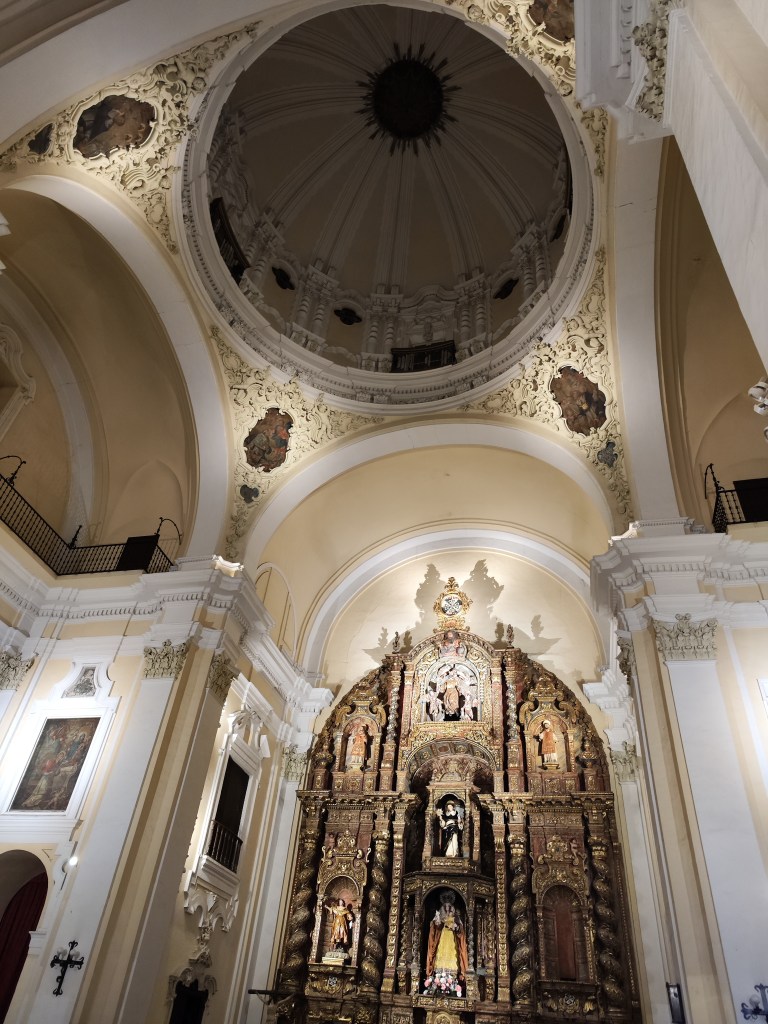

I personally touch the steel of the chapel because they say it brings good luck and visit the Virgin of Stars.
I ended the night and my last day in Seville eating churros and watching an amazing flamenco show along with my wedding planner, OLE!
Thanks for having me Sevilla!


#france #let'shelpaprincess #mountains #paris #part of my origins #portugal #travel #wine adventure architecture art author Blog & Travelling bloganuary bloganuary-2024-02 Buleria dailyprompt dailyprompt-1805 dailyprompt-2026 Dancinggiglio England Flamenco health Holamundo italy martinete motivation Mountains nature notebooks Part of my origins poem poetry Science seguiriya taranto The guitar is like a woman Traditions travel travelling wedding woman writing


 Dancing Giglio
I love the way you describe and delve into the topics and historical treatments of the places you visit, I find them extremely interesting and educational. Also curious for the fact that they were Used for film sets or great places to read a good book (or bring good luck😝). Stunning photos and I’m happy you were able to see such a beautiful sight of flamenco!💃
LikeLiked by 1 person
I love exploring new places! And Spain holds a lot of history and culture at the point it served for inspiration for many movies, books, etc. I am very happy as well! 💃💃💃😏
LikeLiked by 1 person
I’m so happy that you are and I hope that you can travel as much as you want and your breathing will allow you to dream! 💃 and above all that you go back to doing your flamenco tours!
LikeLiked by 1 person
Thank you ☺️
LikeLike