
On day two I had tickets to visit 3 places in a row, mum says I have a great adventure spirit.
I recommend you to check on here for the offer, I find it interesting and with a good price.
Valencia is incredibly hot in September, so I wore some vintage pantyhose with shorts and a top, my first stop of the day: Museo de la Seda.

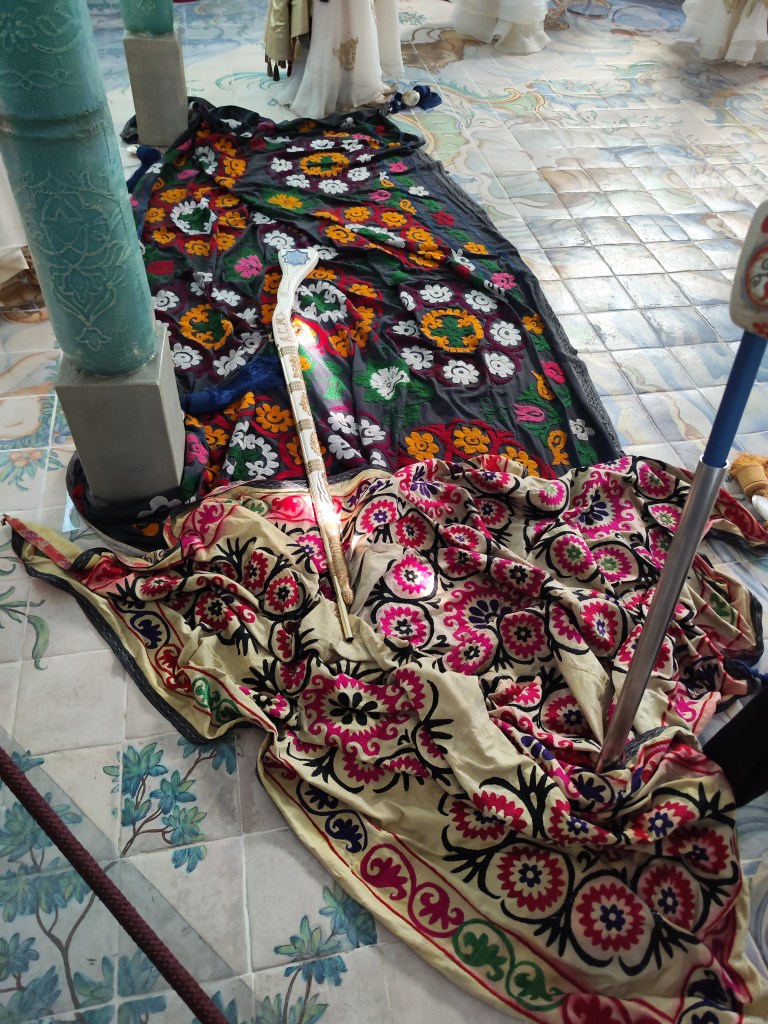
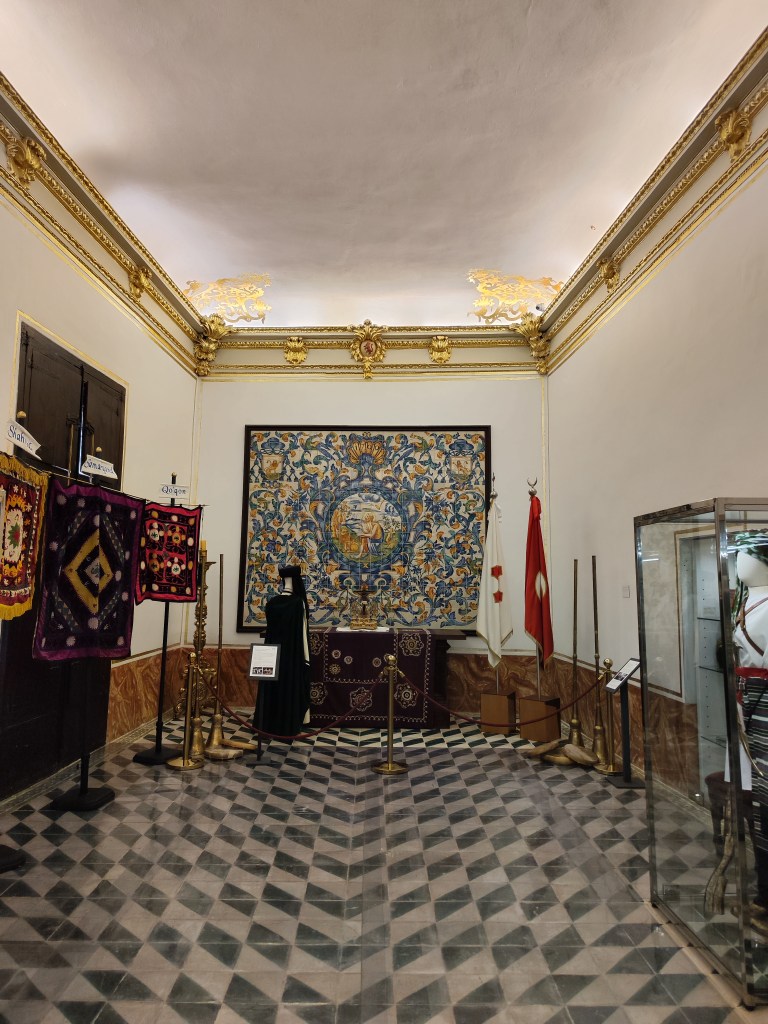
A visit to the museum allows you to learn how silk came to Valencia, the importance of this trade for more than three centuries and the heritage that can still be seen today in the typical costumes of Valencian festivals. Old looms in operation, the typical line where silkworms were raised, work tools, samples of silk fabrics, old costumes, historical documents… a valuable heritage that takes the visitor into the rich silk history that Valencia lived through for three centuries.

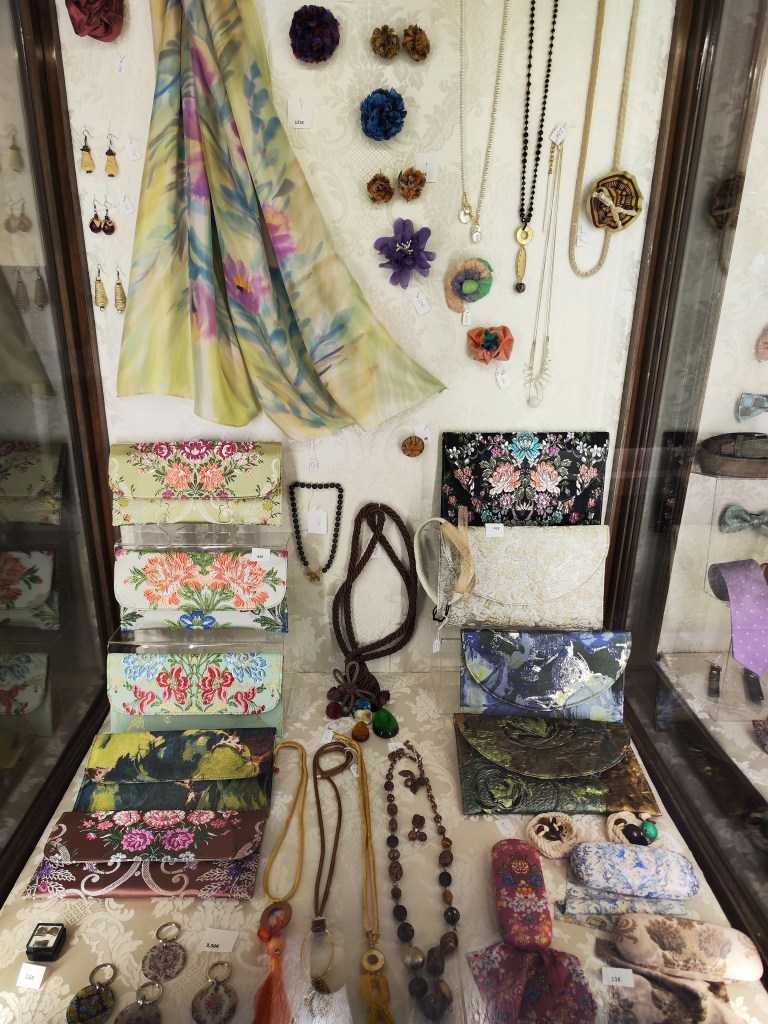
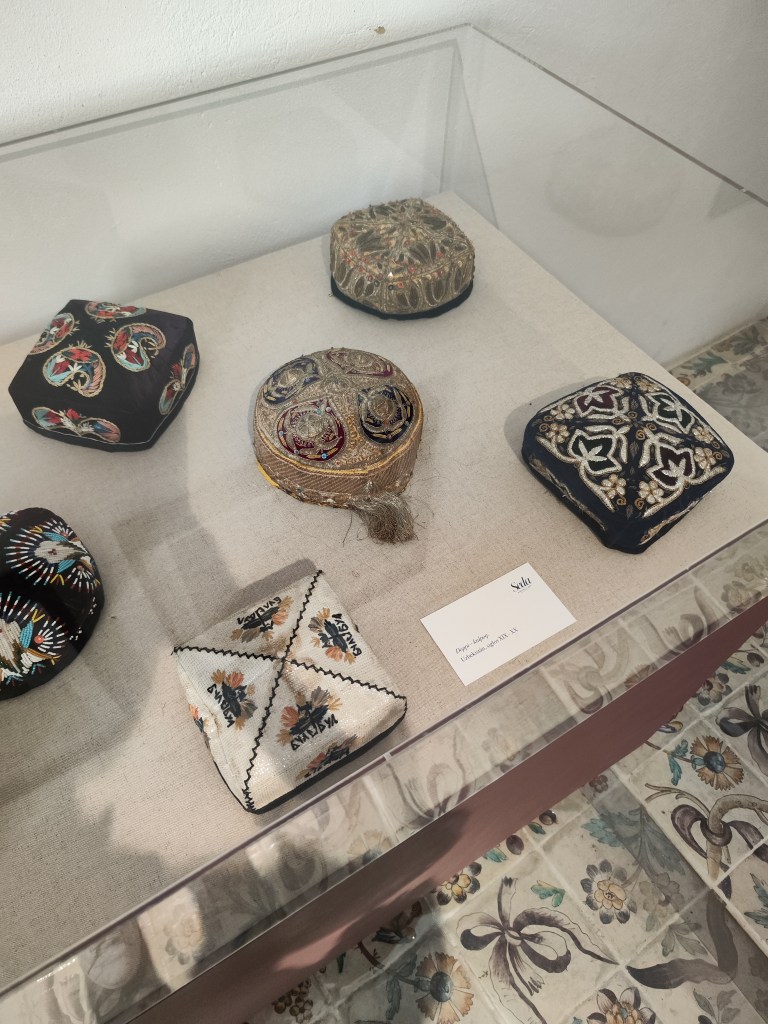


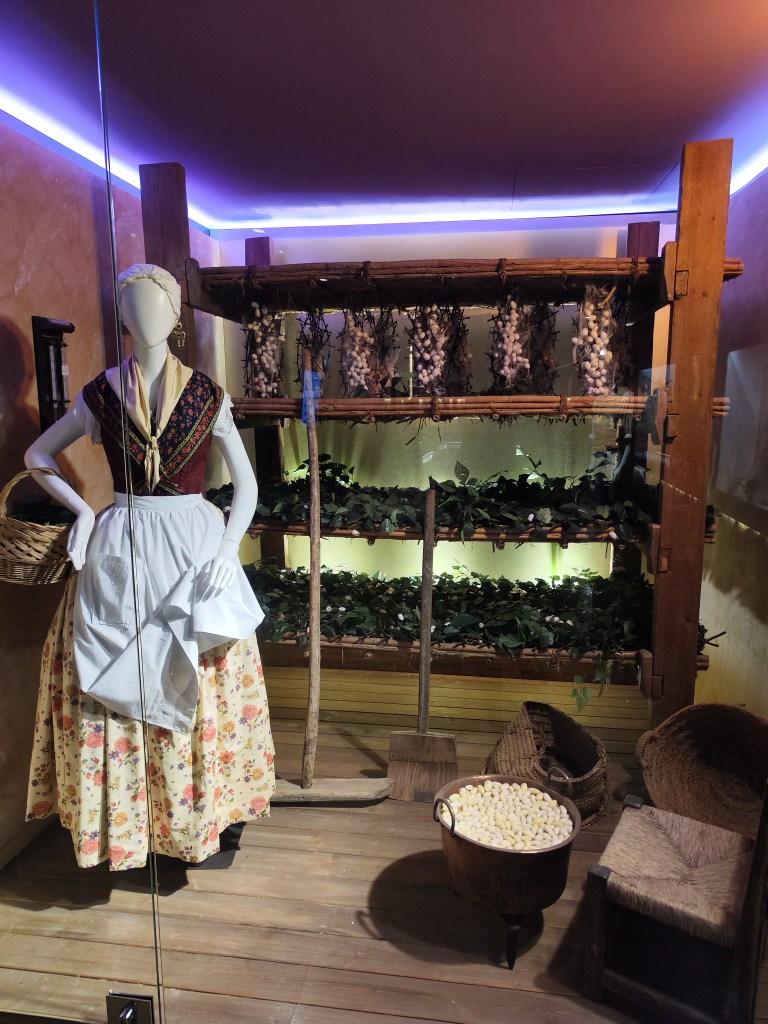
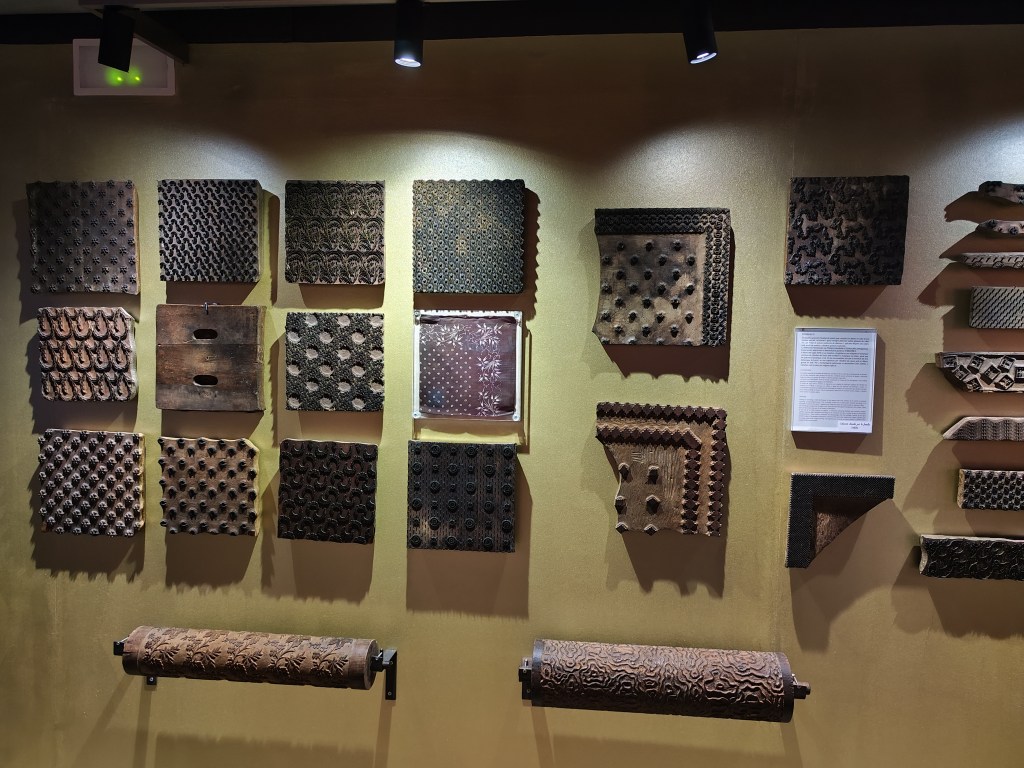
Inside the museum, there is a store called Espai Seda, with interesting souvenirs made of silk, such as scarves, wallets, ties, children’s games, bags, and jewellery. And there is also a restaurant I didn’t try. Close to the Espai Seda, they offer a free exhibition of how they extract the threads to make silk from worm eggs. I leave you a video below to watch the process.
Iglesia de San Nicolás
Ahhh… Where the Sistine Valencia Chapel is, yeah, this Church hides the well-known Sistine Chapel of Valencia, don’t get me wrong, it got inspiration from Romans.
The space occupied by the parish church of San Nicolás has been considered sacred practically since the Roman founding of the city. Apparently, a temple was already dedicated to pagan deities in this area and it was a burial place outside the city walls, according to Roman custom. Historical documents state that the first building was built during the time of King James I, who donated the place to the Dominicans who accompanied him. Years later the Dominicans founded the Convent of Santo Domingo (current General Captaincy building) and the temple was directly linked to the Diocese of Valencia and the secular clergy. It was erected as a parish around 1242 and is included in the first twelve Christian parishes of the city of Valencia after the restoration of the Diocese in the year 1238.
It is the Dominicans who dedicate this new Parish to San Nicolás Obispo, patron saint of the Order, since its founder, Santo Domingo de Guzmán, was writing at that time the Constitutions of the Order of Preachers in the Convent of San Nicolás de Bologna.
Later, an altar was dedicated to San Pedro Mártir in this Parish. A miracle occurred in it that saved the life of a newborn, so devotion in Valencia for this saint grew until San Pedro Mártir ended up being co-owner of the Parish. Although the church maintains, and as such they appear on its High Altar, the ownership of San Nicolás de Bari and San Pedro Mártir, the church is popularly known as San Nicolás.
Later, in the middle of the Golden Age, San Nicolás will be linked to relevant figures of this century such as the writer Jaume Roig, administrator of the parish; and Alfonso de Borja, future Pope Calixto III. It is the century in which San Nicolás was completely transformed into a Gothic building and was expanded towards the foot.
In the 17th and 18th centuries, Valencia experienced urban changes that substantially affected religious buildings. Within the environment of the Counter-Reformation and baroque modernity, San Nicolás also experienced its own transformation.
Saint Nicholas Bishop.
Saint Nicholas Bishop. From an architectural point of view since 1690, San Nicolás masterfully adapted from Gothic to Baroque taste thanks to the architect Juan Bautista Pérez Castiel.
In San Nicolás arches and vaults are filled with stucco, resulting in a chamfered vault. In this way, Gothic edges, arches and vaults are softened, preparing the surface to receive the pictorial decoration.

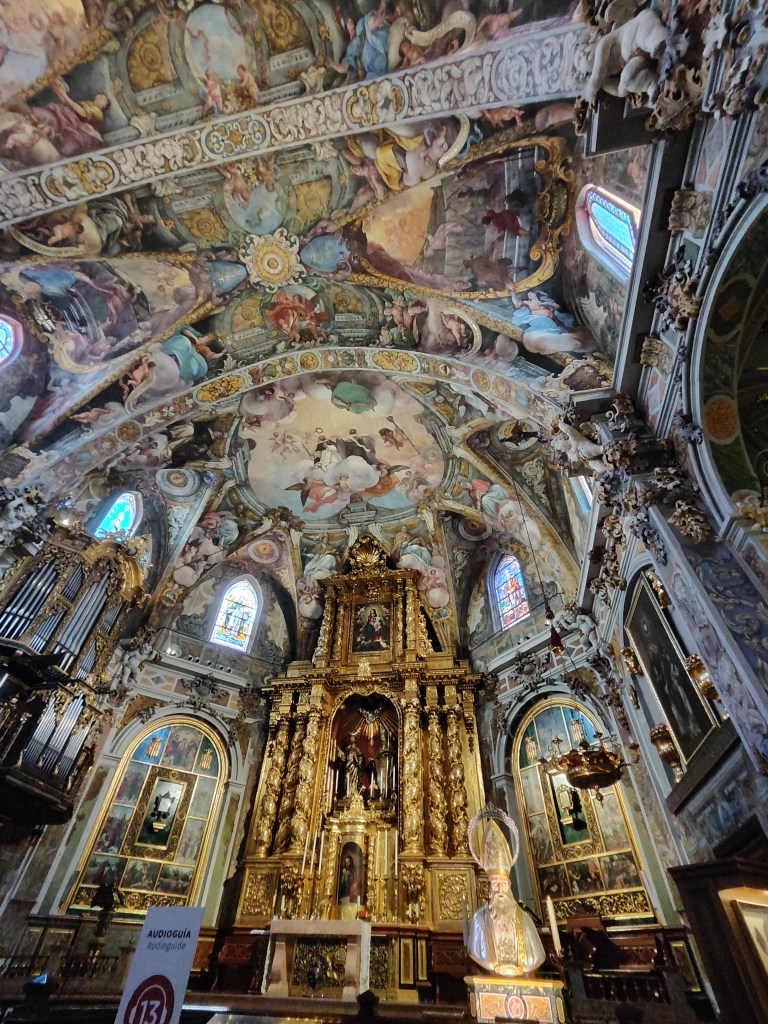




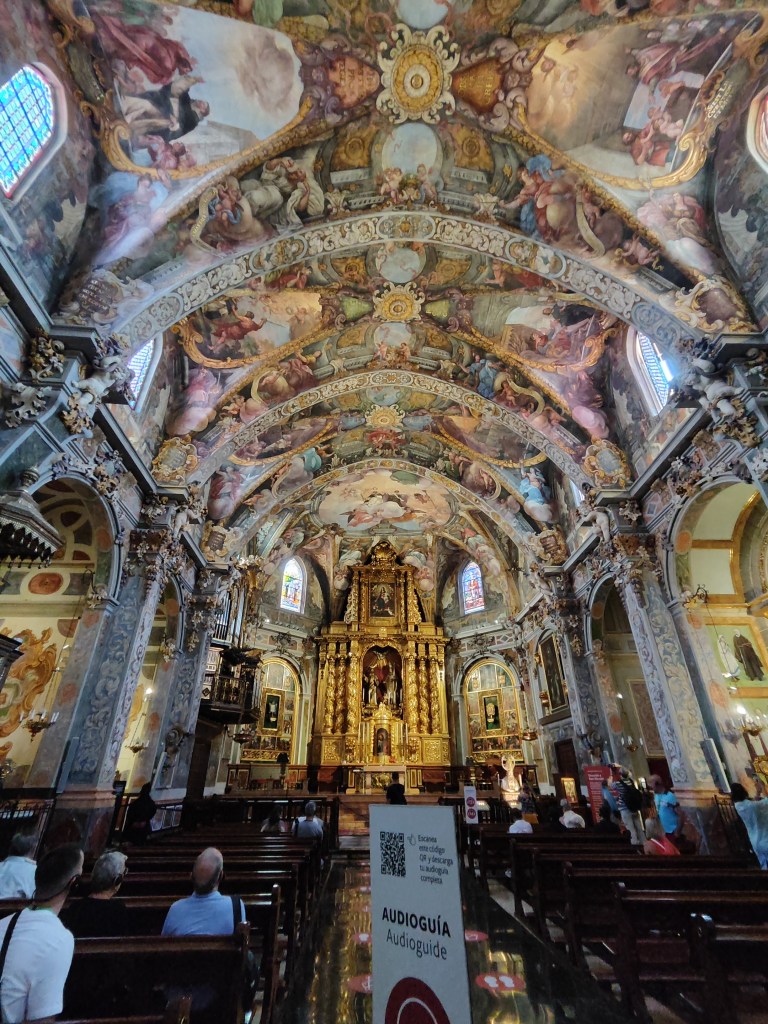
Antonio Palomino had been invited to Valencia by Canon Victoria, this is the moment in which the painter developed his activity in the city. He works in the Basilica of Our Lady of the Forsaken, the parish church of Santos Juanes and also in San Nicolás. He designs a complex iconographic program, skillfully adapted to the architectural space, based on the lives of the two titular saints of the parish, and which will be executed by his disciple: Dionís Vidal.
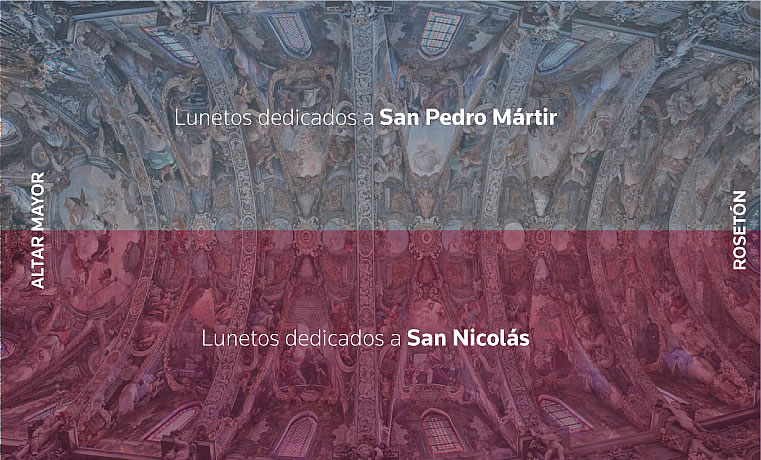
The vault is divided into 12 lunettes, six on each side, which illustrate the life of the parish holders.

Picture by San Nicolás.
Saint Nicholas Bishop: On the right side, looking at the main altar (south)
Saint Peter Martyr: Left side (north).
The scenes in the central nave, on the gospel side, tell us about the life of Saint Peter the Martyr, while on the epistle side, the life narrated is that of Saint Nicholas.
Thus scenes are represented from childhood, through preaching and miracles in life, until reaching his death and the prodigies that occurred when his mortal remains were venerated.
Some fictitious openings suggest the view of the sky. Each section that forms the vault narrates an episode in the lives of the saints. Upon reaching the presbytery, both converge in the glory of angels, doctors of the church and pretend architecture. The scenes from the lives of the saints are accompanied by a plethora of allegorical images. In total, there are almost 2000 m2 of fresco painting.
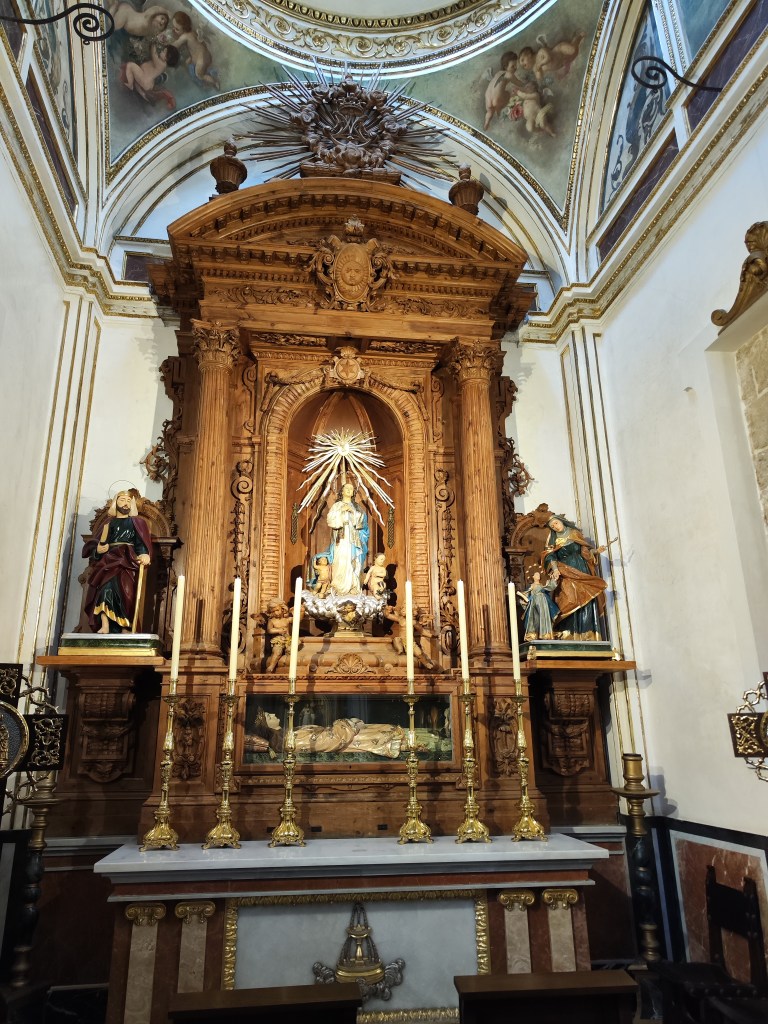
I suppose you have to visit and see more about the altar and all the tiny details in every chapel 😏🤭
Santos Juanes de Valencia
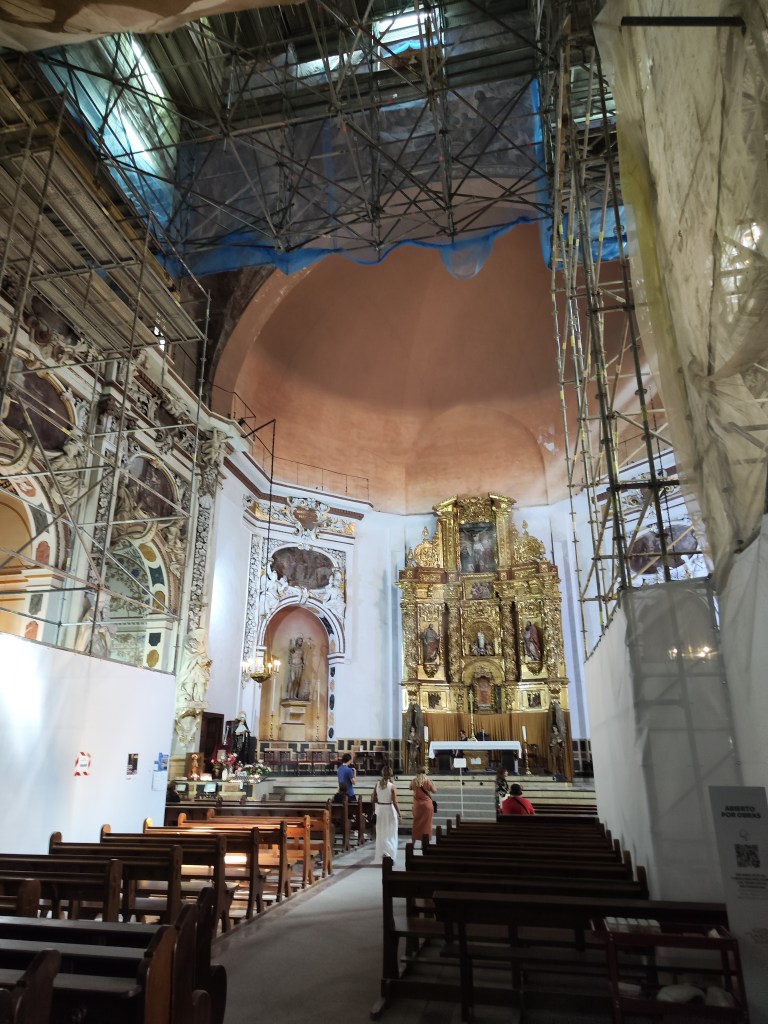
I got lost in the middle of the centre of the city, I got to the address Google Maps indicated to me, but I didn’t see anything I kept walking until the local market, close to La Lontja. The best thing to do when you get lost is to ask. So, I bought churros with hot chocolate and asked where that church was, and I was informed it was hidden and in front of my eyes, but I couldn’t see it as it was under construction.
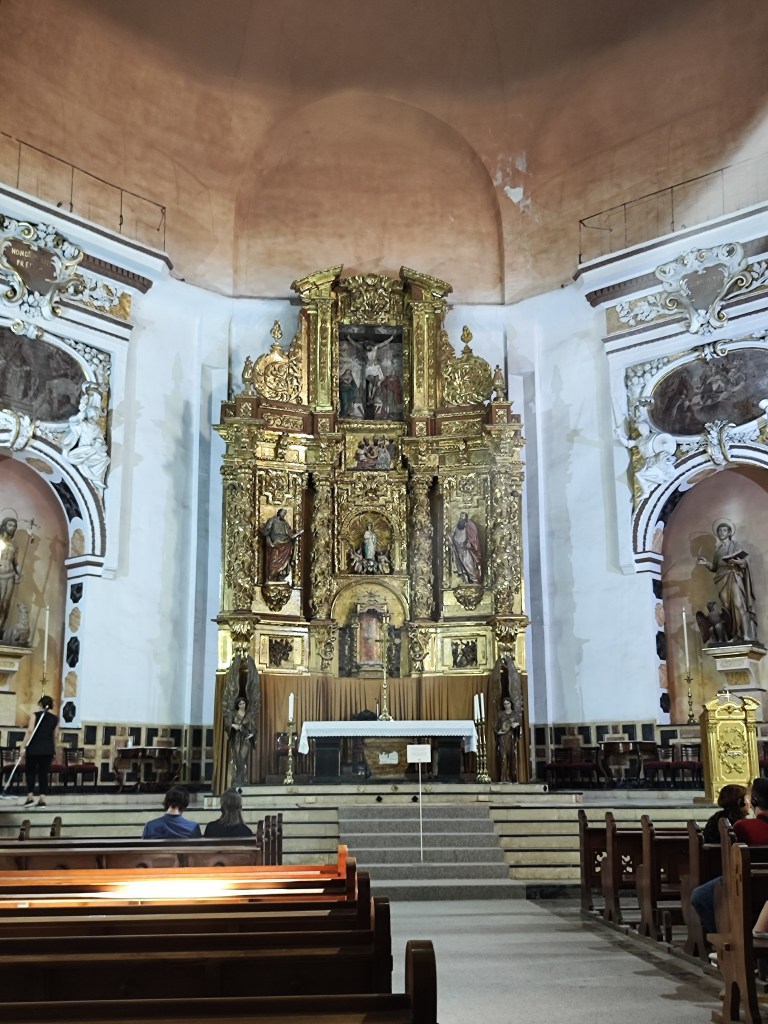
It was a shame such a marvellous piece of art was falling on my feet, all I could see were the white columns with gold decorations, an altar in the front and a beam of light coming down from a sculptured angel holding the upper part of the architrave.

I let you a bit of history from the place:
It has been catalogued as a National Historic-Artistic Monument since February 21, 1947.1
Of Valencian Gothic origin, it was rebuilt in the 14th and 16th centuries due to fires. It was in the 17th century and the beginning of the 18th century when it finally acquired its definitive appearance, with a baroque appearance. Of its old Valencian Gothic style structure, the nave and the large blinded oculus still remain, known as the O de Sant Joan, which was conceived as a large rose window on the façade at the foot. Its exterior was renovated in 1700.
On the façade that faces the Market Square, the central sculpture of the Virgin of the Rosary, the work of Jacopo Bertesi, stands out. Above it is the clock tower, flanked by the two Saints Juanes and the weather vane arranged at the top of the façade, known as the bird of Saint John (pardal de Sant Joan, in Valencian).
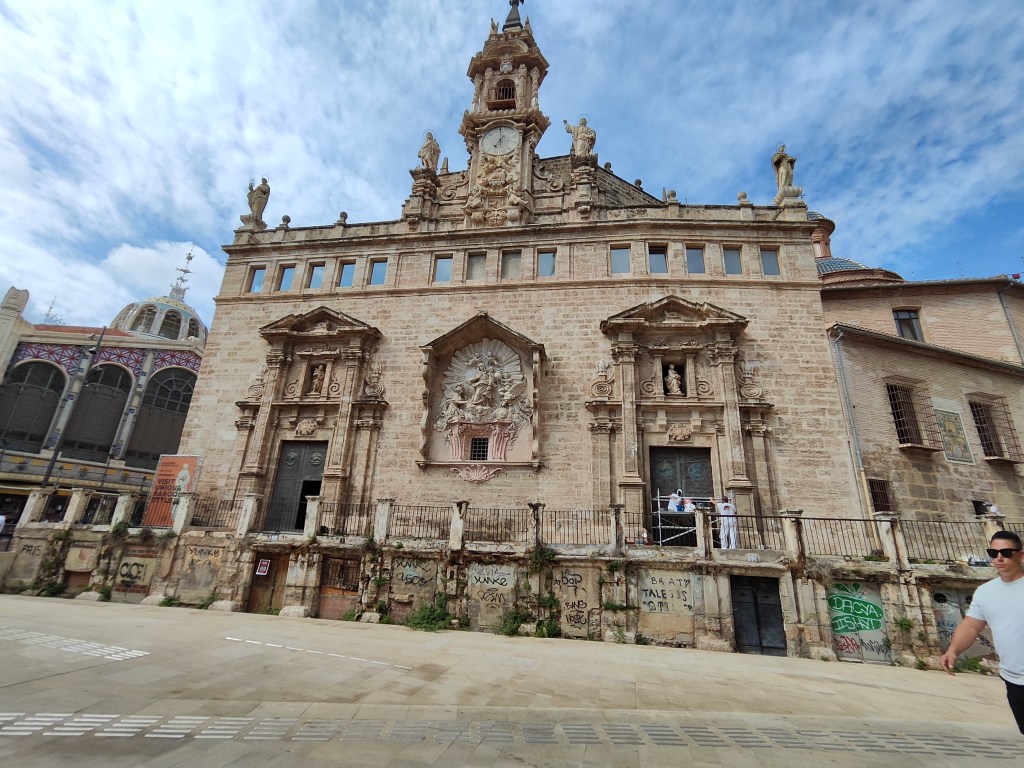
Antonio Palomino left a notable mark in Valencia. This building was precisely the reason for his arrival in Valencia in 1697. The parish clergy had commissioned a new decoration after the fires suffered by the building. Charles II sent his painter, who corroborated the impression of the chaplains, to see the great space that was placed in his hands and accept the challenge. He removed what he had done and painted the presbytery and all the vaults of the church in the last years of the 17th century.
On July 19, 1936, during the Civil War, it was burned to the ground and its effects still linger.

I ended up visiting La Plaza de Toros de Valencia after my 3 in a row tour, plus, everything is close, so why not? It was not the season to get inside but a view from the outside is also accepted.

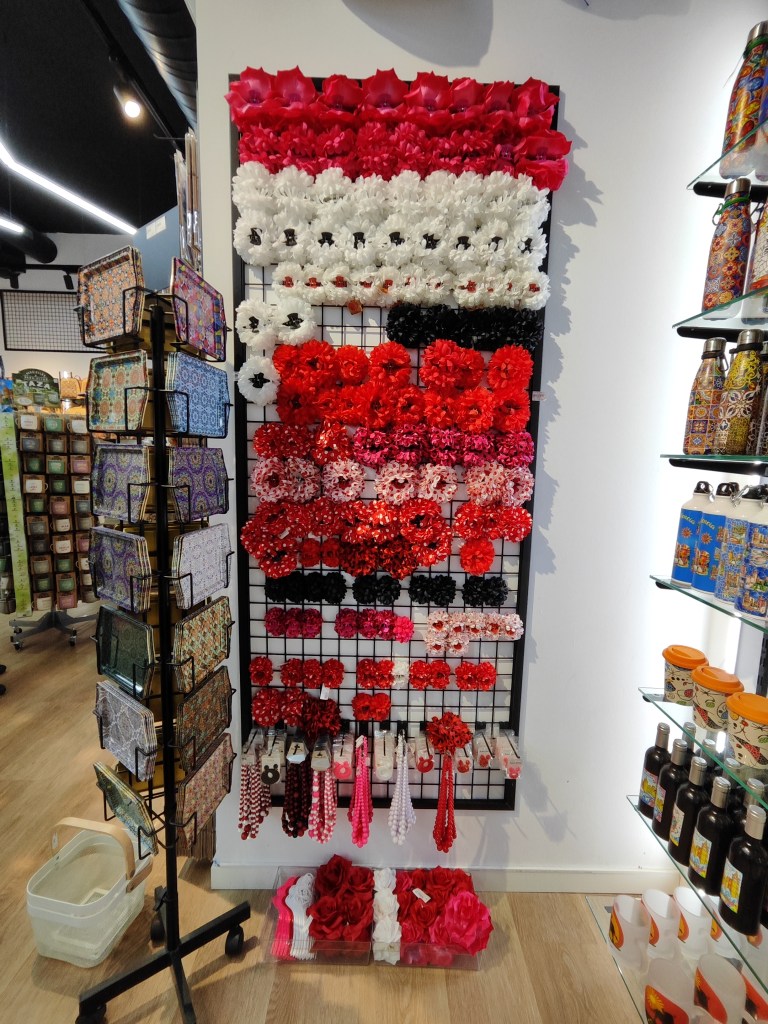
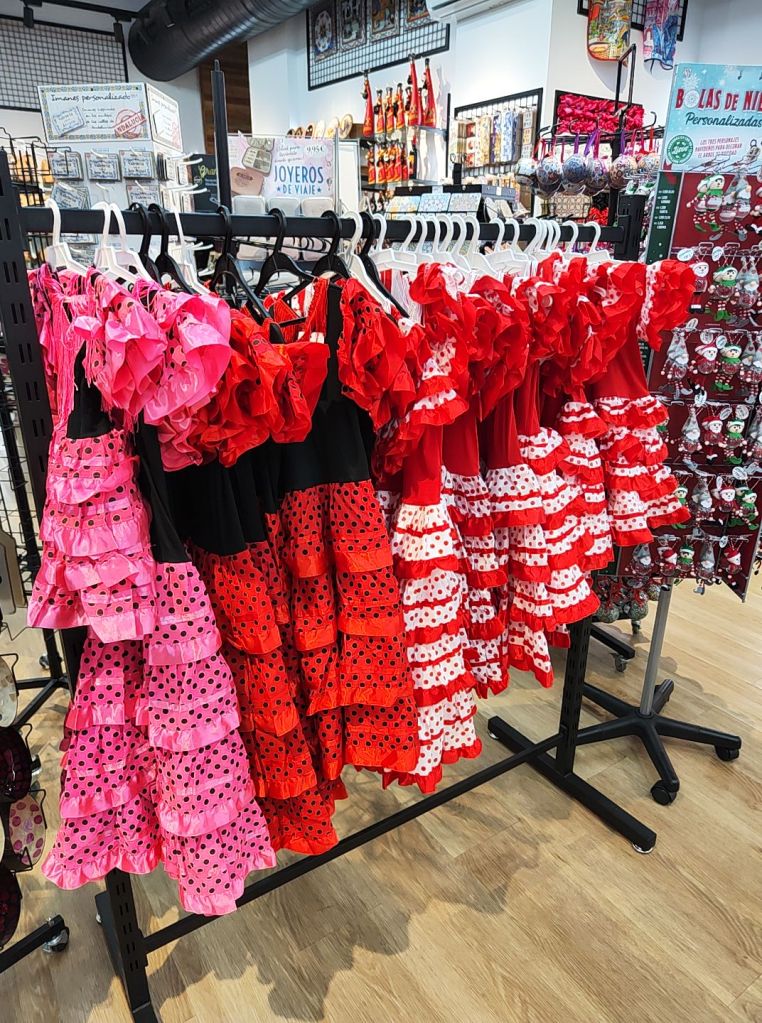
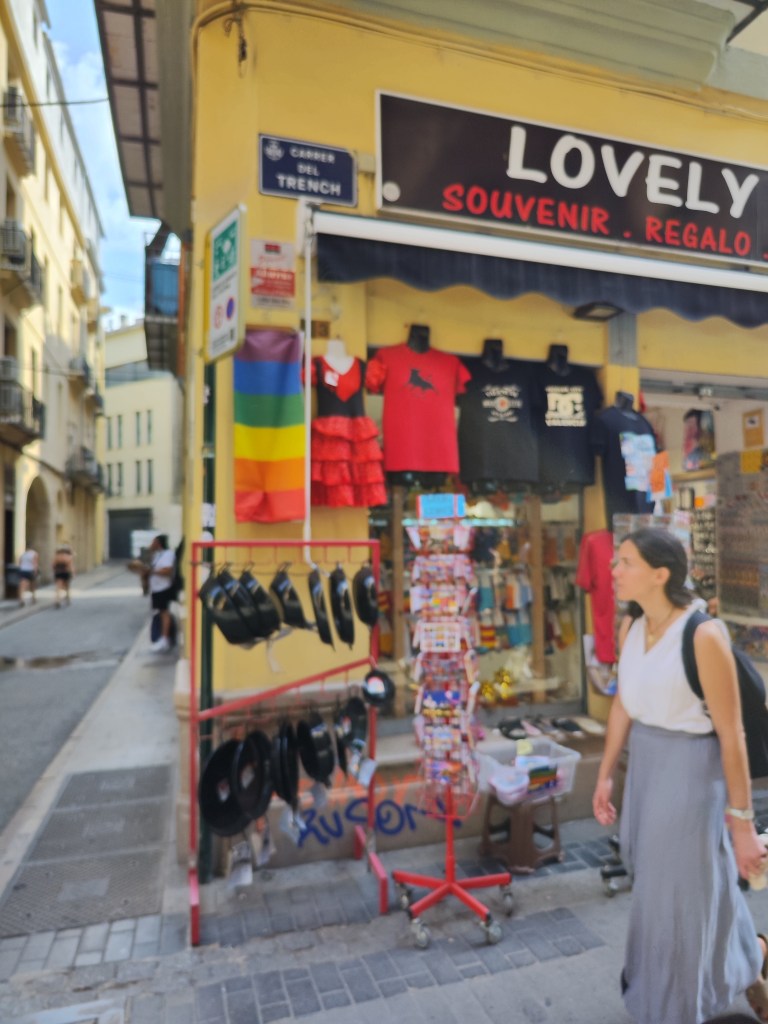
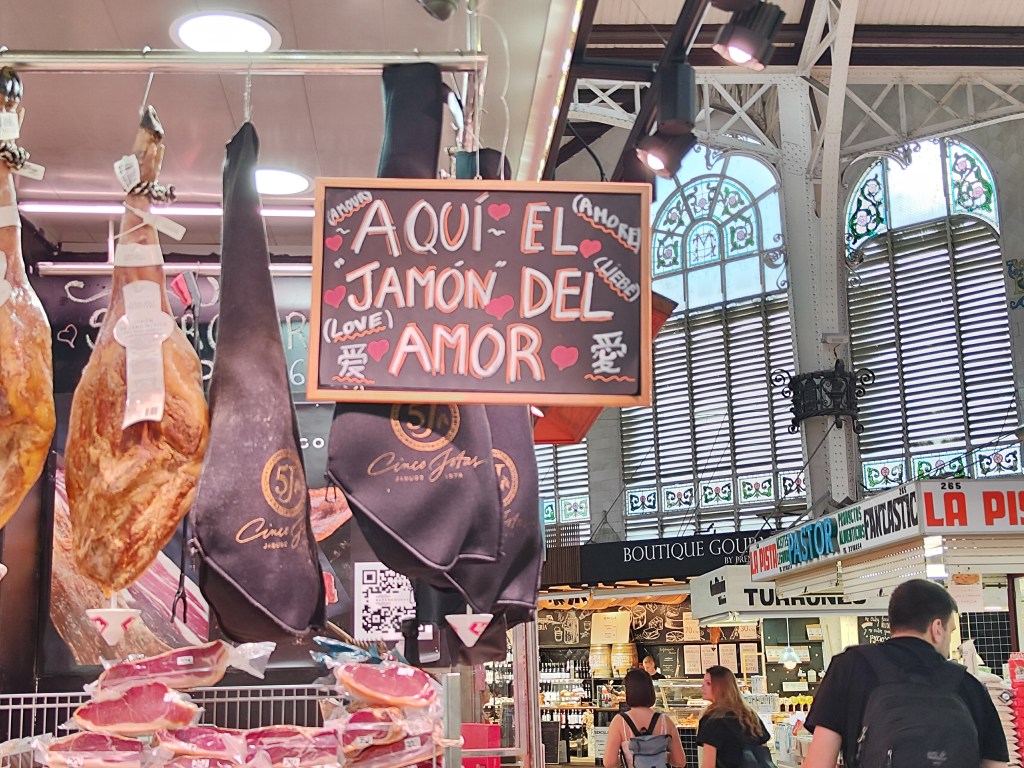
I also visited some souvenir shops, to buy presents for my family and friends. Yikes, I forgot, I visit the local market as well, gonna get always some yummy ham and turrones.




That’s all for today, see you soon!




 Dancing Giglio
Paella is delicious
LikeLiked by 1 person
It is indeed
LikeLike