
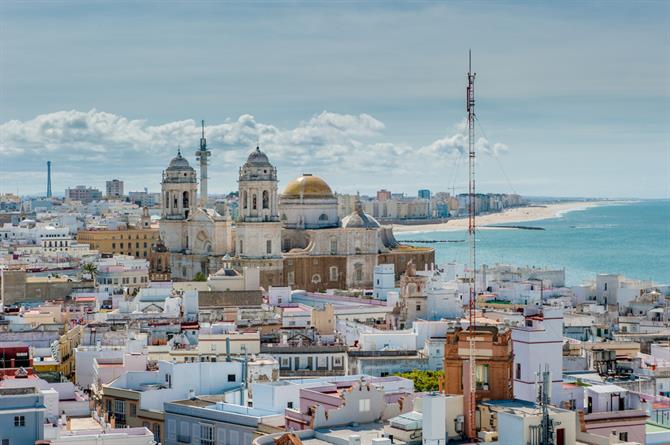
Alegria is a cante chico flamenco form that belongs to the Cantiñas family and originates in Andalusian the town of Cadíz. It is usually played at a lively rhythm (120-170 beats per minute) and in a major key. Alegria letras focus on light-hearted themes like love, humour, and happiness – the word “Alegria” literally means “joy.”
The compass of Alegria is based on a twelve count similar to solea and emphasizes the 3, 6, 8, 10, and 12 beats:
1 2 3 4 5 6 7 8 9 10 11 12
Alegria is structurally one of the strictest forms of flamenco. A traditional dance in Alegria must contain each of the following sections, in order:
- salida (entrance)
- paseo (walkaround)
- Silencio (similar to an adagio in ballet – it is the singer who is “silent”)
- castellana (upbeat section)
- escobilla (literally “brush” as with a broom, which describes dancers’ footwork in this section)
- bulerias
This structure is often not strictly followed when Alegria is played as a standalone song with no dancing. You will, however, frequently hear parts of this structure in solo guitar playing. In this way, an artist can pay homage to the entirety of the art form, even when a dancer is not present.
Now an Alegria danced by one of the best flamenco dancers Eva La Yerbabuena 😊👏
Alegria Accompaniment
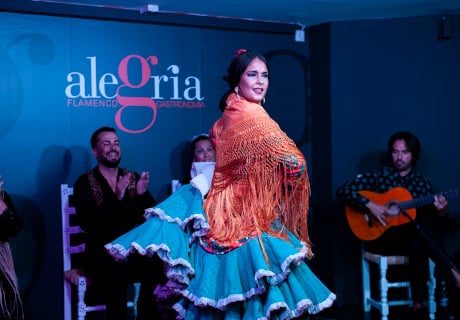
The word alegria is commonly translated as “happiness” or “merriment.” As you might imagine, the Alegria palo is typically played at an upbeat tempo and in a major key (usually A or E).
While not as formulaic as sevillana, Alegria dance accompaniment does have a set of distinct “song parts” which, in more traditional arrangements, are often assembled in a predictable order. Many of the same principles apply to solo instrumental arrangements as well.
Structure and Compas
The basic structure of Alegria por baile (“for dance”) can be schematized like this:
- Intro
- Copla (verse) & Falseta (guitar melody)
- Footwork
- Silencio
- Castellana
- Escobilla
- Buleria
Within this basic schema, sections can be rearranged, doubled, or eliminated altogether.
 Dancing Giglio
And happy International Dance Day to you too! 🙂
LikeLike
Thank you very much, you are too kind!! 😉
LikeLike