
Like the Manila shawl, the origin of the fan is Asian. It is believed to have originated in China in the mid-7th century. However, it wasn’t until the 15th century that it arrived in Europe, through Portuguese merchants. There are also studies that suggest the Jesuits were the first to introduce this accessory in Europe.

§Abanico in Flamenco§
Since the south of Spain, due to its climate, was where the use of the fan became most popular, it is not surprising that it immediately became a protagonist in flamenco dances, which adds grace and style to the movements, of the dancers.
The fan plays an essential role within the dance, precisely because of that language of seduction that we mentioned earlier: flamenco being, as it is, passionate and sensual, the dancers use a slightly larger fan, called a “pericón” to provide greater intentionality. to their movements, giving them a special meaning, which increases the charm of the dance.
Different parts
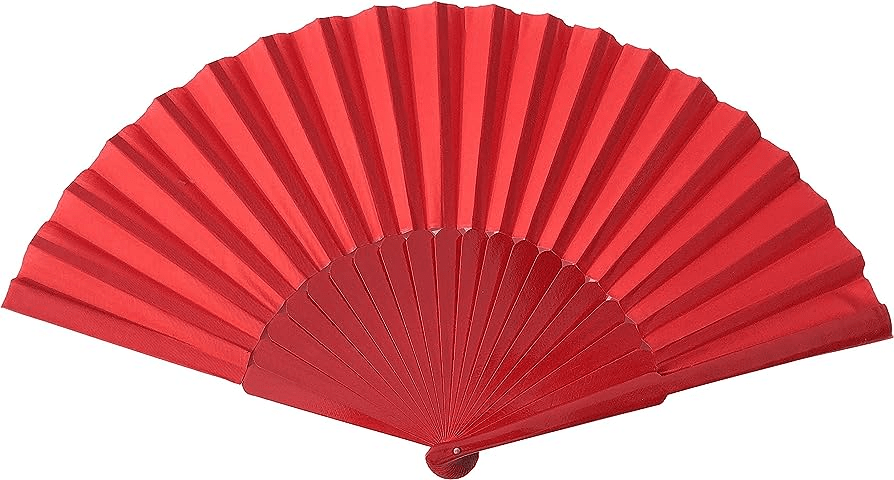
The body of the flamenco fan is a folding skeleton or deck, which in turn is made up of 3 different pieces:
- Rods: rigid strips, made of wood, plastic, and mother-of-pearl… that give shape to the fan and that fold and unfold. The first and the last, known as guards, are wider than the others; their function is to protect the fan when folded.
- Peg or axis of the fan: it is the fixed point where all the rods converge and allow it to open and close.
- Landscape: also known as country, it is the decorated part of the fan, attached to the rods and that folds when it is closed. It is usually made of cloth or paper, although there are wooden models in which the upper part of the rods serves as a landscape.
Movement, colour and a hidden language: the fan in flamenco

In flamenco dancing, the fan is used not only as a visual complement (because of its beauty and movement) but also contributes to the flamenco style and to the interpretation that the artist is doing on the stage.
10 gestures and their meaning, so that you can feel even more when you go to see a live flamenco dance:
- Fan yourself quickly: I love you intensely.
- Throw the fan: it means: “I hate you” or “Goodbye, it’s over.”
- Close it slowly: This gesture means “Yes”. You can also express “yes” by resting the fan on your right cheek.
- Close it quickly: closing the fan quickly and a little angrily means “No”, the same as if we rest it on the left cheek.
- Pass your fingers through the temples: it means that you want to talk to us.
- Giving a blow: a blow or a few taps with the fan on an object, means impatience.
- Half-open: supporting the half-open fan on the lips means “you can kiss me”.
- Support your lips: if you support your lips on the fan or its patterns, it means distrust, “I don’t trust”.
- Lower it to chest height: means: “We can be friends”. Also leaving it hanging means “we will be friends”.
- Count or open a certain number of rods: indicates the time to meet in an appointment, based on the number of open or “touched” rods.
These are just some of the gestures that women used to use with the fan. Known painters such as Goya, Sorolla or Velázquez have collected and captured this hidden language in their art. Such was its popularization that in the 19th century the Royal Fan Factory was created in Valencia, thus making the fan-makers’ guild official.

One last curiosity: if when you go to see a flamenco show the bailaora carries a fan, but it is large, it is called a “pericón”.



#france #let'shelpaprincess #mountains #paris #part of my origins #portugal #travel #wine adventure architecture art author Blog & Travelling bloganuary bloganuary-2024-02 Buleria dailyprompt dailyprompt-1805 dailyprompt-2026 Dancinggiglio England Flamenco health Holamundo italy martinete motivation Mountains nature notebooks Part of my origins poem poetry Science seguiriya taranto The guitar is like a woman Traditions travel travelling wedding woman writing


 Dancing Giglio