
And here we are again for the second part of this trip to the magical Rome!
For today’s adventure, we planned:
- Guided tour to Colosseo, Foro Romano and Monte Palatino
- Fontana di Trevi (Trevi’s fountain)
- Galleria Borghese
- Villa Borghese
- Eat! (My fiancè thinks we are doing Ramadam)
I decided to wear a fashionable medieval/roman dress with a corset I absolutely adore and my butterflies sandals. The weather was not on our side today, apparently, it was going to rain around lunchtime, let’s hope that won’t happen.
Our guide tour inside these marvellous ruins started at 11 am, in the meantime, I was set to get the perfect angle of the Colosseum, with much of Isaac’s tedious face of “Enough pictures”, one needs to preserve the memories people, tell him that!
We waited at the meeting point, I was told the tour also included Palatine Hill and Foro Romano, what a relief, they gave us a blue sticker, and you better remember this because from that moment we became “Fellowship of the Blue sticker”.
They made us surround each other in a circle, and after a few minutes our guide arrived, a long beard, trousers tightened with a karate bandage, a black hat, and a pair of battery sticks sticking out of the bag, his name… if you are curious: Rudo.
“I know I know, you were expecting something like Francesco, Alessandro, Marco perhaps, but no, I’M RUDO!” – He said.
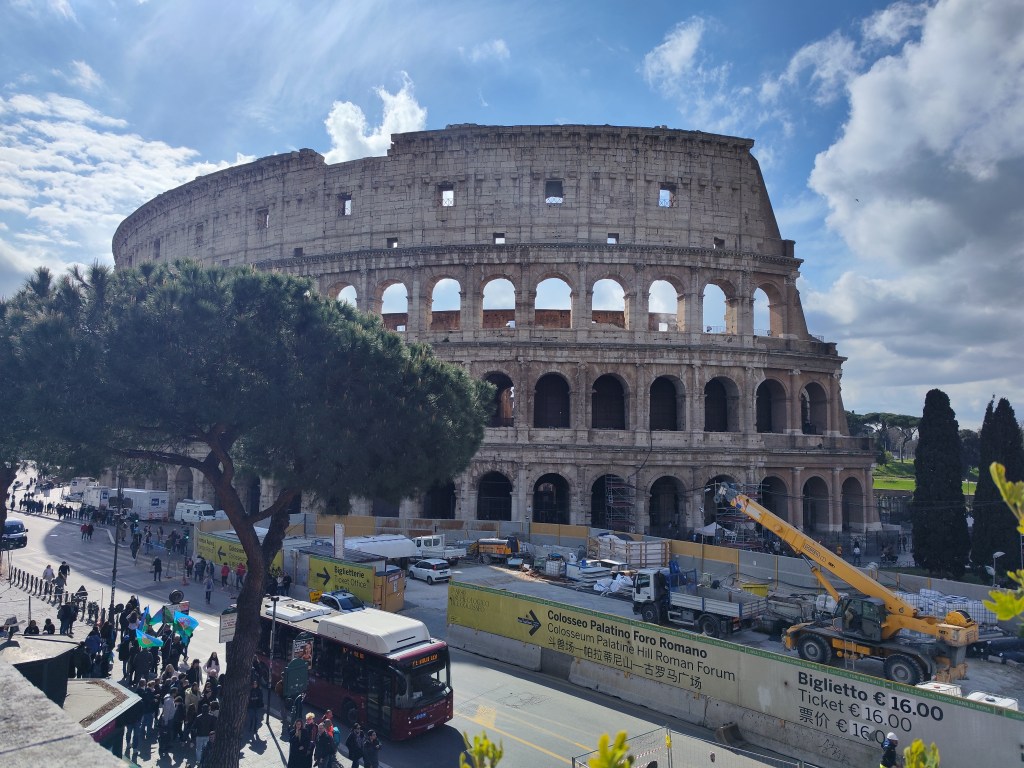
He didn’t have a flag to guide us, which was the reason for the battery sticks, we started our tour by queueing outside the Colosseum while he explained to us the reason why did they build such a thing, and how old is it.
The building process started between 70-72 of the first century, the real name tam tam:
Roman Amphitheater, our dear friend is part of the new seven wonders of the World and UNESCO Heritage.


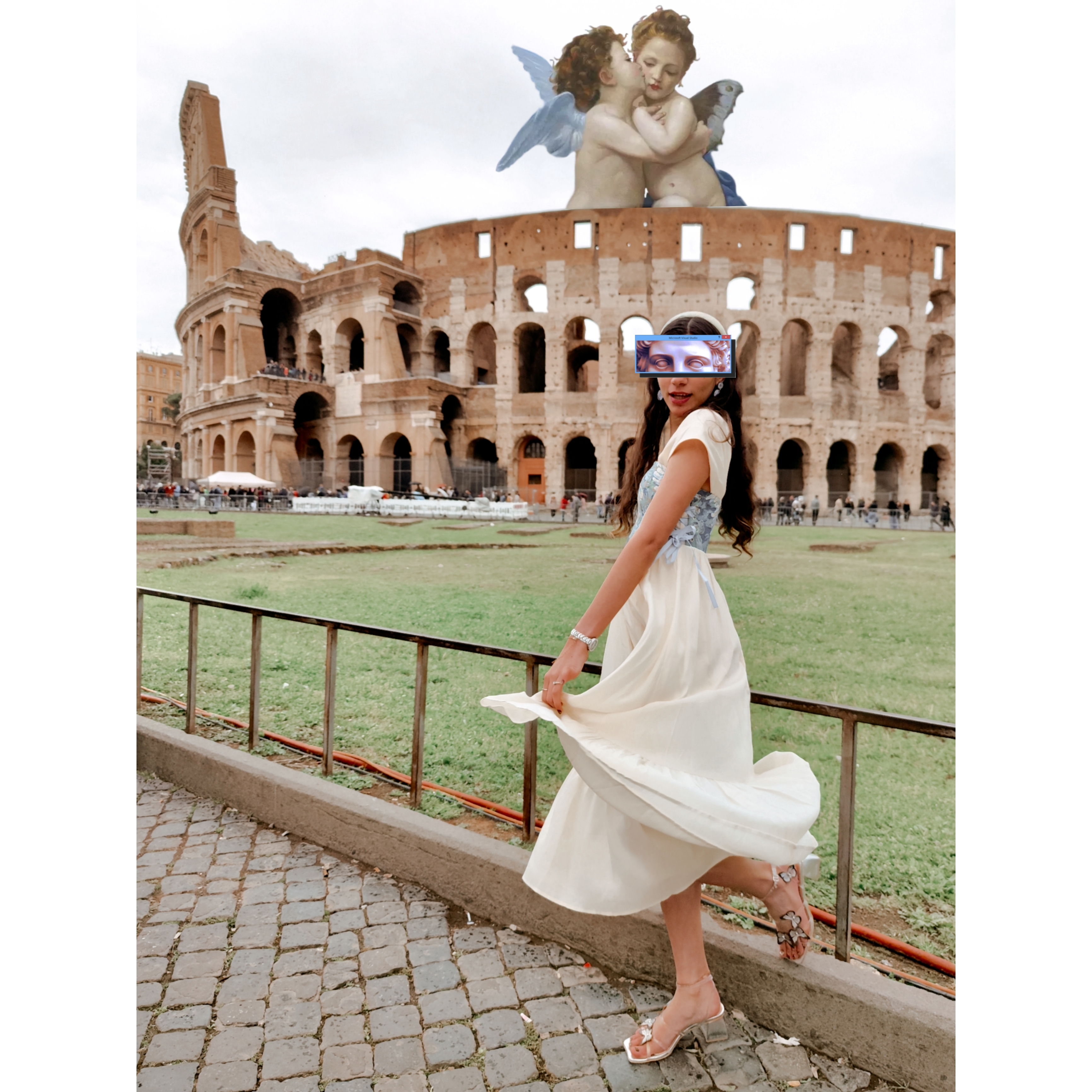

The name “Colosseum” was diffused only in the Middle Ages, and derives from the popular deformation of the Latin “colosseum” (translated into “colossale”, as it appeared in the High Middle Ages through the cassette to one or two feet). The building soon became a symbol of the imperial city, an expression of an ideology in which the will to celebrate came to define models for the amusement and entertainment of the people.
I won’t tell you much about it, because you should really go yourself and explore it, but I can tell you the Colosseum was supposed to be a sacred and safe place for Romans, around the time it was completely done, you could visit and have a look around the variety of markets inside, for people that usually stayed at their houses working at the farms, this was a huge innovation, another important thing: Christian were not persecuted inside, they were protected.
It was formerly used for gladiator shows and other public events (hunting shows, naval battles, re-enactments of famous battles and dramas based on classical mythology).
Nowadays, the Colosseum is a place of history, inside the big walls people do documentaries, they preserved and took care of it, a long time ago, and you can see by the holes in the walls, people stole most of the things inside, that’s why a priest placed a cross at the bottom centre of the first floor.
“Rome, be as just and gracious unto me As I am confident and kind to thee.”
- Book: Titus Andronicus by William Shakespeare
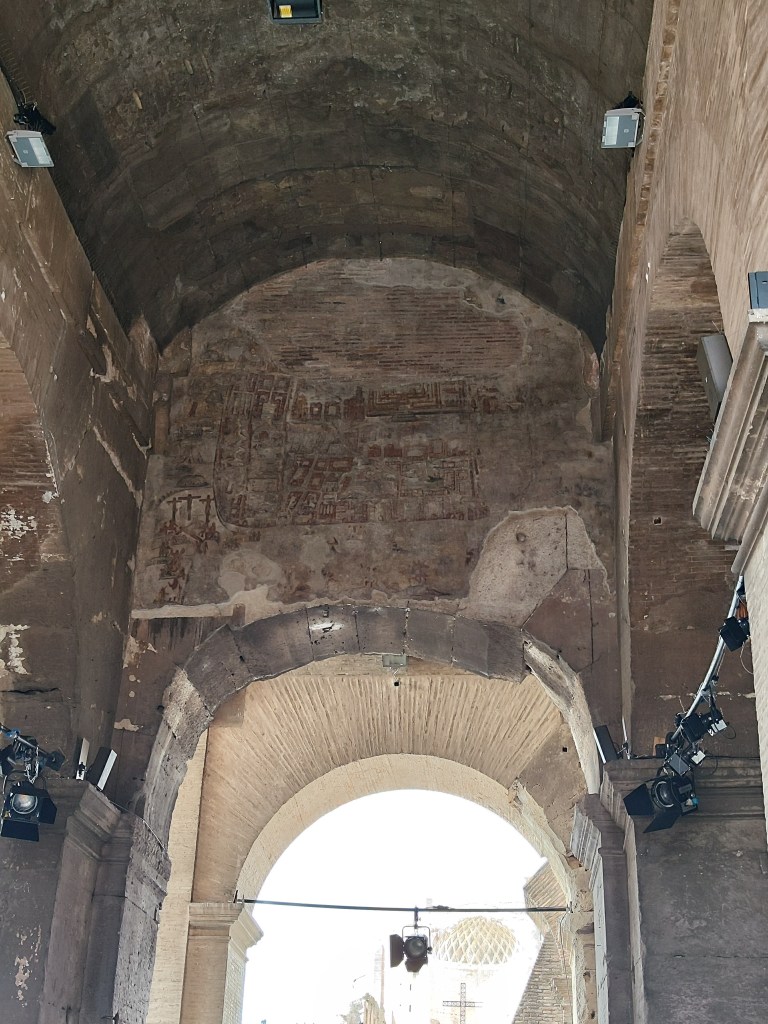
Map of Israel inside the Colosseo, they commissioned the construction of the building.
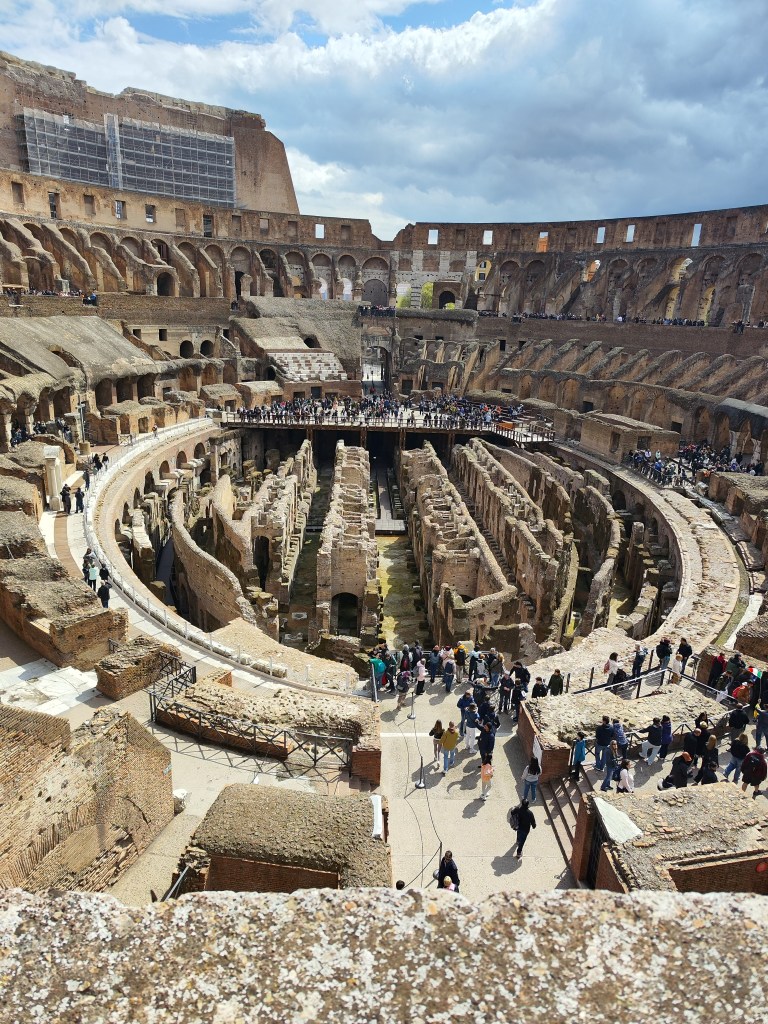
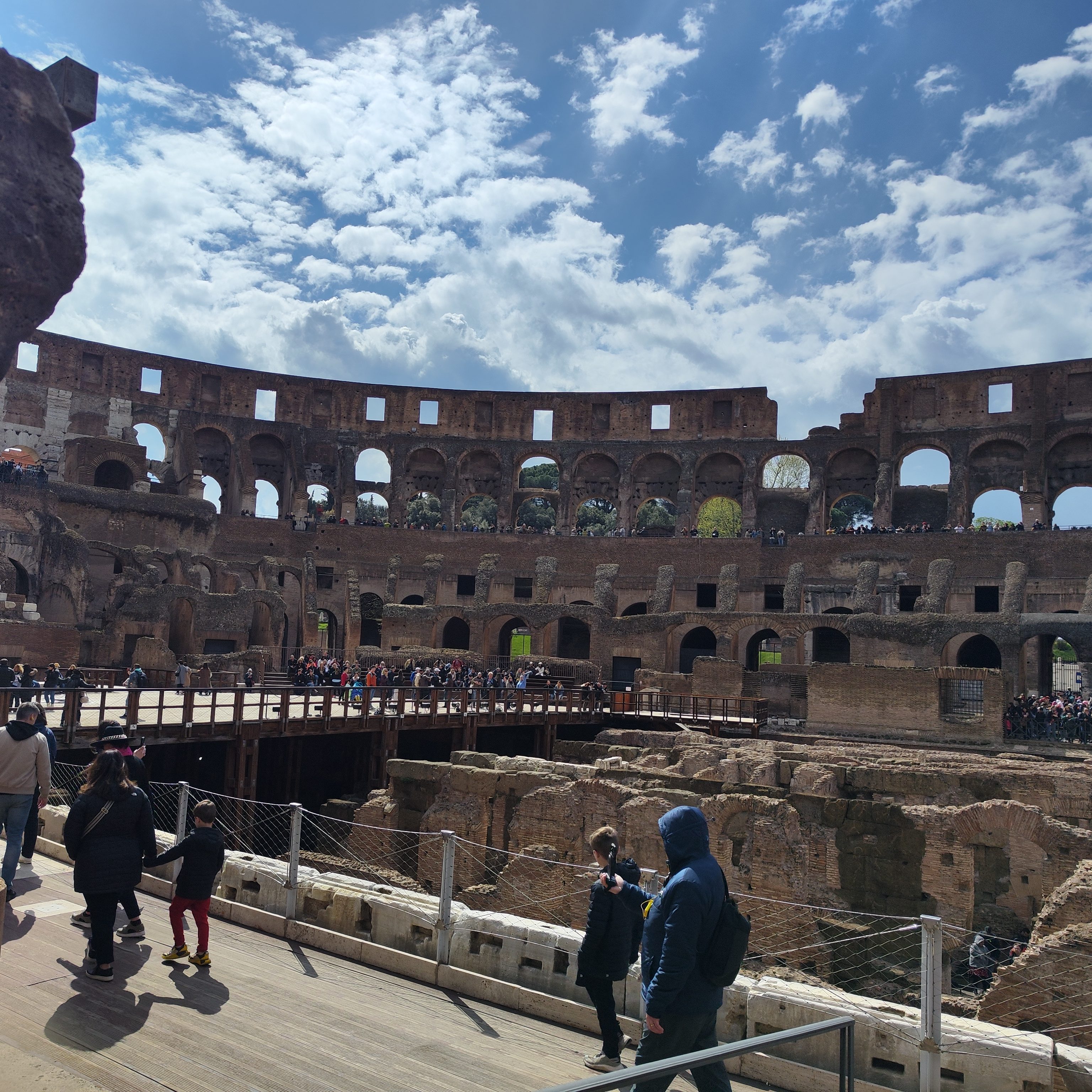
The members of our group were fascinated, it’s funny when we are so mixed, I actually love it, there were a Mexican couple, Dominic republic girls that live in the USA, someone from the USA, an Israeli couple, an Australian couple, and 3 couples from England.
English always make fun of Americans, I don’t know their logical reasons but the guy from the USA was so kind to me. He said he loved my sandals! HOW CUTE!
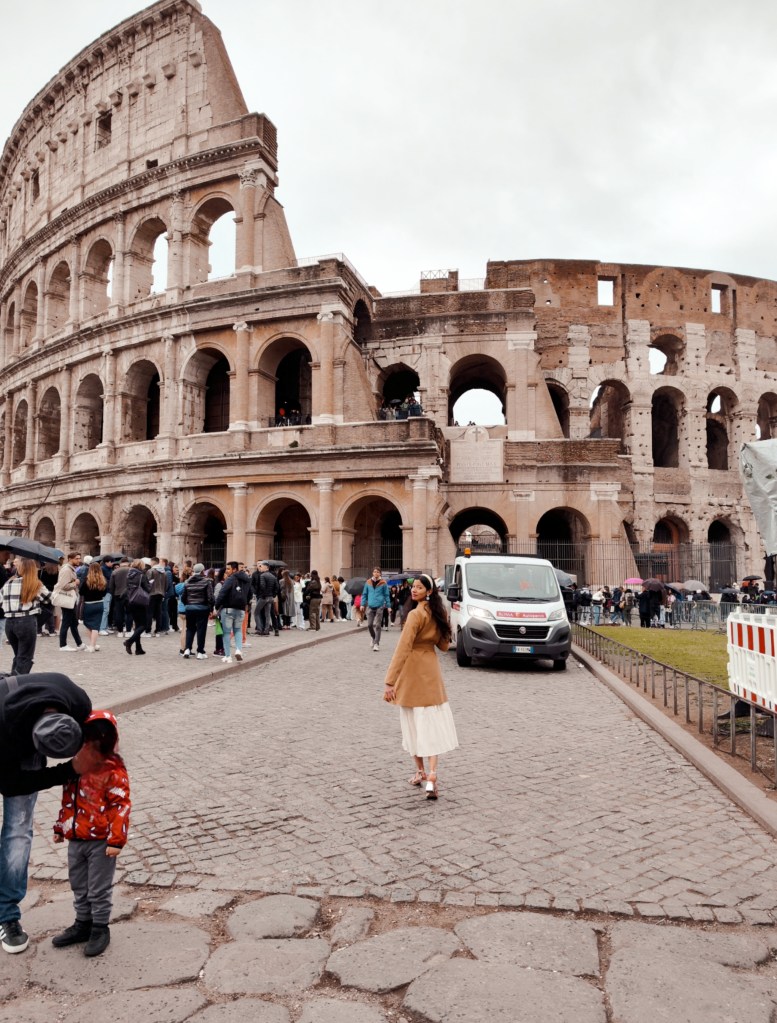
Anyways, after our amazing trip inside the Colosseum, we immediately went to our next destination: Palatine Hill and Foro Romano.
These two make part of the archaeological circuit, the guide explained it’s a shame we only can see pieces of what’s left from Palatine Hill, it would have been a whole tour around rooms, but as we all know, Italy is one of the countries with volcanic activity and the sediments were released, the only thing Romans could do to preserve was filling the ruins with cement, stones, and other kinds of mixtures to make solid to walk on the top.
The Palatine is one of the central hills of Rome, but unlike the Campidoglio and the Aventine, it is close to the river but not adjacent to it. The maximum height is 51 meters above sea level. The hill overlooks the Roman Forum on one side and the Circus Maximus on the other.
The Colle had two summits separated by a valley; the central summit, the highest, was called Palatium, while the other, located towards the slope that descends towards the Forum Boarium and the Tiber, was called Germalus (or Cermalus).
It was once connected to the Esquiline behind it, via the Velia hill, excavated when the Via dei Fori Imperiali was built.


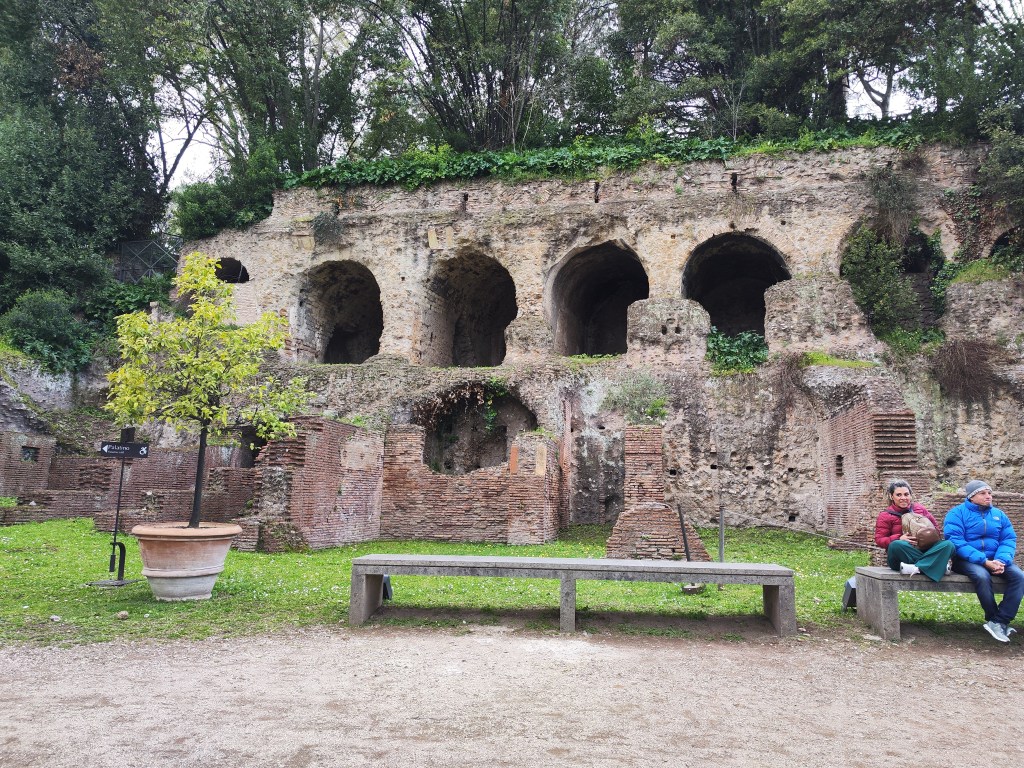
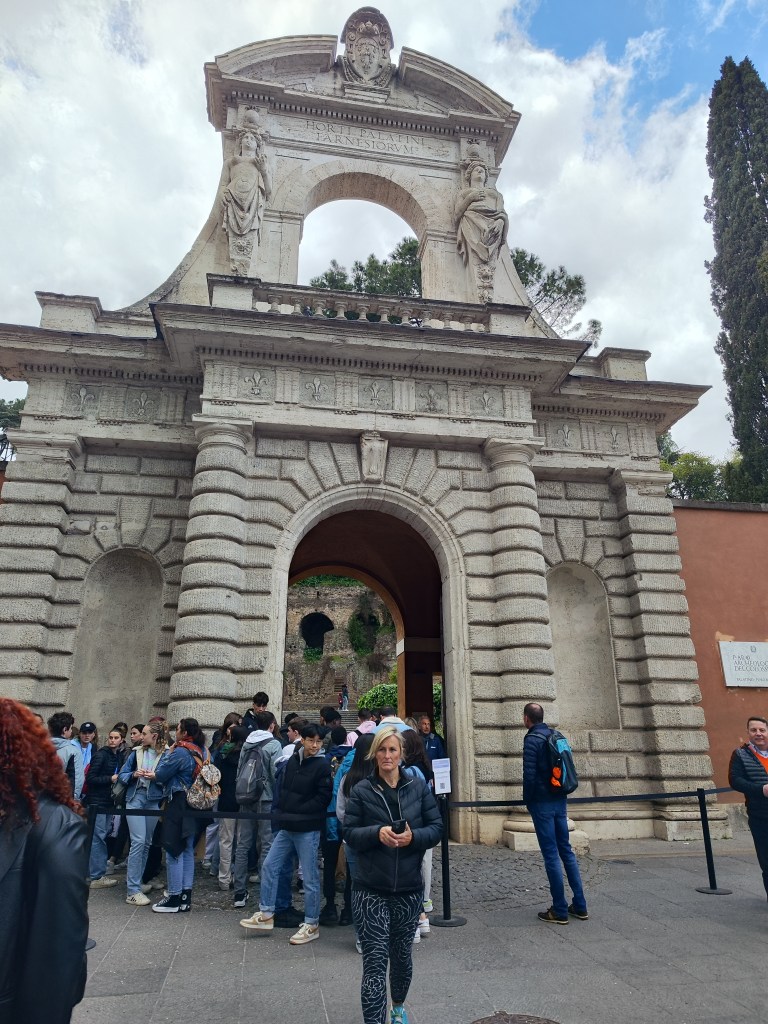
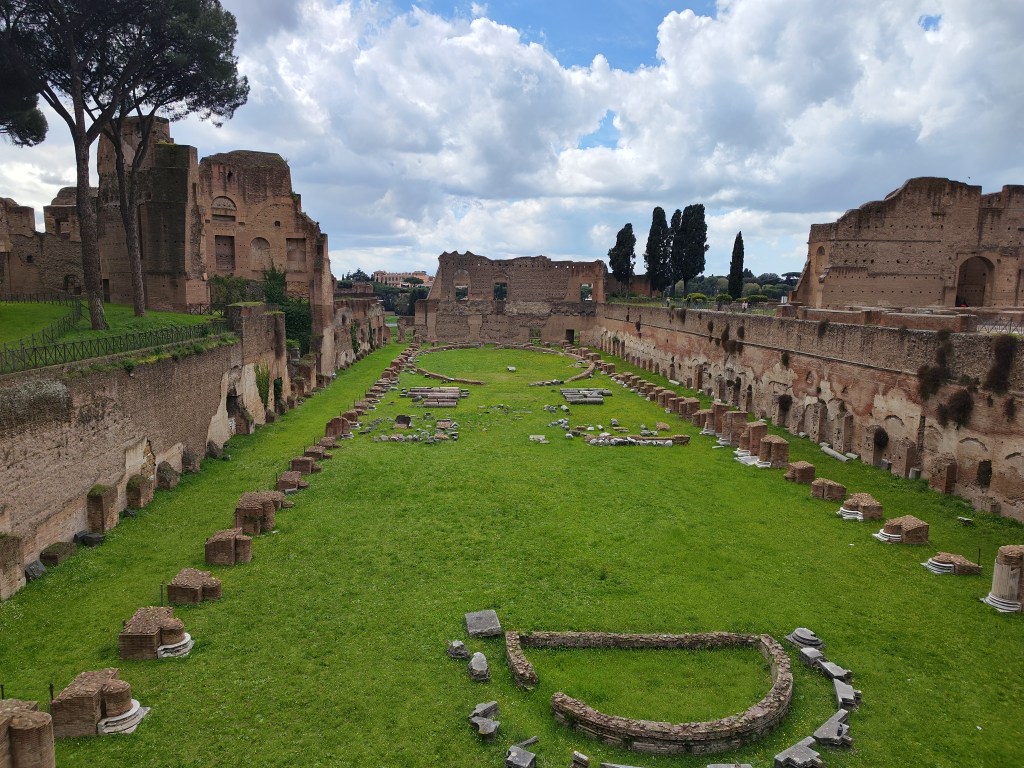
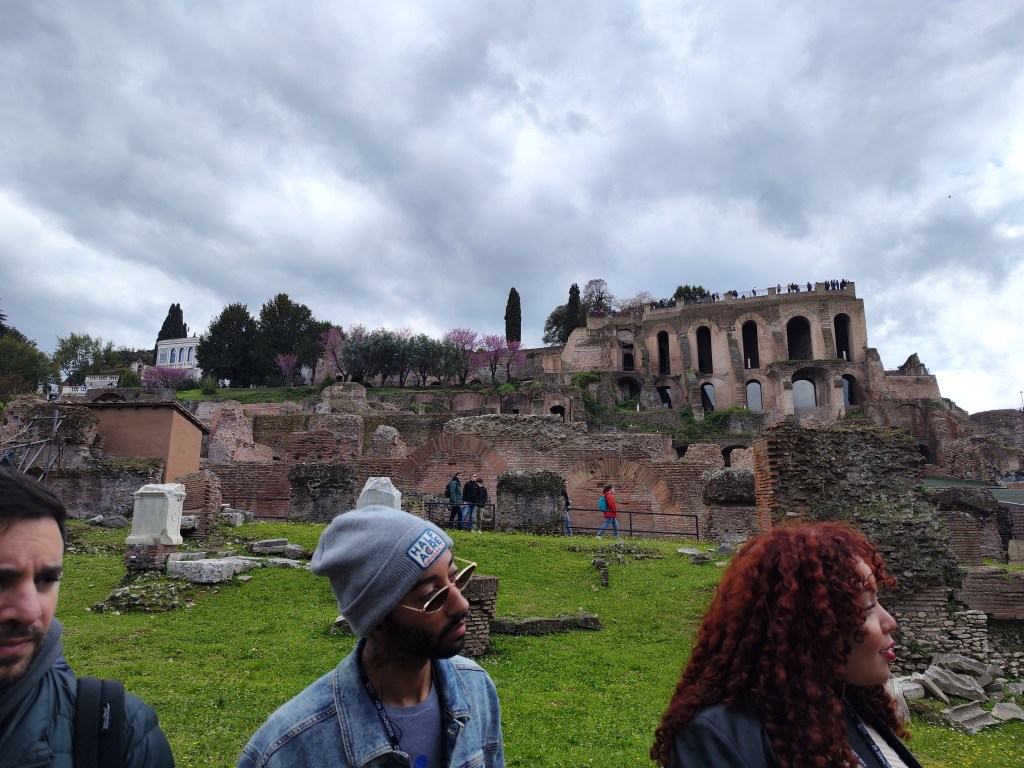
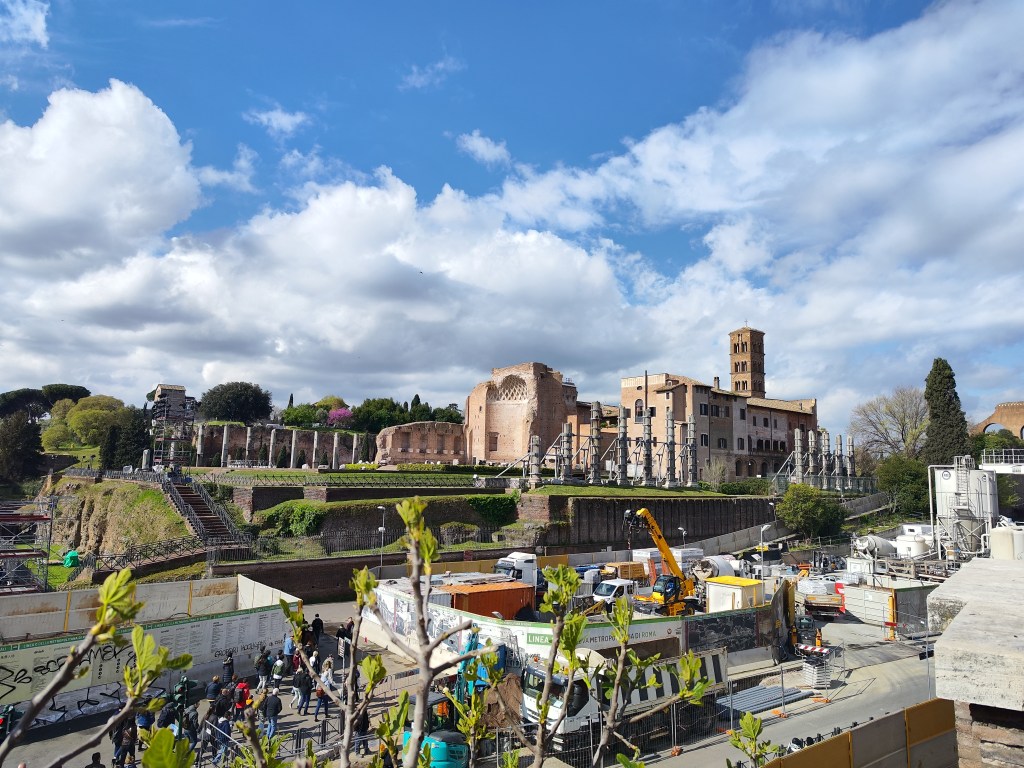
But don’t give up your imagination, it’s like a proper Roman Castle, as we were walking on the top you could see the ceilings, and this is interesting, there’s evidence of the earthquakes, the walls shifted, a piece of ceiling is at one side and then the rest moved for around 20 miles away.
Palatine was also considered the proper “Cittadella” for Romans, which means the town where they met, Romans believed they came from Gods, and so they built these wonderful structures feeling like Gods themselves.
Going down the Palatine you get inside the Foro Romano;
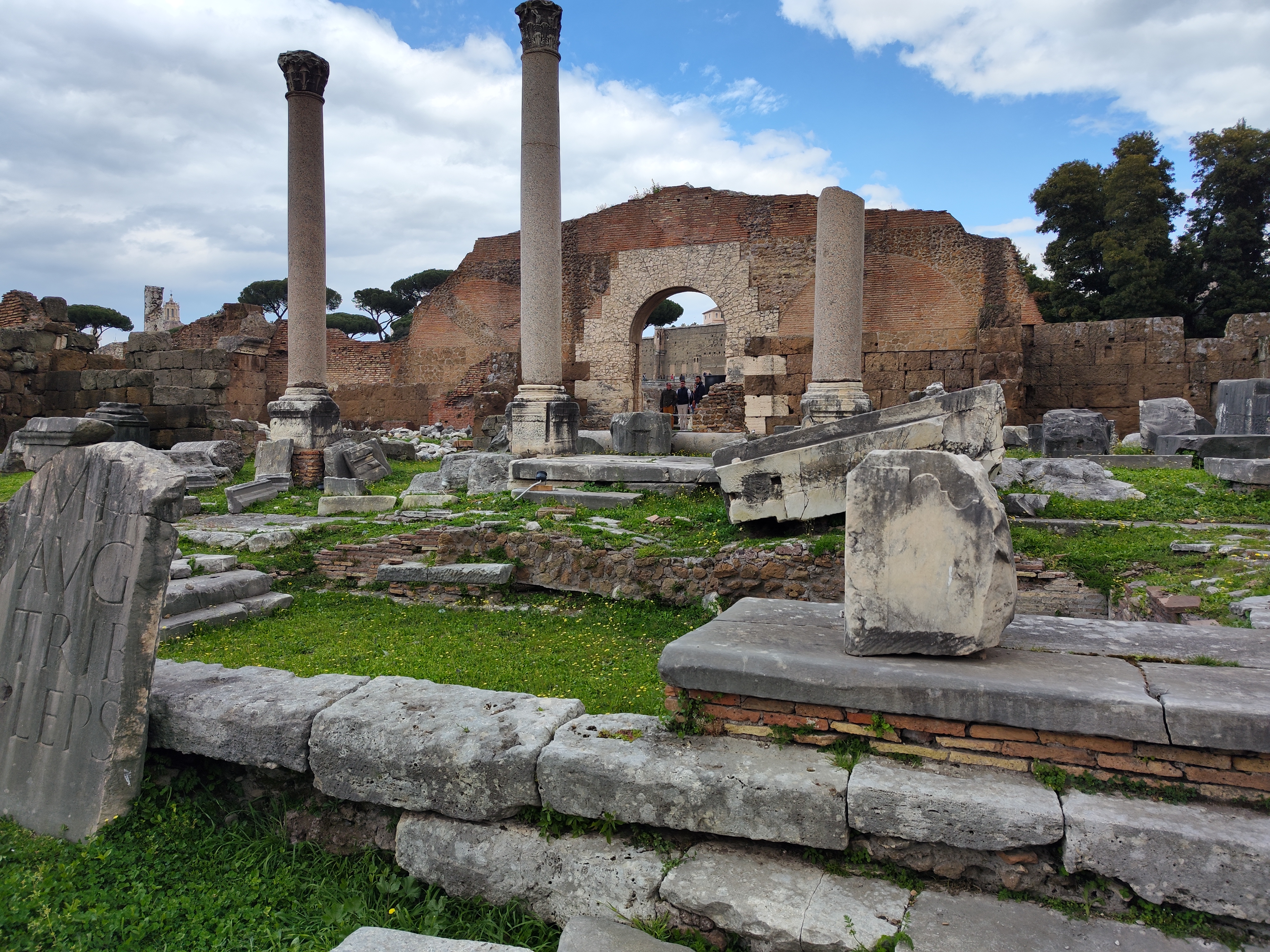
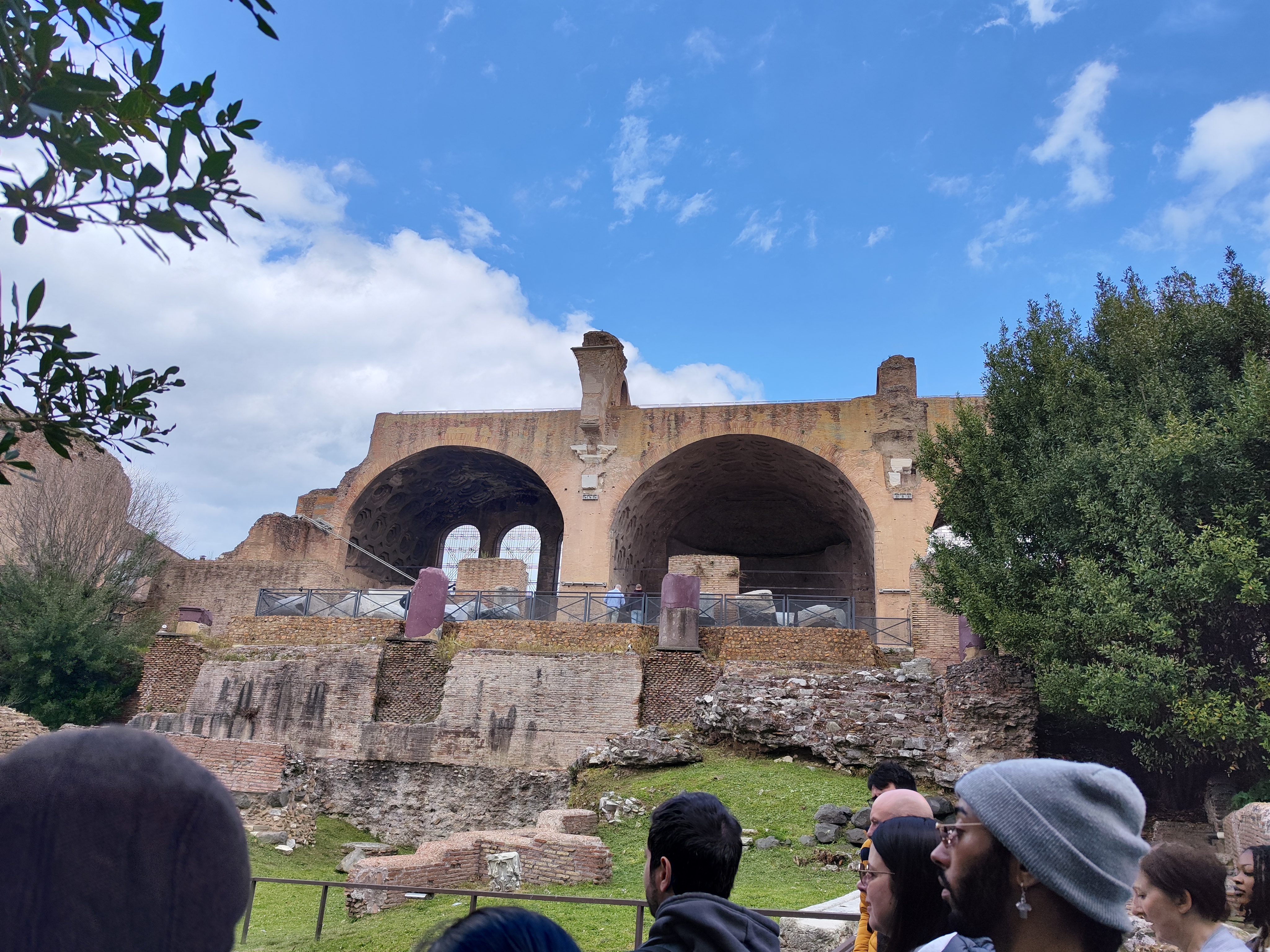
The Roman Forum (in Latin Forum Romanum, although the Romans referred to it more often as Forum Magnum or simply Forum) is an archaeological area of Rome enclosed between the Palatine Hill, the Campidoglio, Via dei Fori Imperiali and the Colosseum, consisting of stratification of the remains of those buildings and monuments of heterogeneous eras which for most of the ancient history of Rome represented the political, legal, religious and economic centre of the city of Rome, as well as the nerve centre of the entire Roman civilization.
From the royal age until the advent of the Middle Ages, the valley of the Forum was the scene of events and the seat of institutions of such importance as to have determined the historical course of Western civilization on several occasions and to have predominantly influenced the political, juridical, cultural and philosophical foundations of Western thought.
After a phase of decline that began in late antiquity, the Forum was subject to frequent plundering and changes of intended use until it found itself, in the 16th century, almost completely underground and permanently used as a pasture for cattle, hence the denomination of Campo Vaccine.
Driven by the reborn and growing interest in historical-archaeological studies of the late nineteenth century and also due to the massive urban restructuring of post-unification and fascist Italy, the area of the Forum was gradually brought to light and studied, becoming with the Colosseum and Palatine Hill one of the most illustrious and visited archaeological sites in the world.
Same as Colloseum, many precious objects were stolen until they put a cross again.
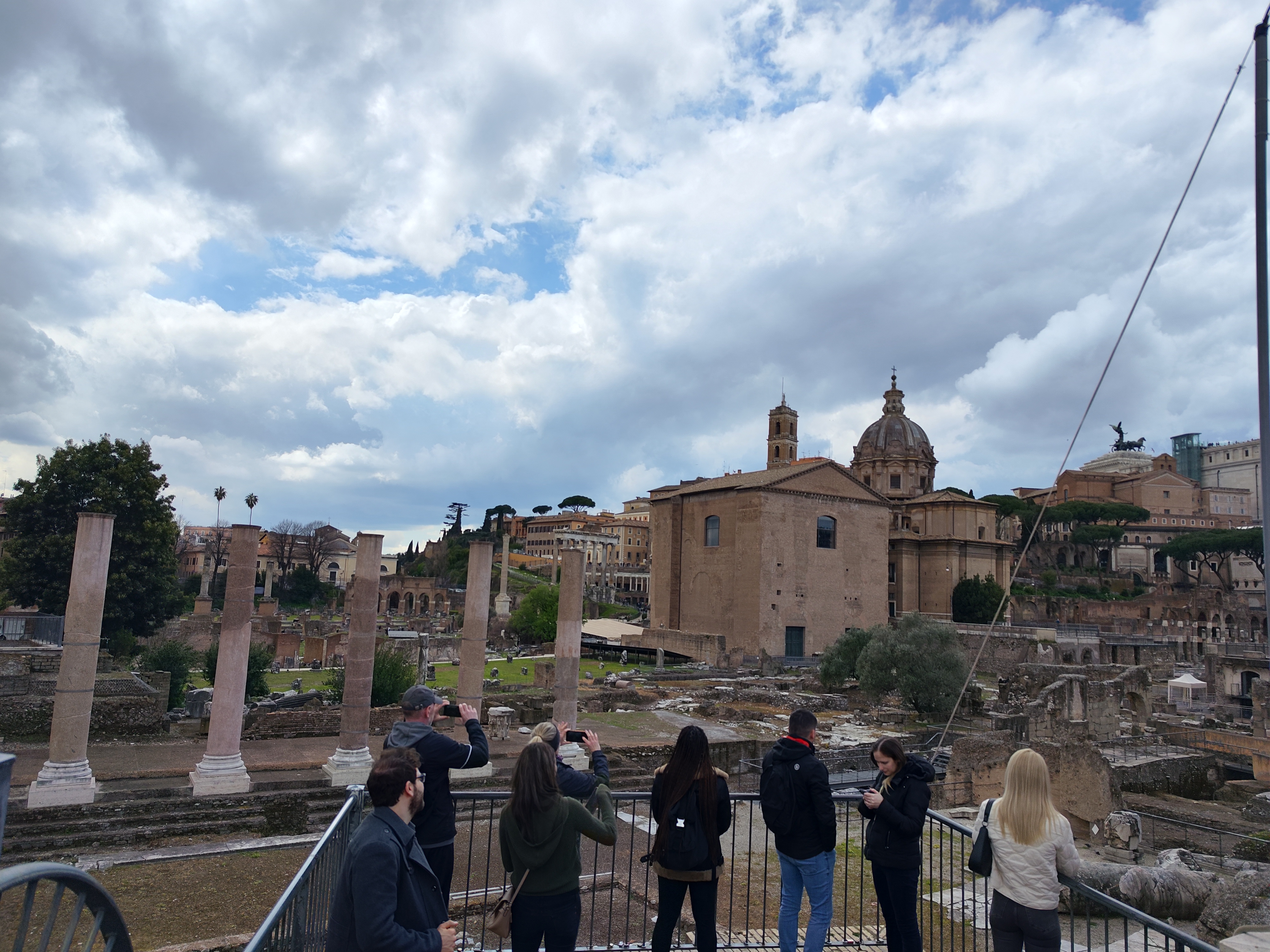
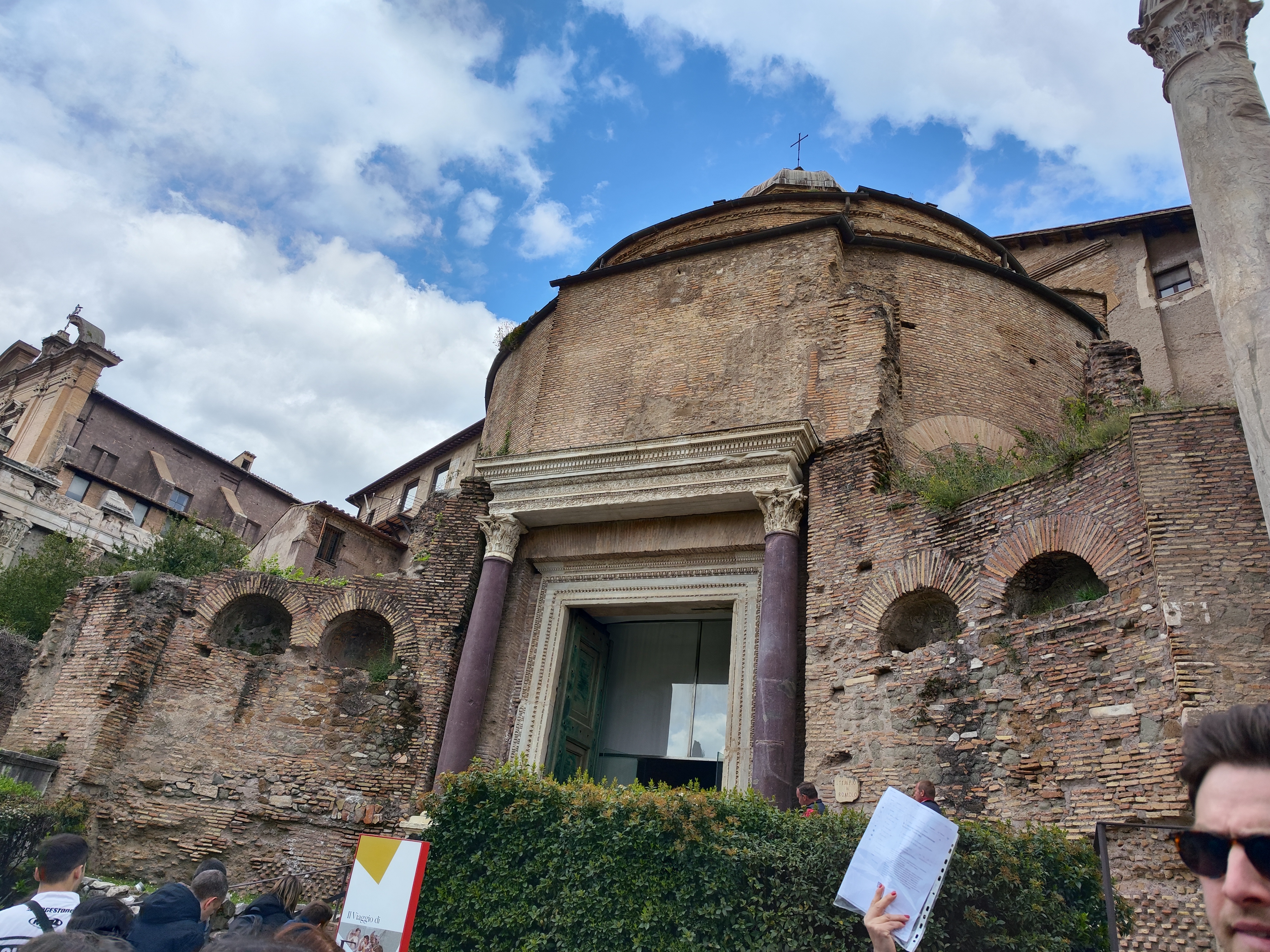

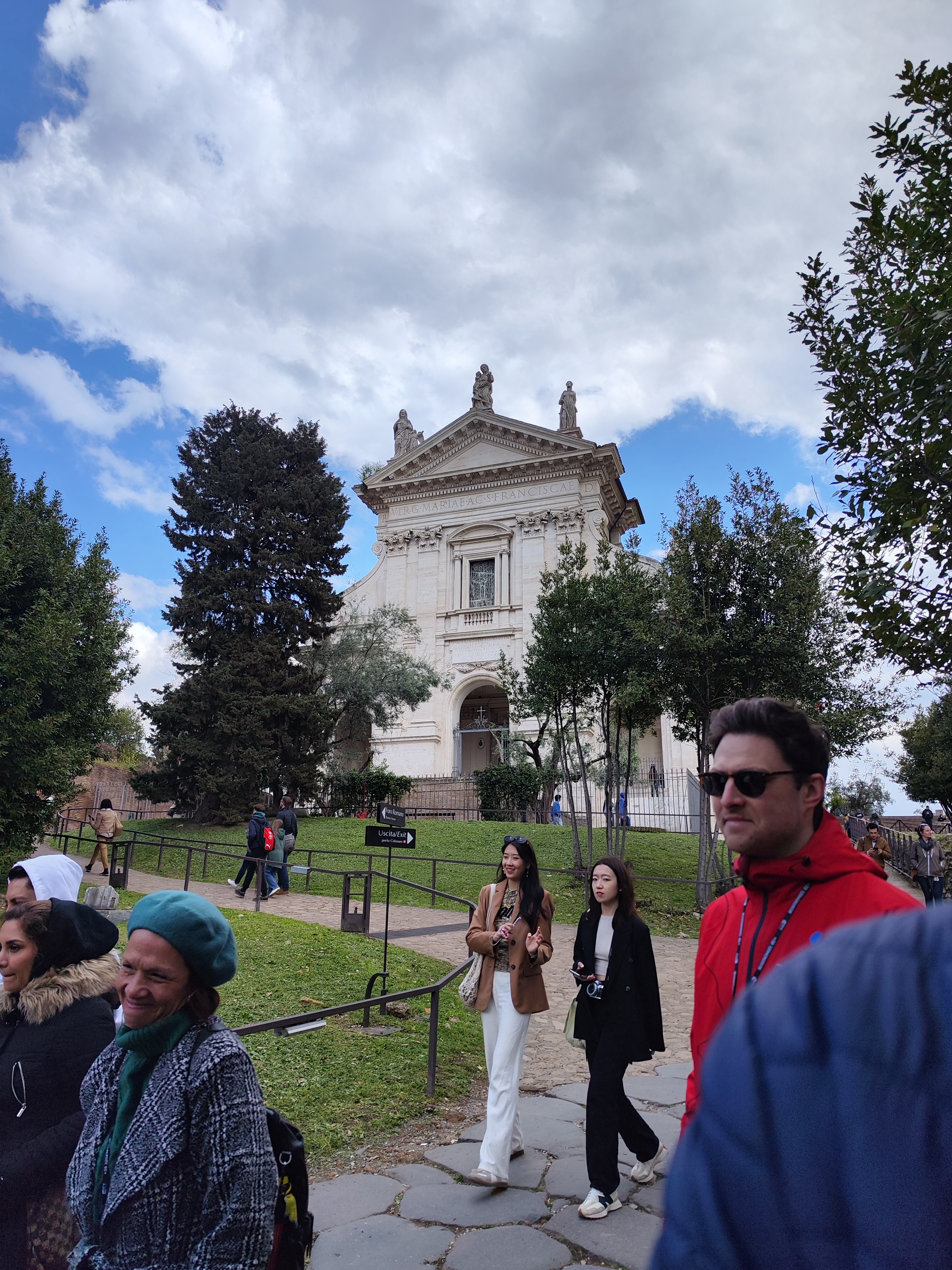
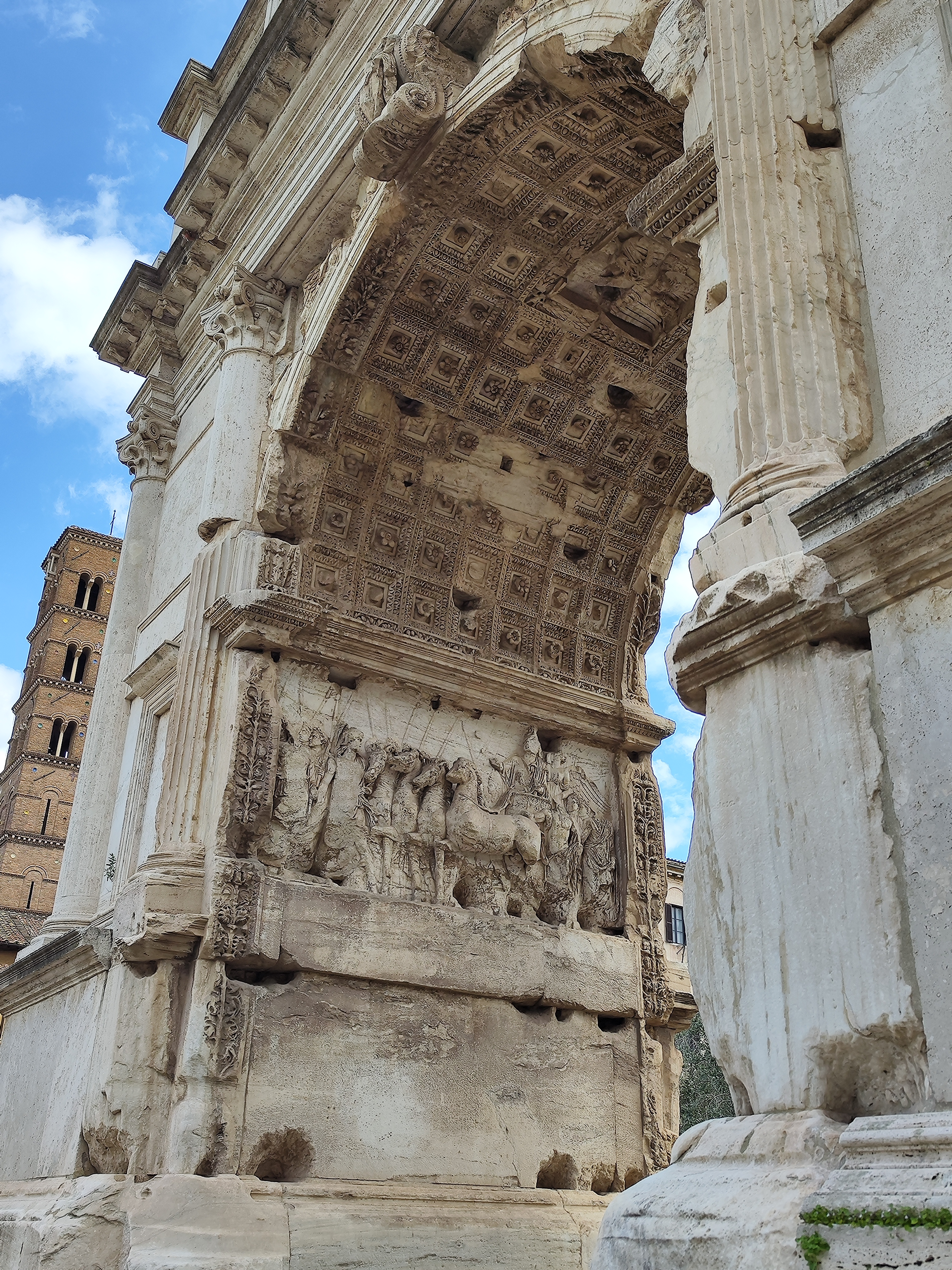

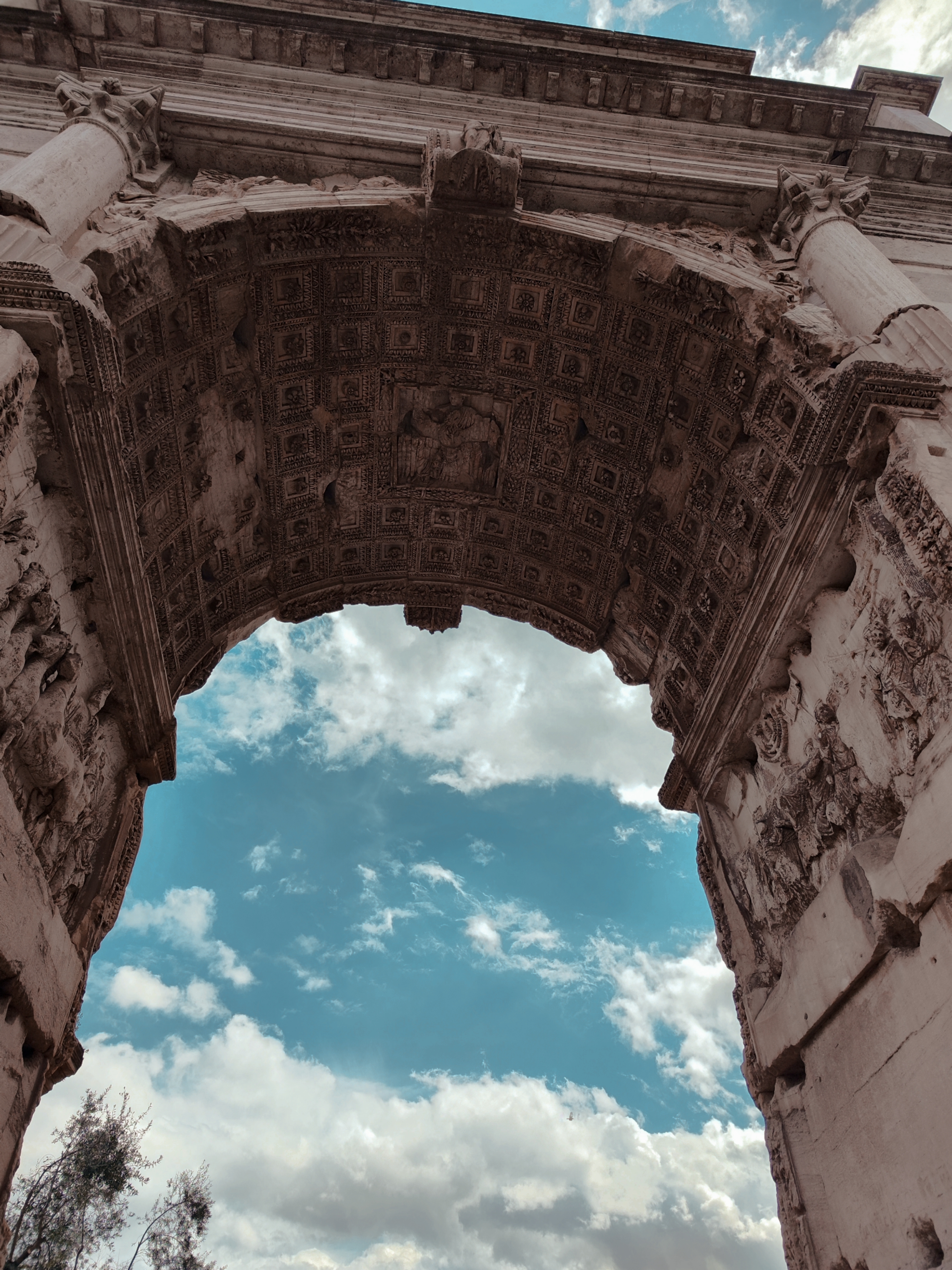
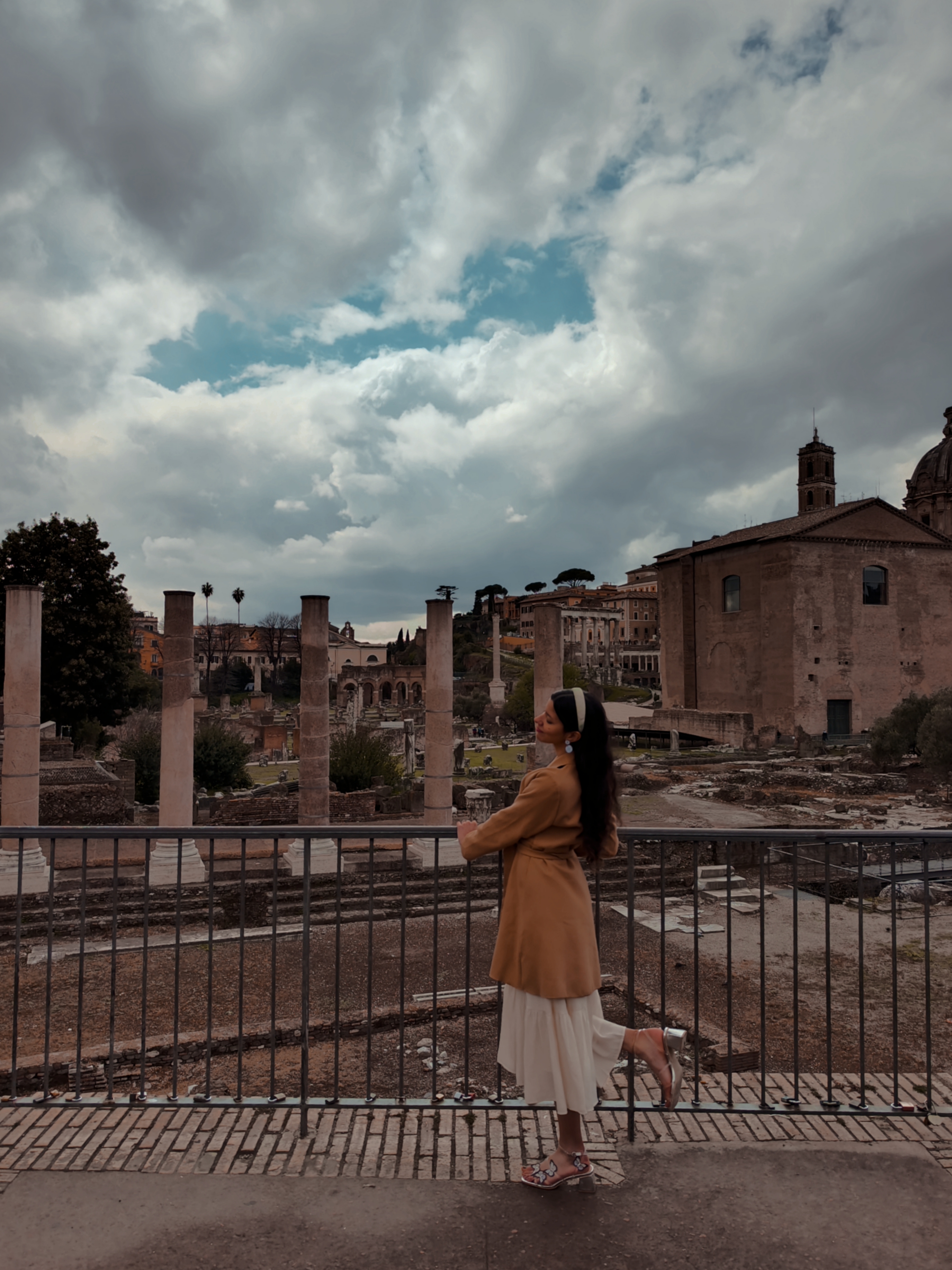
Our last stop was the Temple of Antonino and Faustina, the guide told the men to keep eyes on him, apparently that’s the moment when all the girls complained to their couple.
The temple of Antoninus and Faustina is a temple in the Roman Forum in Rome dedicated to the emperor Antoninus Pius and his wife Faustina. He built it for her after she died to remember their love.
The temple stands on a high podium in blocks of tufa, originally covered externally in marble, accessible using a high staircase on the front (the result of a recent brick reconstruction), with the altar in the centre, of which some remain brick remains. The building consists of a cell, with walls still a square work of peperino blocks (originally it also had a marble facing), preceded by a hexastyle pronaos, with six smooth columns on the front and two on the sides, in cipollino marble, coming from ‘Euboea. They are 17 meters high and have Corinthian capitals. On the side they have oblique grooves that the vulgate considers originally intended to hold the ropes with which they attempted to bring down the building to recover the materials; in reality, they are traces of additions, probably wooden, which must have occupied this part of the temple after its abandonment. On a column (the central one on the left) there are graffiti of statues perhaps once present here, including that of Hercules with the Nemean lion.
Unfortunately, you can’t get inside, the door is way too high for the scalinata, but archaeologists make studying the temple.


And that’s how our morning finished, the guide let us some recommendations to eat, but by the time we were to take the last pictures it started raining, so we chose the closest one on the list, when we gotto the restaurant, it was extremely crowded so we chose the first we find available to sit down.
After lunch, our destination would be: Trevi’s fountain, I thought it was very close by walking, but it was almost half an hour, I got a bit of horse pop on my ankle, disgusting, nothing the fountain and antibacterial gel cannot clean.
As expected, the fountain was crowded, even when dogs were falling from the sky, after we saw what we wanted, we got inside a gelateria, because they say the ice cream in Rome is absolutely delicious so why not try.
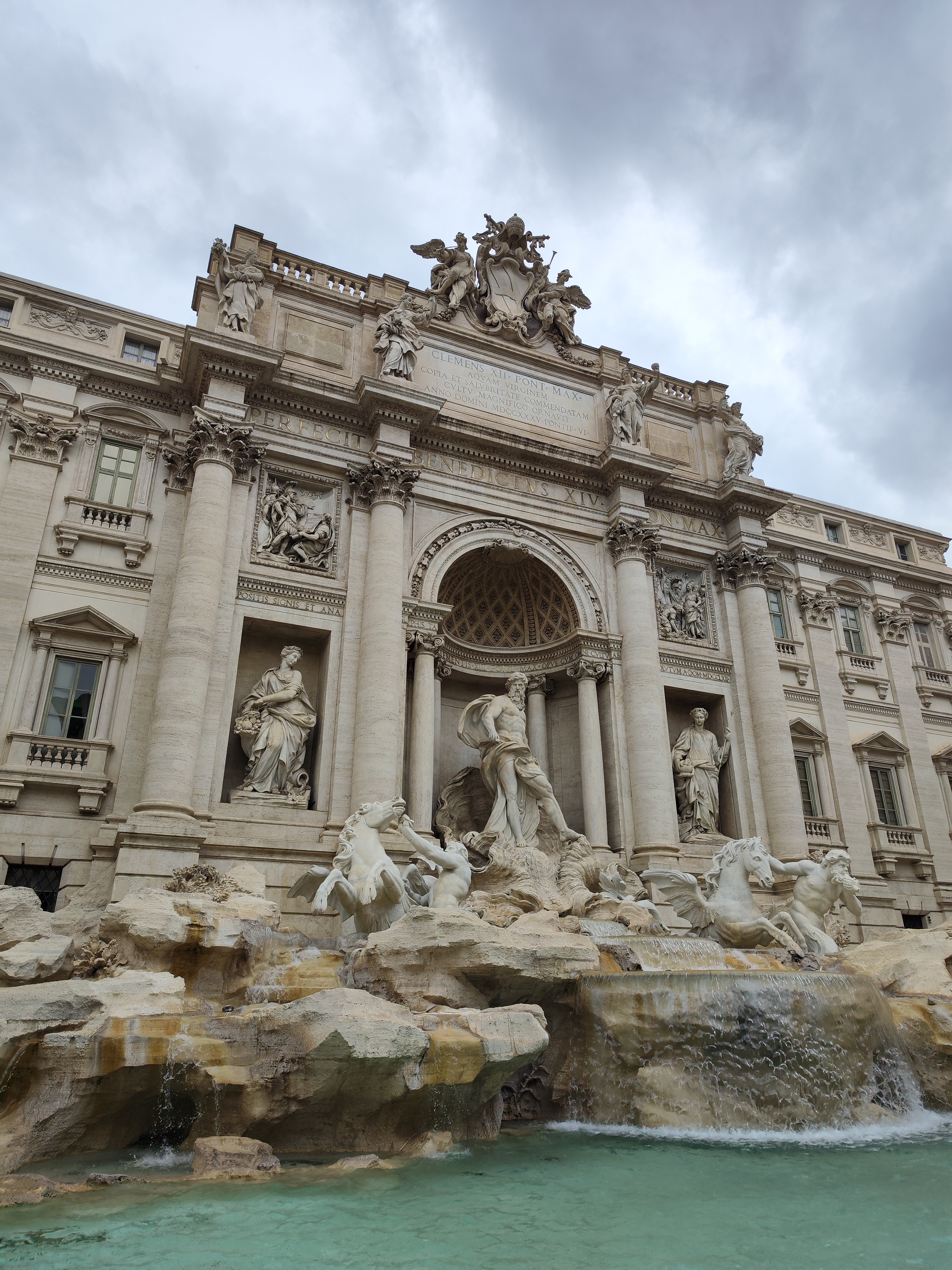
We walked under the rain while eating ice cream, just to let you know how crazy we are, in fact, Isaac got flu after this trip.
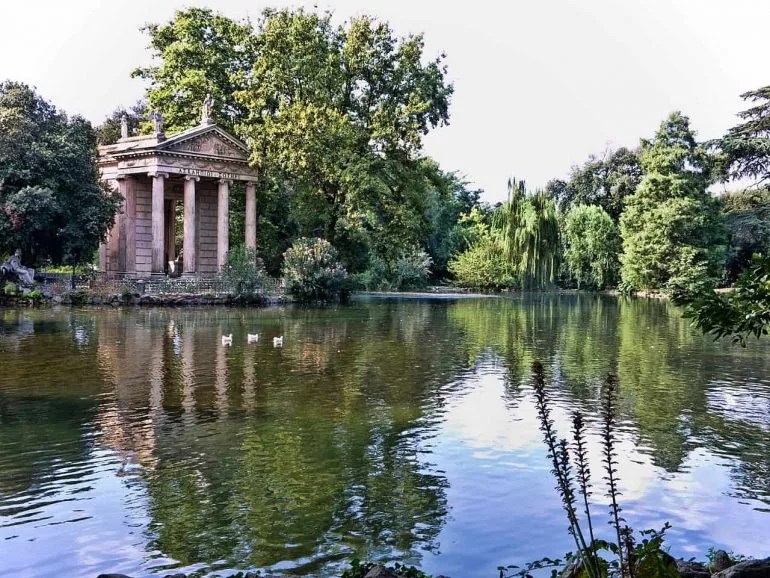
Villa Borghese, where the beautiful garden with a temple is as well, was around 27 minutes walking from Trevi’s fountain, I’m not gonna lie, we stopped several times due to the rain, it was getting annoying, but we made people! we did!
Now, let me tell you a bit about Villa Borghese.
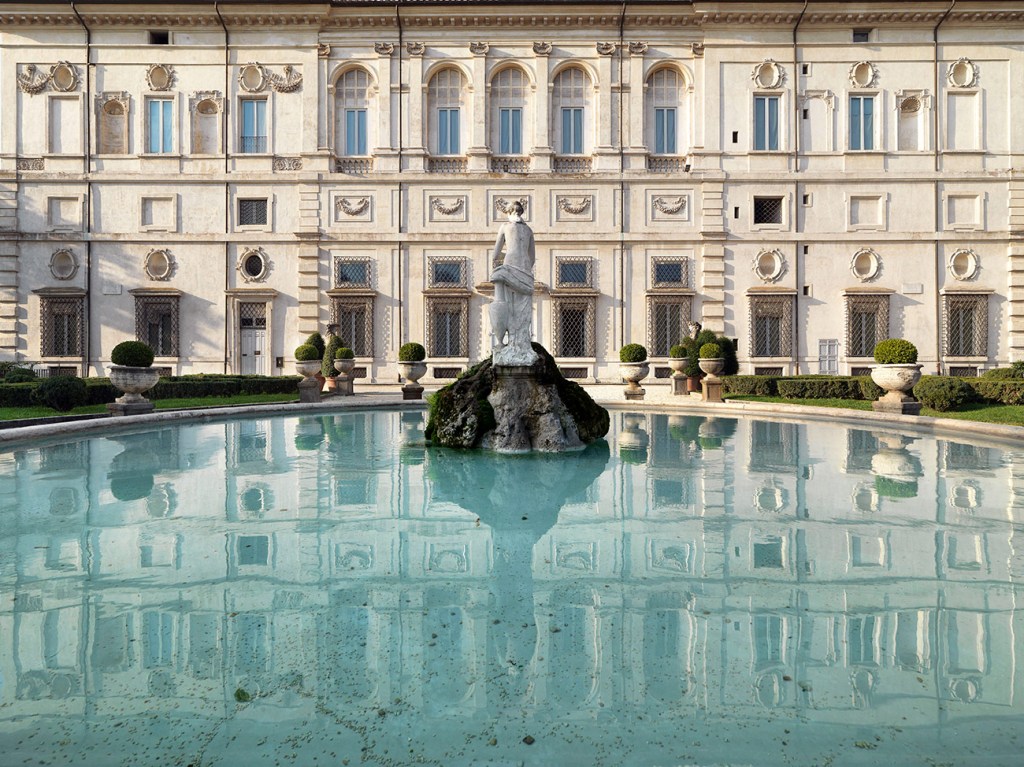
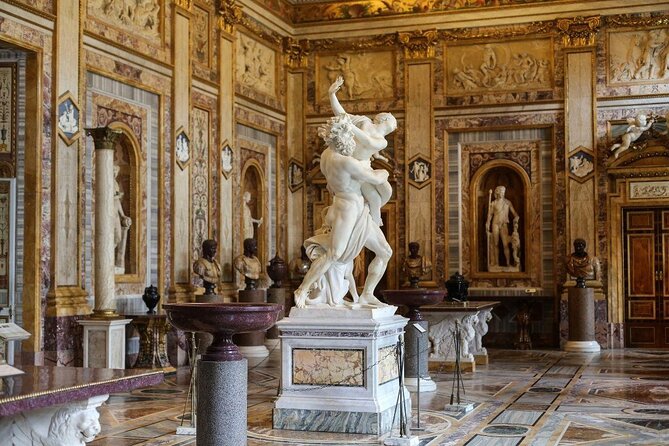
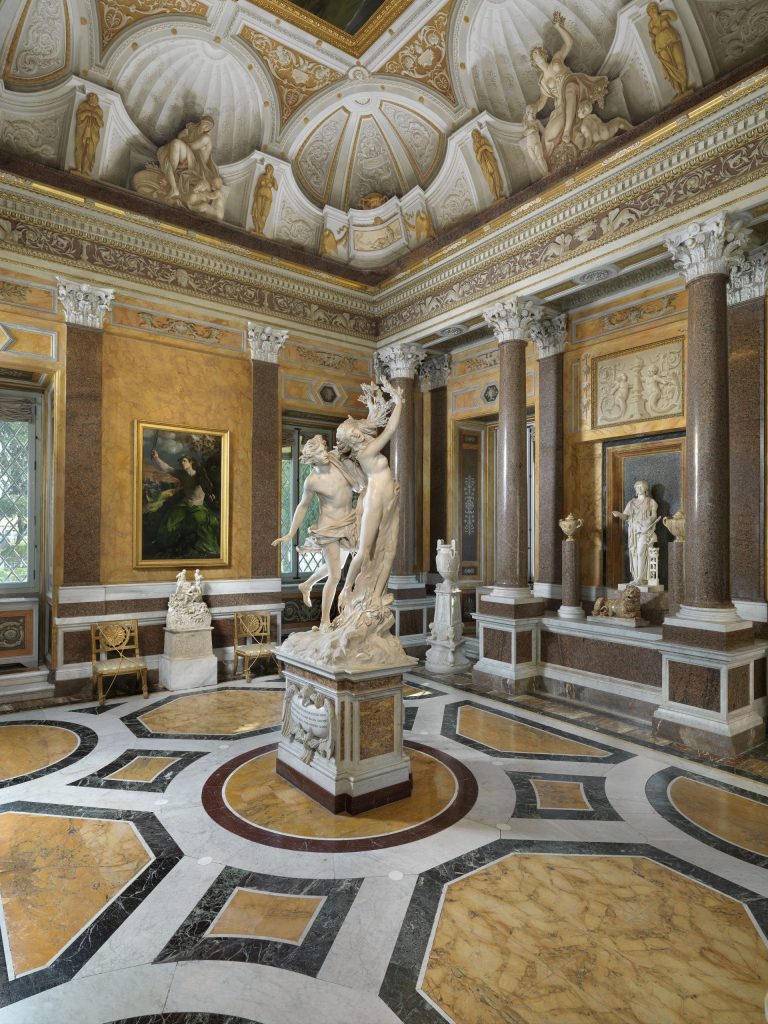
Villa Borghese is a large park in the city of Rome which includes different styles from the garden to the Italian one to large areas of English, stately and stately buildings. It contains in its interior various buildings, museums and attractions such as the Villa Borghese Pinciana, home of the famous Galleria Borghese, with works by Caravaggio, Rafael and Bernini. It is the third largest public park in the Italian capital, with 80 hectares, between the Villa Doria-Pamphili and Villa Ada.
My favourite part of it? Of course, inside the gallery: the Ratto di Prosperina by Bernini Gian Lorenzo, this sculpture got my heart, and from the garden: the beautiful lake with the Temple of Esculapio. Ethereal.
Villa Borghese

Next time I’ll get on the boat!
Quick recommendation, never explore Rome while it’s raining, don’t be mad as we are.
And that was all our trip to Rome, we left the day after in the morning, with a delay of the train as usual in this country, but we had fun, we got inspired and we got more culture to our book adventures.
Hope you had fun with me during this reading, many blessings to you!!
#france #let'shelpaprincess #mountains #paris #part of my origins #portugal #travel #wine adventure architecture art author Blog & Travelling bloganuary bloganuary-2024-02 Buleria dailyprompt dailyprompt-1805 dailyprompt-2026 Dancinggiglio England Flamenco health Holamundo italy martinete motivation Mountains nature notebooks Part of my origins poem poetry Science seguiriya taranto The guitar is like a woman Traditions travel travelling wedding woman writing




 Dancing Giglio