As a traveller living in Italy, I thought it’d be finally time to visit Italy, I didn’t have the time, even if you find it weird, travelling around Italy takes more time than going to another EU country.
This time, after lots of thinking, we decide to go to the historical and magical ROME.
From where I live, going by train to Rome takes around 7-8 hours, my fiancè bought the tickets with FrecciaRossa, which is supposed to be quicker. Our departure was at 13:45 pm, Isaac arrived from the airport at the train station around 11 in the morning, we bought some saltimbocca (his favourite) and I, had a simple salad piadina, while we wait.
Once we got on our carriage, certainly the seats were comfortable, but the trip was going to be long, we’ll arrive at Roma Termini at 18:40, and 19 at the hotel. I’ve never got on a FrecciaRossa before in my life, I usually travel with Regionale to go to uni, except for one time, I got accidentally on one after visiting Isaac and his siblings at Milano.
I must say the travel was quiet, and you get beverages and snacks for free which is good, it was a pleasant trip, but the streets around the train station instead quite dangerous, Caritas of Rome was close and that’s alright, it’s just that the walls looked like they were going to fall beneath us, and lots of people drinking and stuff, fortunately, after 20 min of walking we got to the Hotel.
And here I can tell you people, never in your life get this hotel if you want to stay in Rome for a few days.
Hotel Felice, was more sort of a hostage, with small rooms with shared toilet rooms, no breakfast or other services, except that, according to the putting a basket with croissants, juice and water is breakfast included. And the noise at night was unbearable.
But let’s talk about what we visit in Rome, after all, this is the beautiful part of it.
For the first day, we booked a tour guide to the Museum of the Vatican City, If you’re ever going to visit the Vatican, quick recommendations:
- Wear long sleeves
- Long trousers
- Get comfortable shoes
- Be prepared to feel like tuna on a can

I was going to wear a long tube black skirt with a top and a black blazer, but my fiancè told me you could only wear skirts if they go below the knees, so I wore long trousers.
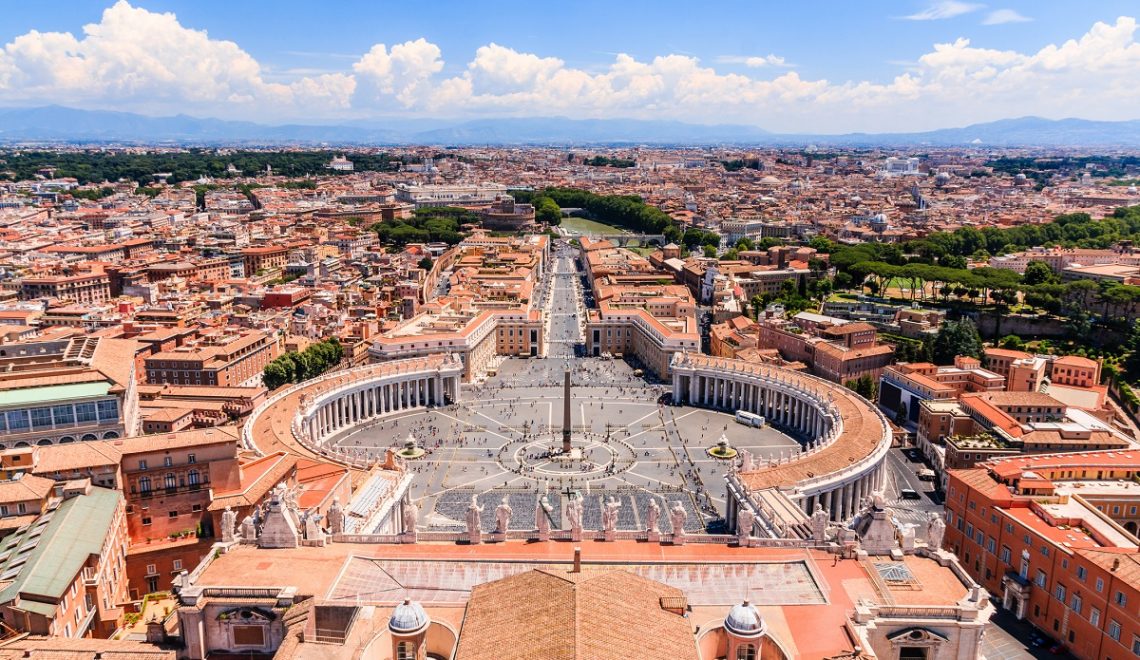
We took the taxi until our meeting point, when our guide gave us some earpads and a monitor to control the volume, and we started our adventure. First thing first, scan even your pants to get inside, and then, once you’re in, a beautiful view of the San Pietro’s Basilica, we were going to pass through different stanzas of the pope to get to the Sistine Chapel, my favourite HAHA.


After getting inside the first corridor we stopped to get an explanation of the volta of the Sistine Chapel, the guide explained you can’t talk inside the Chapel, there are guards inside that don’t allow you to, so she explained the figures.
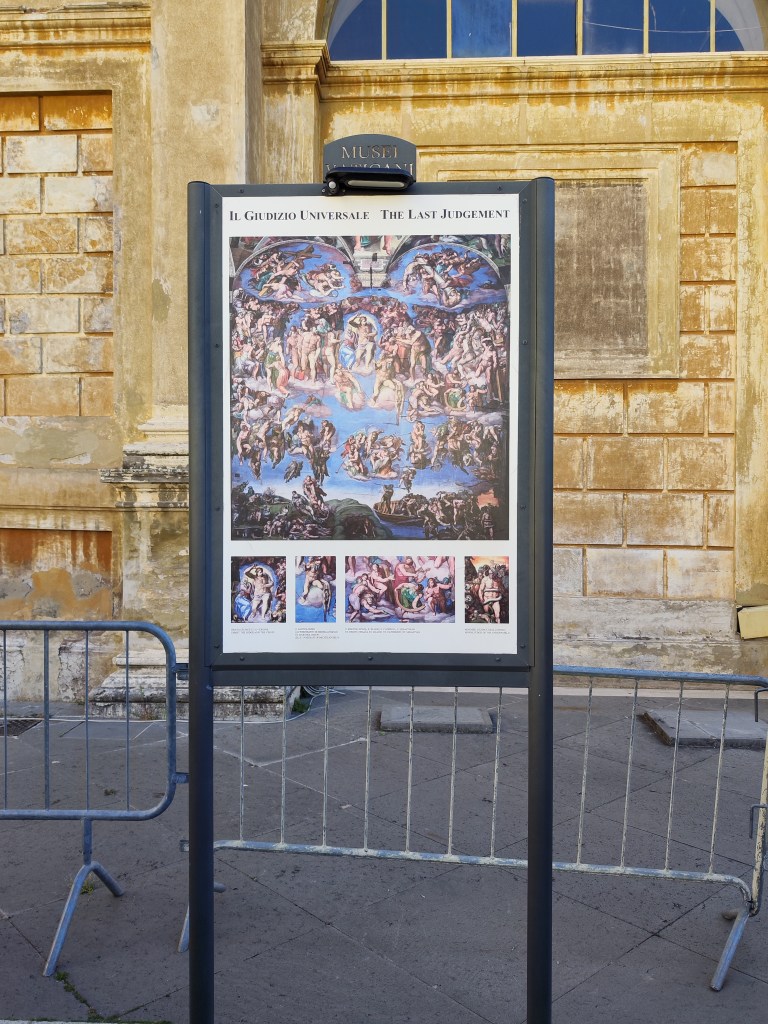
Michelangelo was the master of sculptures, and Pope Sisto, from whom the name of the Sistine Chapel came, asked him to make an affresco of the chapel, la volta and the Universal Judge.
An Affresco is a picture painted on a wall while the plaster is still wet.
For Michelangelo, this task was a bit hard, he has been making sculptures his whole life, so that’s the reason the human bodies look so muscular, and the women were made with male bodies, so they look too buxom.
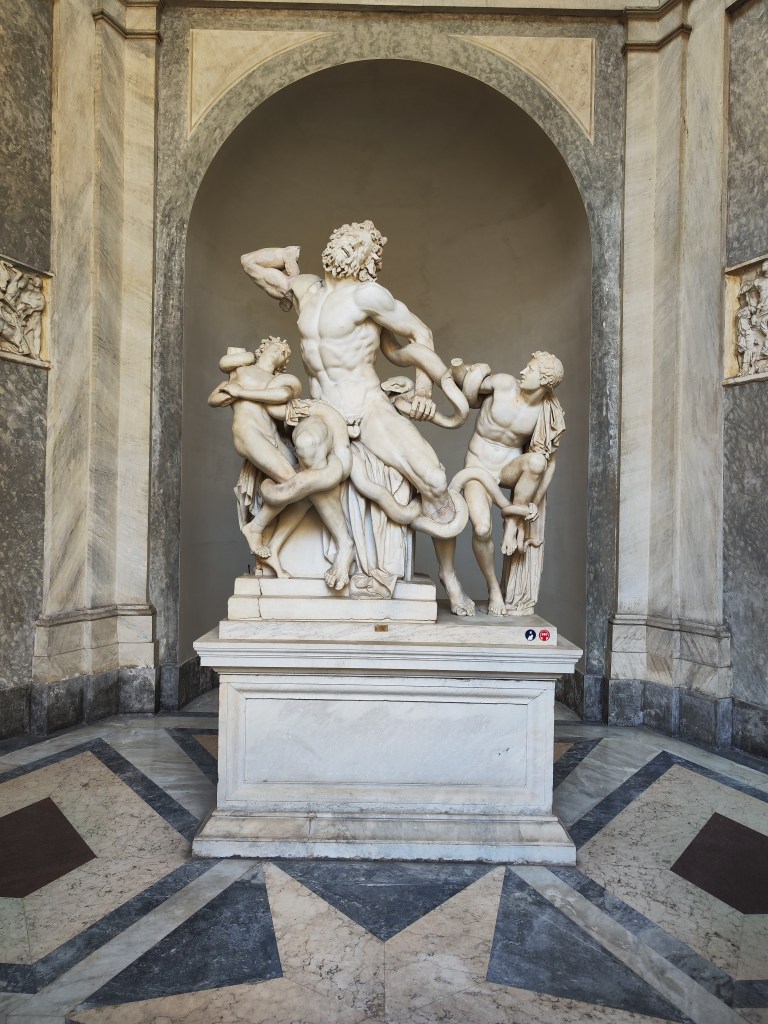
On our way to get to the Sistine Chapel, we saw several sculptures that inspired Michelangelo, such as Gruppo scultoreo del Laocoonte, il Torso, etc, and paintings, like the famous paintings of the rival Raffaello, as well as, many tapestries with political and religious representations.



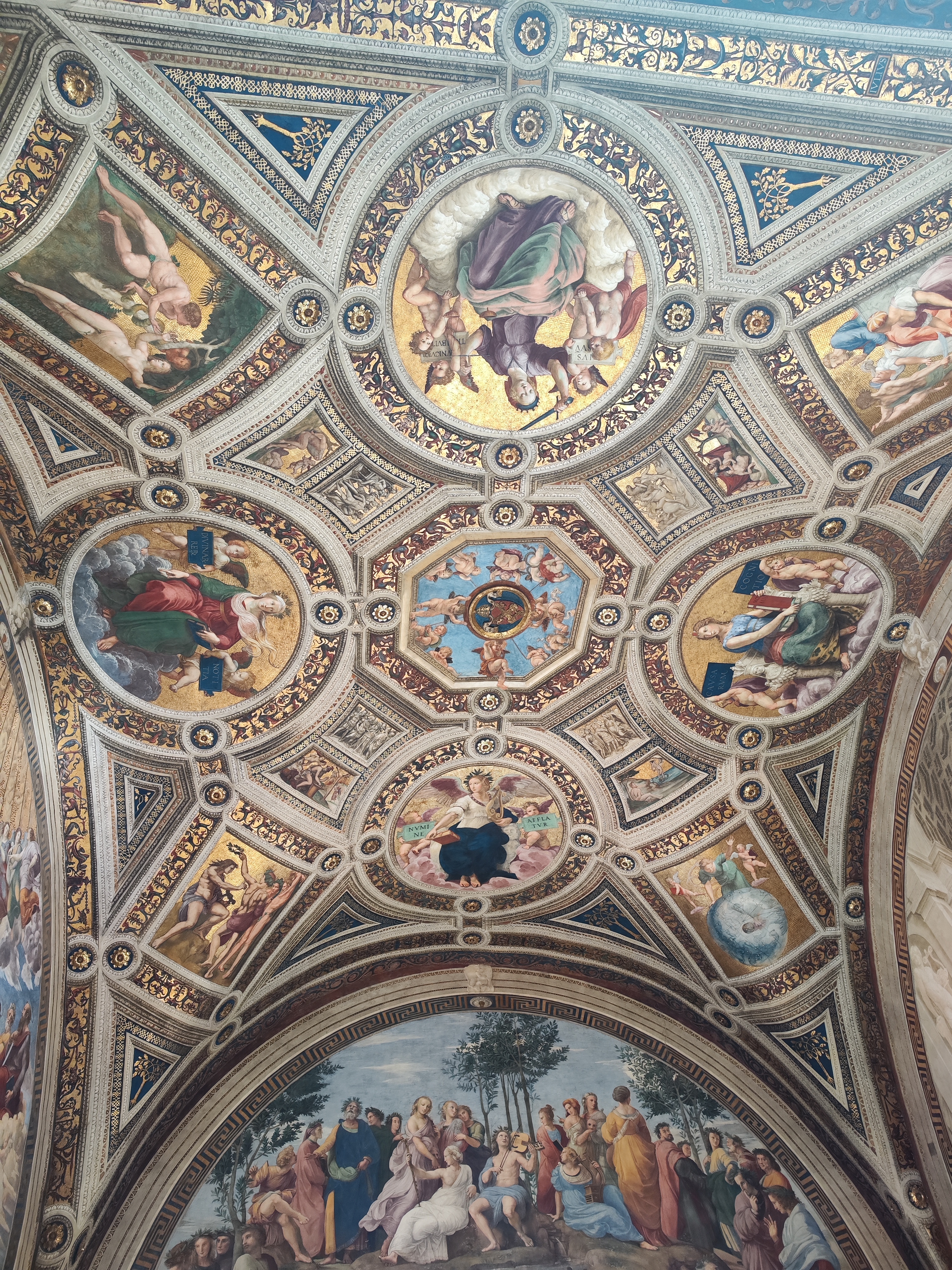
Every ceiling was more impressive than the other, decorated with gold ornaments or made with an amazing perspective of colours.


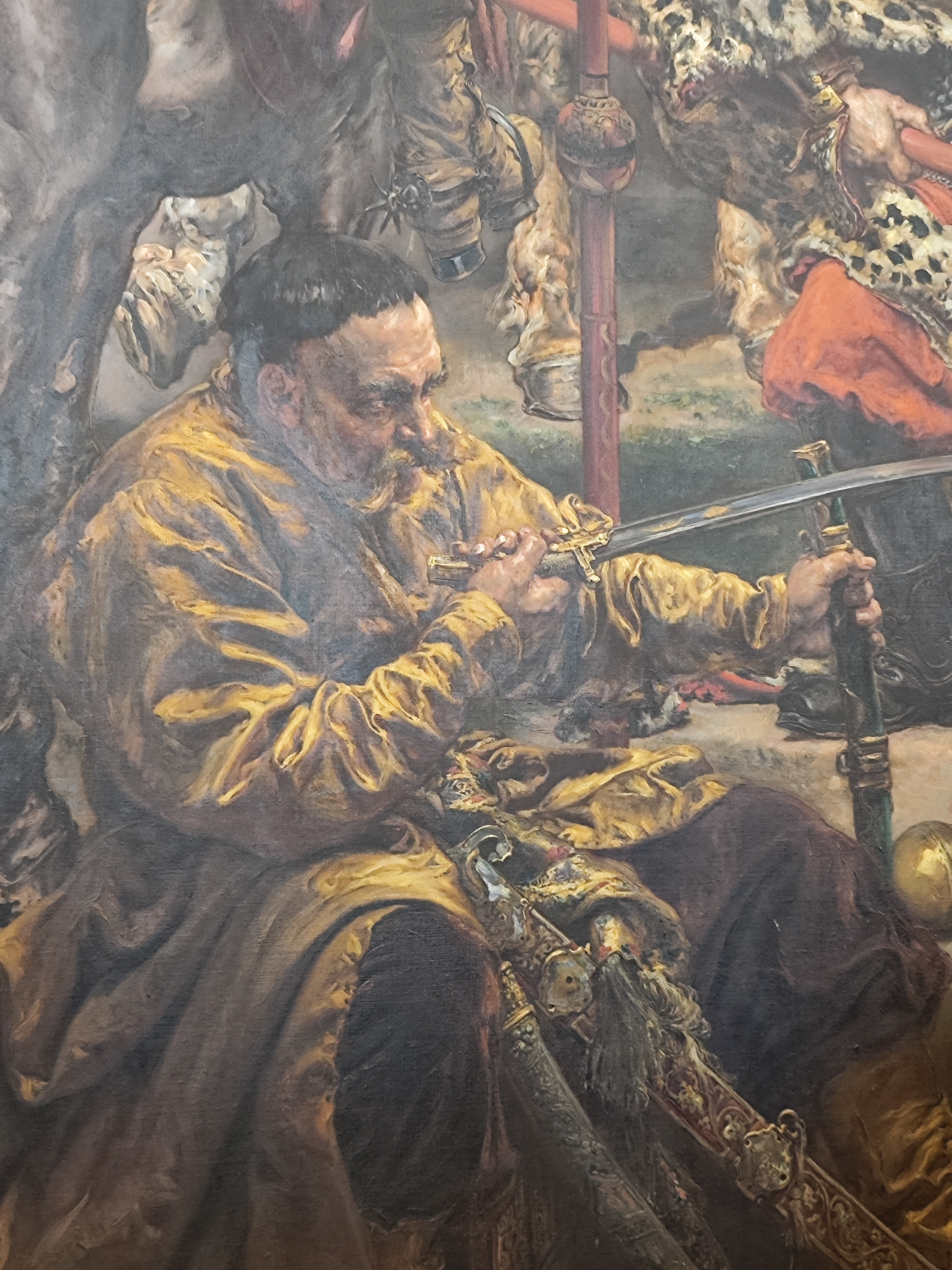

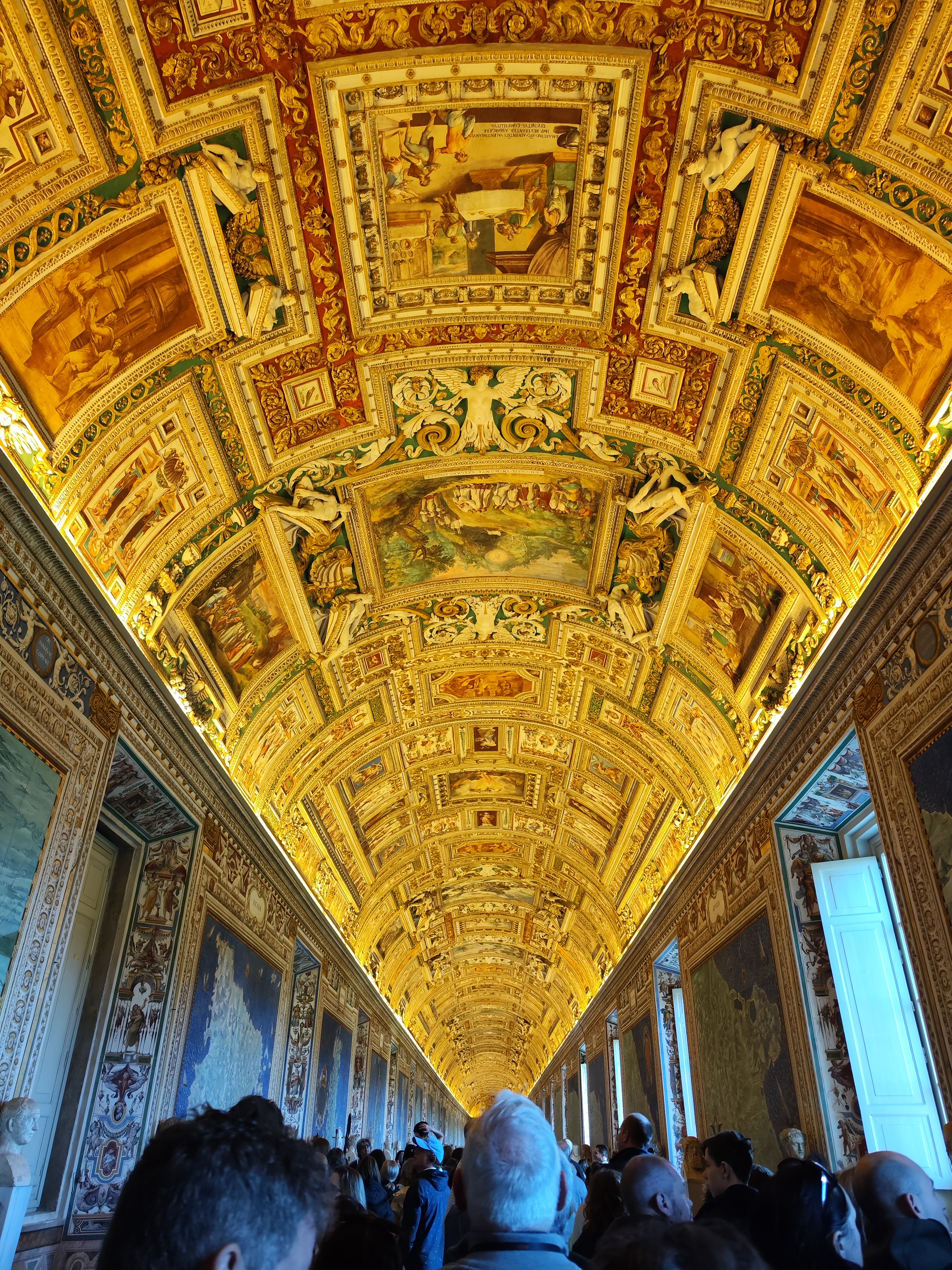

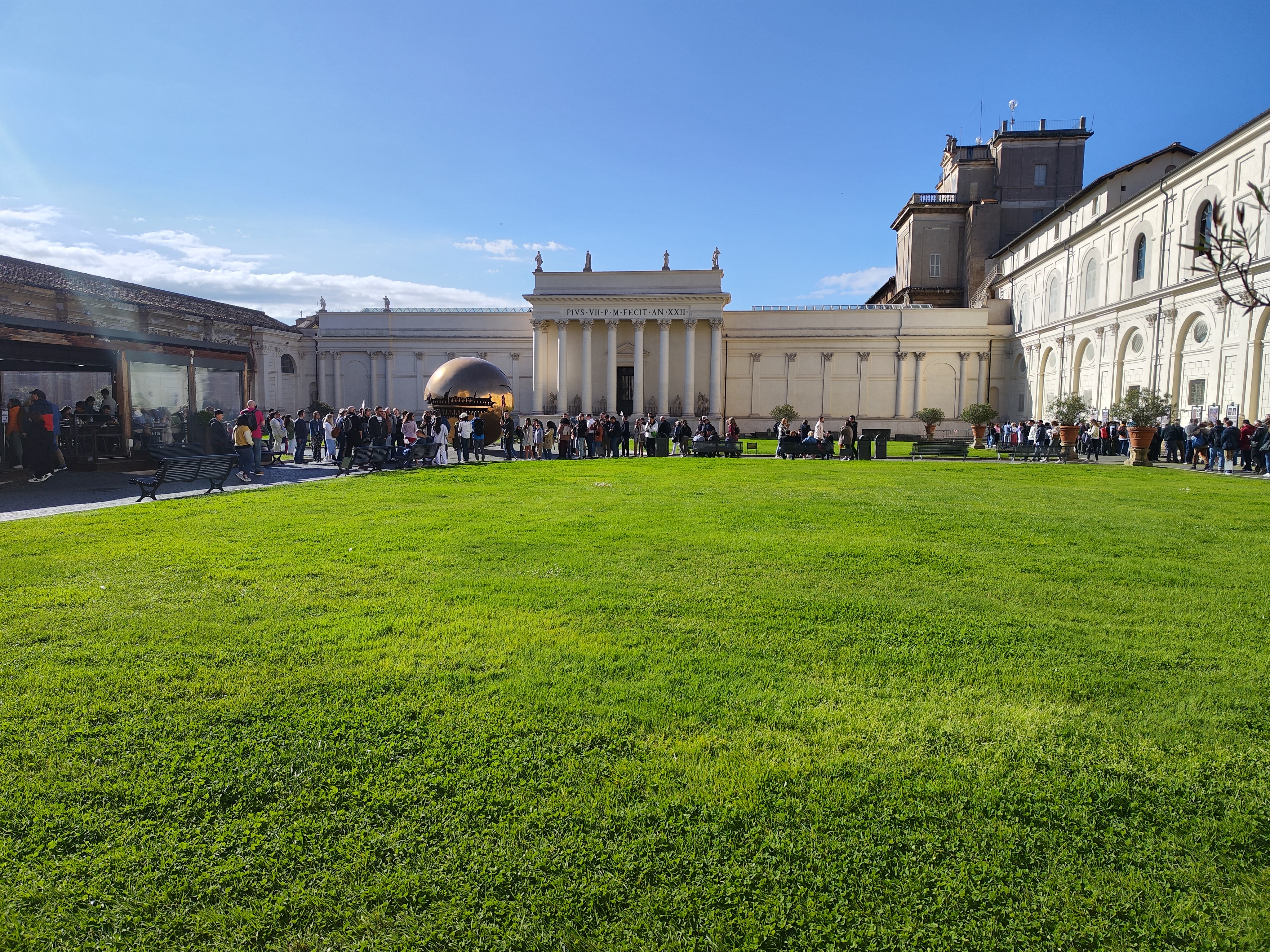
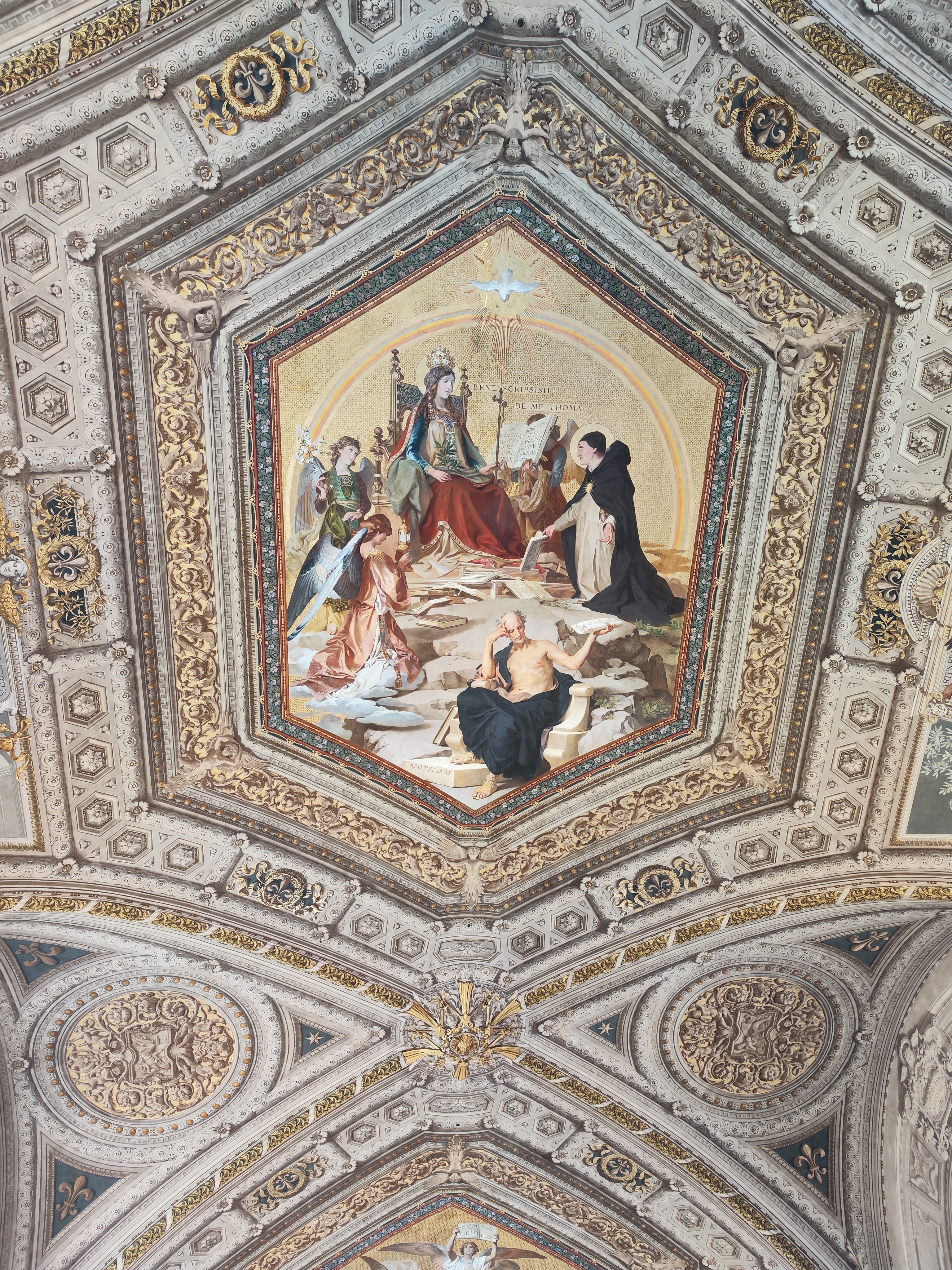

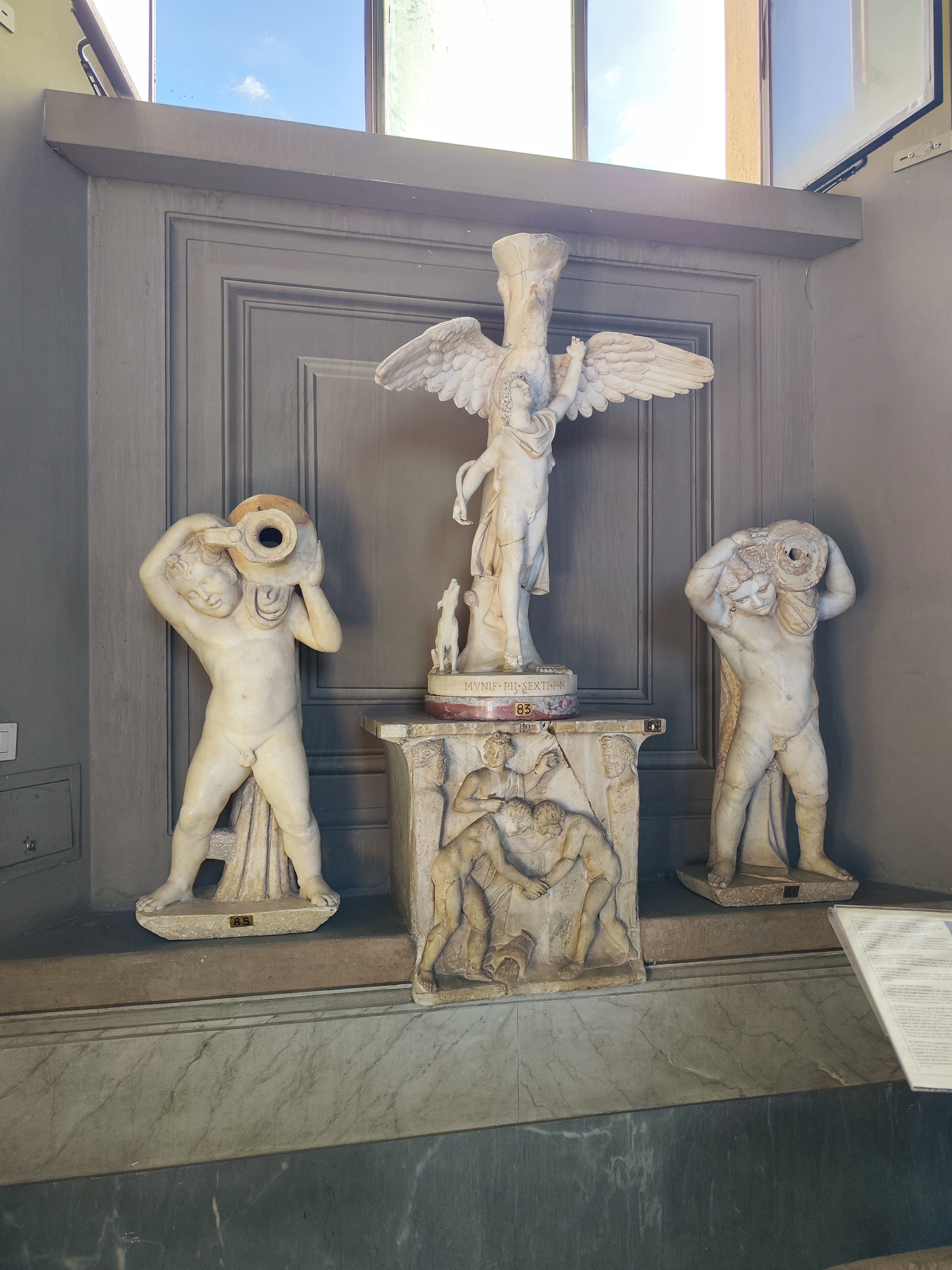
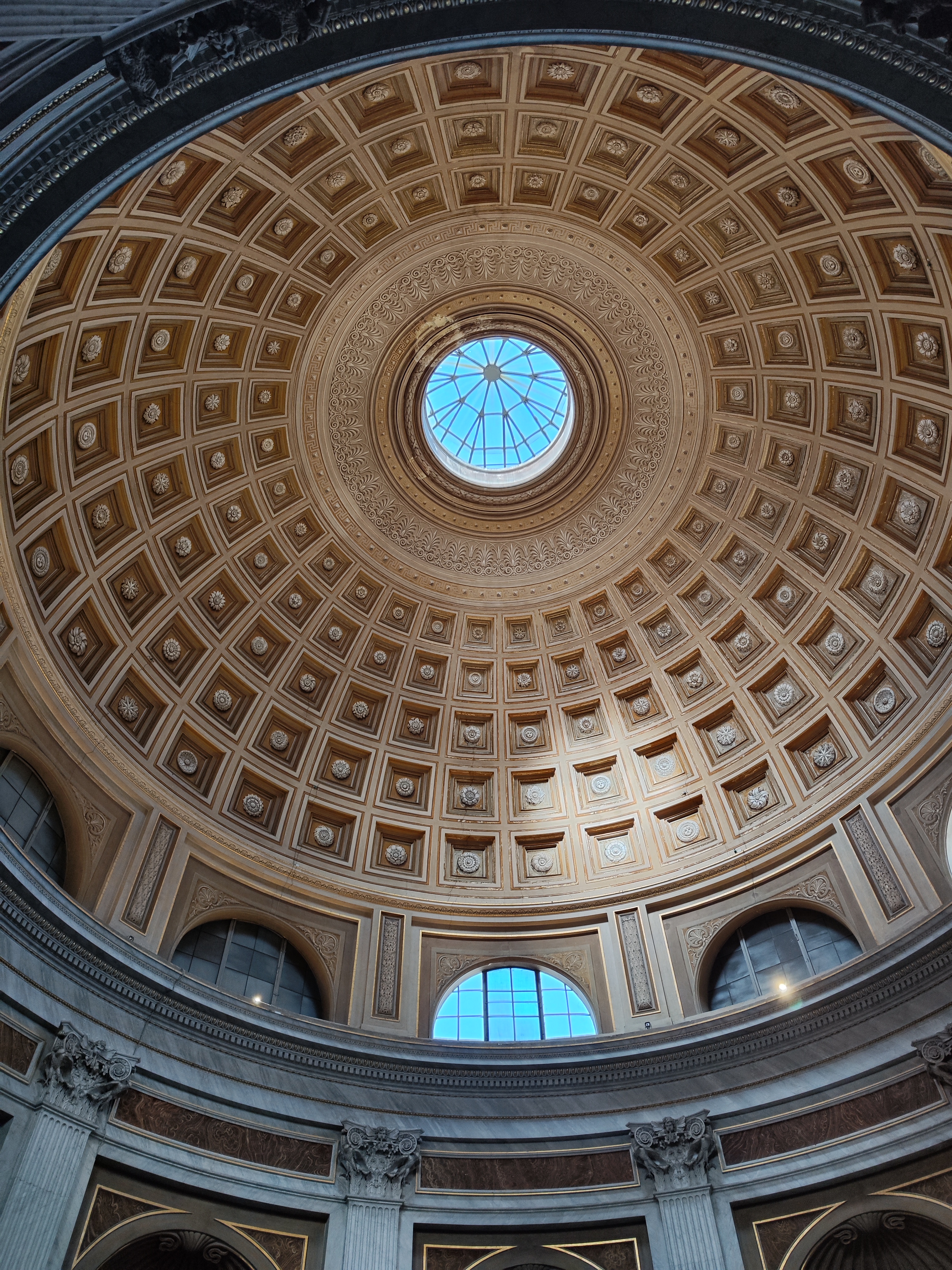
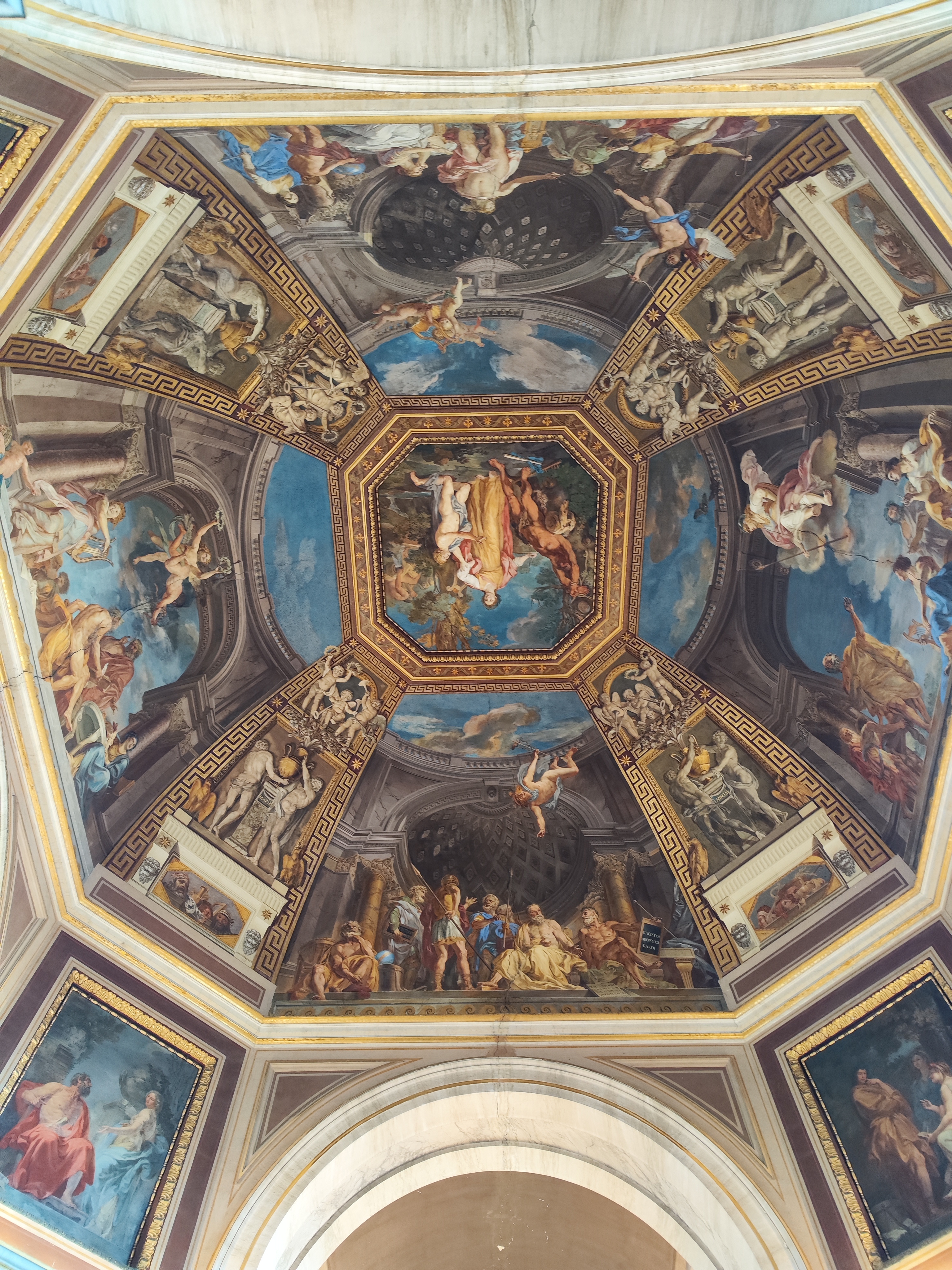
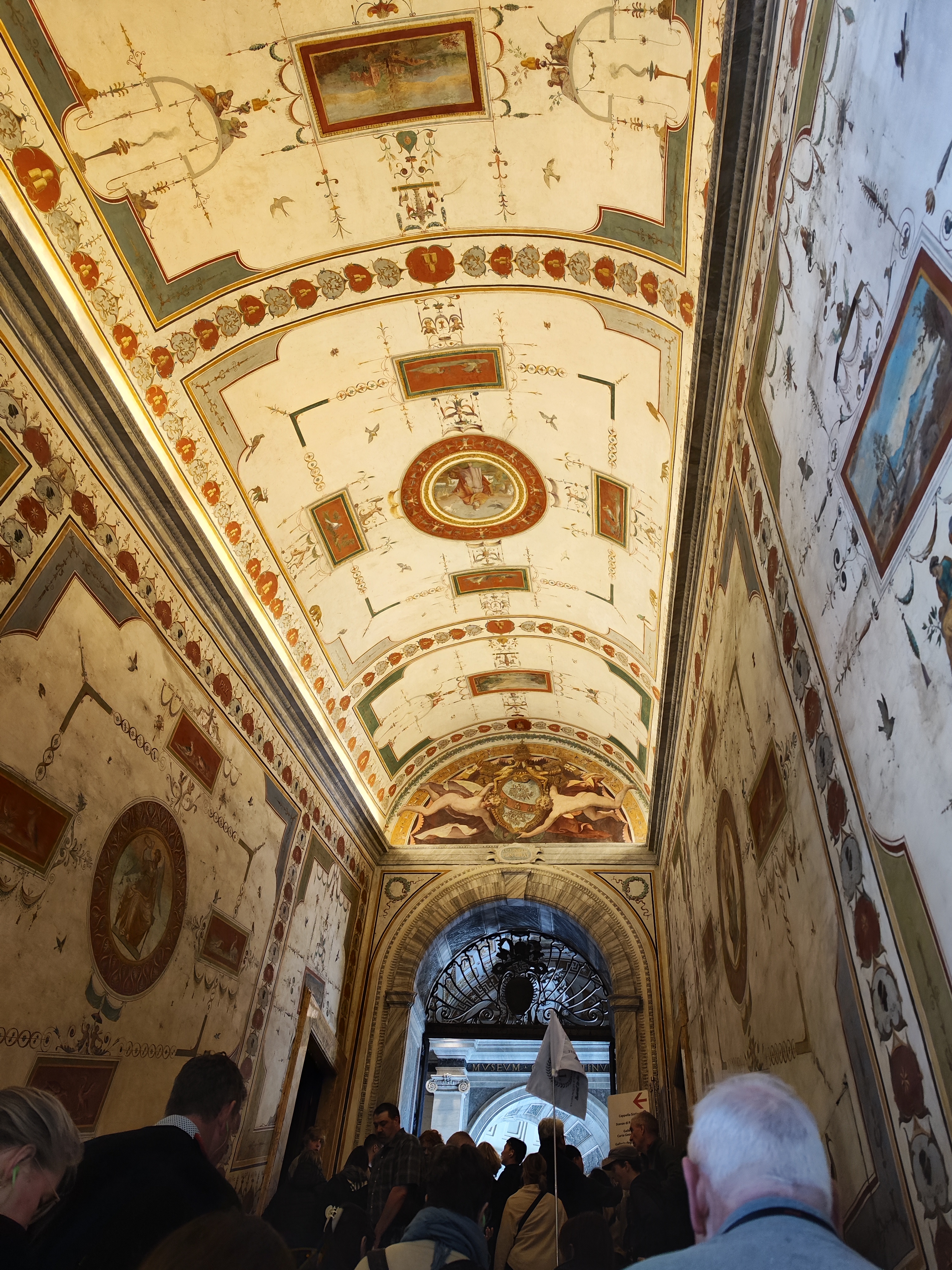
Until… We got there, walked up the stairs, and the guide explained to us, we have to get to the right of the entrance and then get to the centre, otherwise, people will force us to get out.
On the sides of the walls, I recognised most of the paintings, I studied them in art, Botticelli, Raffaello, and Piero della Francesca, but once could only be shocked in front of the marvellous work of the ceiling and the altar wall, it looks like the figures were alive, and they were telling us a story, which was true of course, if you want to read the ceiling, you must start from the centre bottom and going up, where there’s the creation of Adam, Adam and Eve, their expulsion of the Garden, etc.

The Universal Judge instead, it’s the representation of the souls going to paradise (on the left) and the souls going down to hell (on the right), with God at the centre of the painting with some martyrs.
After finishing the delight of our eyes, we got to the main street of the Vatican City which leads you to Saint Peter’s Church.
Basilica di San Pietro
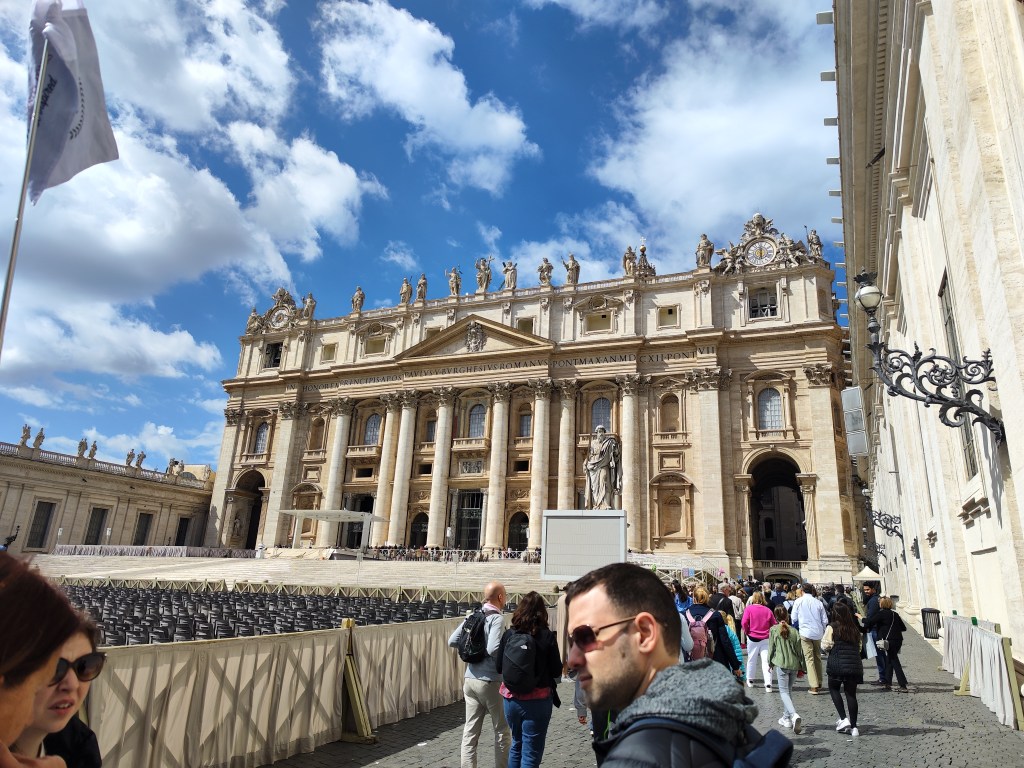
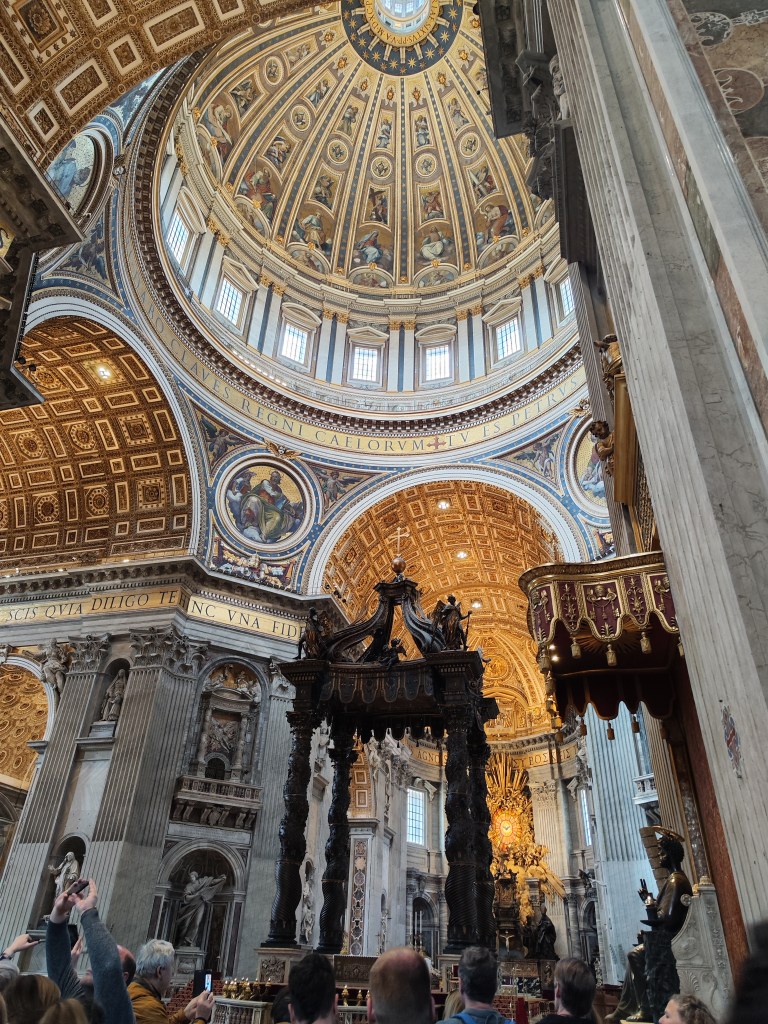

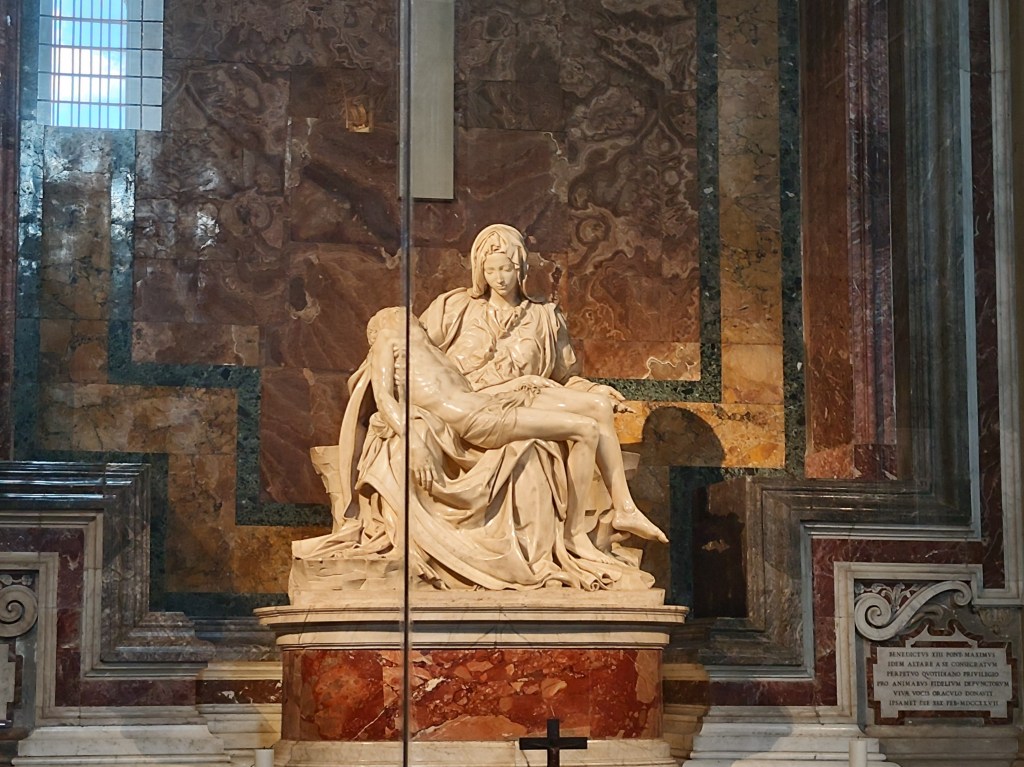
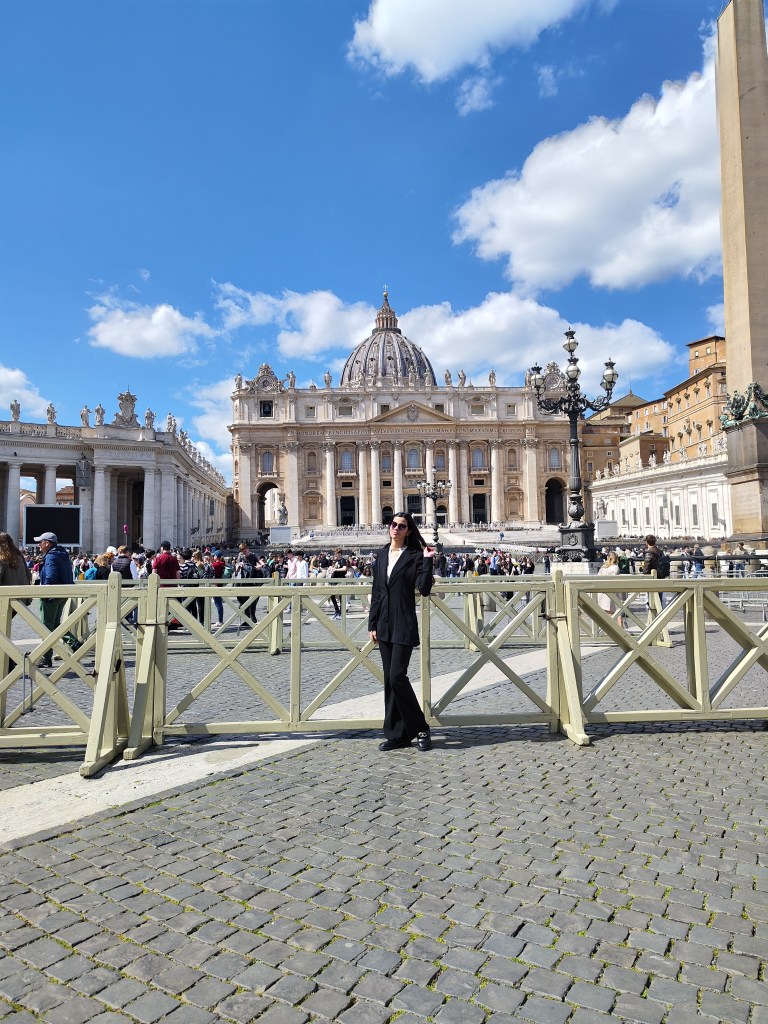

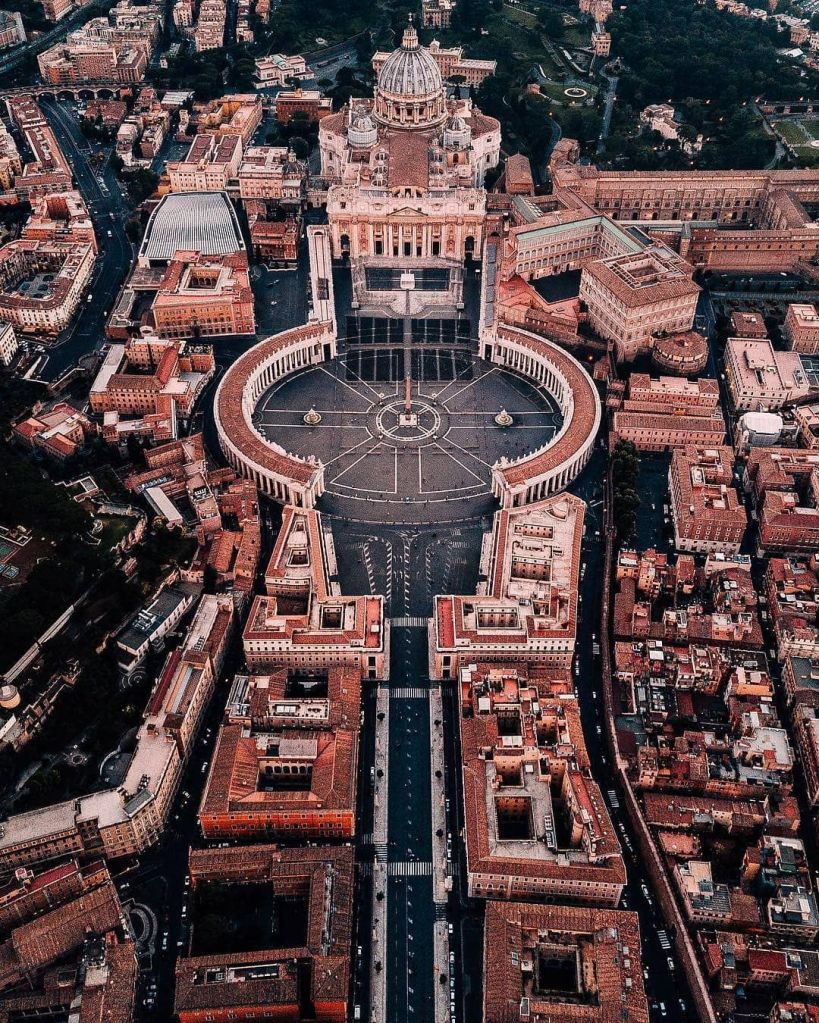
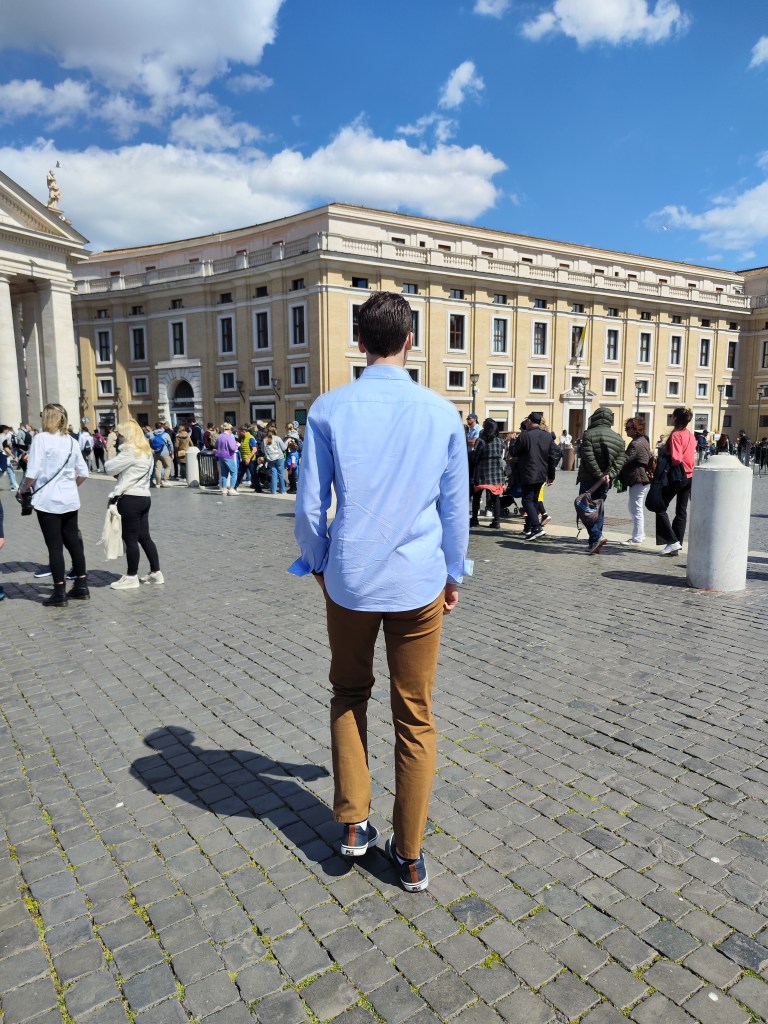
They say, there are plenty of religious relics inside, protected of course, under the altar lies the body of John Paul II. John Paul was the second longest-serving pope, whose papacy spanned from 1978 to 2005. Also, the body of Peter, which is considered the first Pope, is inside the Basilica, close to a sculpture they always dress up for special occasions.
An image preserved of the Velo della Veronica is inside St. Peter’s Basilica in the Vatican.
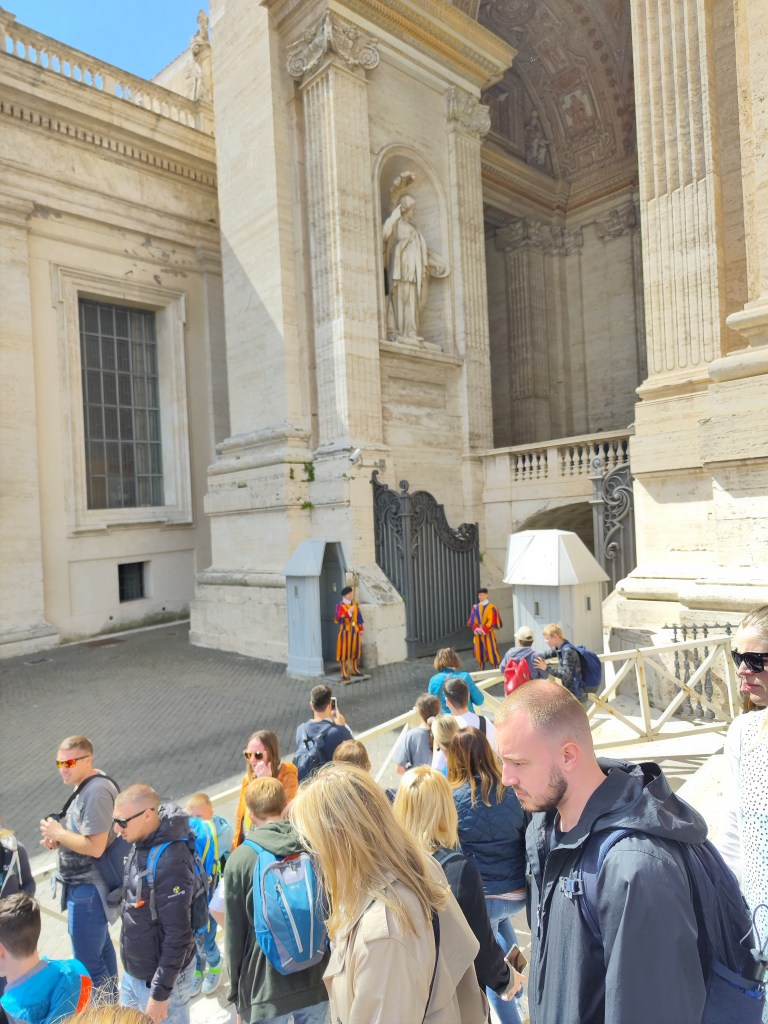
The guards wear interesting uniforms, usually most of them are Swiss, they get double nationality thanks for the service, and it’ll be passed to their children.
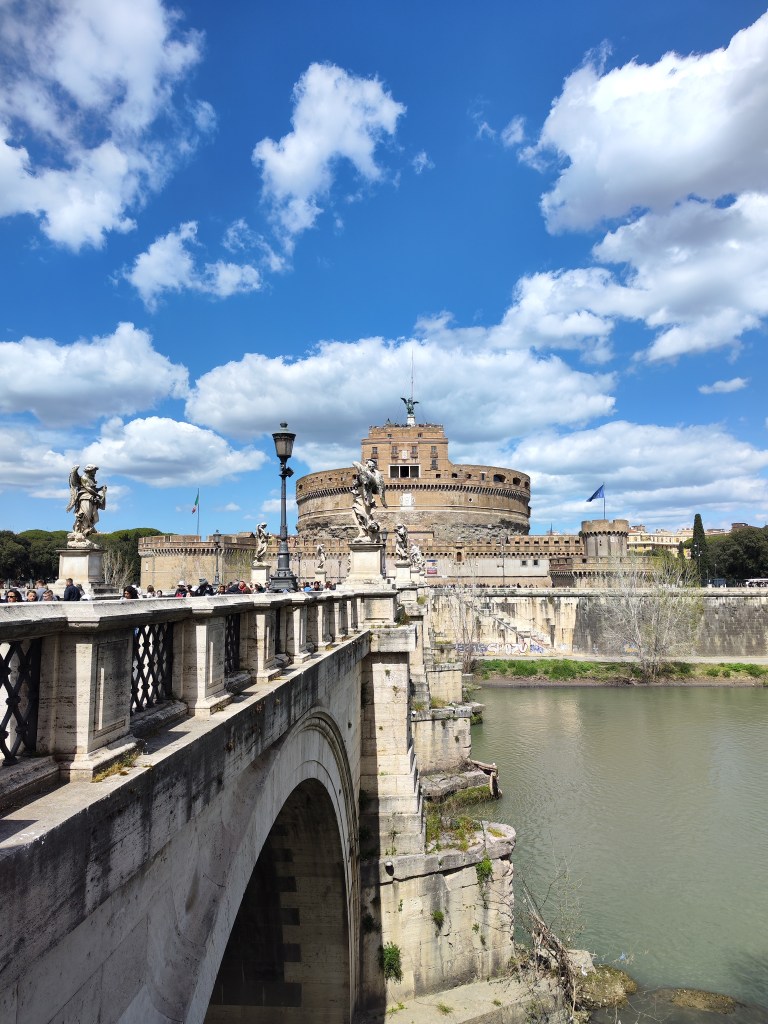
After our marvellous “mattutino” tour, we decided to visit around and find something to eat, on the way out the back of the Castle of Sant’Angelo received us.
You could perfectly book tickets for visiting the Castle inside, we opted to only take pictures of the outside and then get some pizza to eat at the park of the castle.
But come on, let’s talk about the Castle, you might be curious, well, you’d be surprised, but it’s not a Castle…
When the imposing cylindrical mass that we know today as Castel Sant’Angelo sees the light on the right bank of the Tiber, it is not a castle but a sepulchre, and among the numerous statues that decorate it, there are neither saints nor angels. Emperor Hadrian had it built, wanting to guarantee a worthy burial for his and his family’s remains in that large portion of territory on the extreme periphery of Rome known as Ager Vaticanus, whose highly decentralized position together with the ban on burying the dead inside the city causes sepulchres and tombs to line up along the sides of its two main streets – the Cornelia and the Triumphalis.
One in particular, certainly modest and inconspicuous, is the object of continuous pilgrimages by small groups of Christians: it is said that the apostle Peter is buried there, crucified not far away in an unspecified year between 64 and 68. The presence of this memory will decisively condition the developments and evolutions that will invest the Mausoleum, the ager vaticanus and the entire city of Rome.
Built starting from the simple and clear-cut shapes of the circle and the square, it probably consists of a quadrangular base on which two cylinders of decreasing size are superimposed, perhaps crowned by a hanging garden of evergreen plants; at the corners of the base, there are groups of bronze statues depicting men and horses, while on the top stands a quadriga also in bronze driven by the god Helios and flanked by a sculpture portraying the emperor.
Of this original Roman structure, today almost unrecognizable, conspicuous remains survive, such as the foundation structures of the base, the entire masonry core of the cylindrical body, the monumental entrance made of stone blocks, the helicoidal ramp that leads to the upper floor and the burial chamber, the so-called Sala delle Urne, intended to house the emperor’s remains. The complex – whose construction work began around 123 AD. – it was only completed in 139 AD, one year after the emperor’s death, by his successor Antoninus Pius; for about 150 years the sepulchre diligently fulfilled its function, welcoming the remains of the Antonines.
The last emperor whose deposition is known for certain is Caracalla, killed in 217 AD, however, the tomb probably also houses the bodies of his successors, at least until its inclusion – as a fortified outpost – in the walls wanted by the emperor Aurelian in 271 AD. Hadrian’s building definitively abandons its function as a tomb to assume that – which will prove to be crucial starting from 476 AD when the Goth Odoacer deposes the helpless Romulus Augustus decreeing the end of the Roman Empire – of the fortress.
Interesting, isn’t it?

Going back to our tour, I changed my trousers with my skirt btw, it gives me more style with the outfit, anyways, our next destination will be: The Pantheon, you could get inside for free, and we love free tickets, right?
The Pantheon is composed of a circular structure joined to a pronaos in Corinthian columns (eight frontal and two groups of four in the second and third row) which support a pediment. The large circular cell, known as the rotunda, is surrounded by thick masonry walls and by eight large pylons on which the weight of the characteristic hemispherical concrete dome is distributed. internal environment. The height of the building calculated at the oculus is equal to the diameter of the rotunda, a feature that reflects the classical criteria of balanced and harmonious architecture. Almost two millennia after its construction, the intrados dome of the Pantheon is still today one of the largest domes in the world, and specifically the largest built in Roman concrete.
It was founded in 27 BC. by Arpinate Marco Vipsanio Agrippa, son-in-law of Augustus. Agrippa dedicated it to the goddess Cybele and all the gods. It was rebuilt by the emperor Hadrian presumably from 112-115 until 124 AD. circa, after the fires of 80 and 110 AD. had damaged the previous construction of the Augustan age.
The cupola was what got Isaac’s attention. The oculus, which gives light to the dome, is surrounded by a frame of large bronze tiles fixed to the dome, which perhaps continued internally up to the highest row of coffers. A Roman tradition has it that rain does not penetrate the Pantheon due to the so-called “chimney effect”: in reality, it is a legend linked to the past, when the myriad of candles that were lit in the church produced a current of warm air that rose towards the high and which, meeting with the rain, nebulized it, thus cancelling the perception of the entry of the water.


Once we got out, there were other places close to visit, but we were already tired, so we decided to visit tomorrow, after the Colosseum, the Trevis’s fountain, and the rest we planned.
Another recommendation for readers: Pay attention to the foreigners around that have products and stop you out of a sudden, they steal your money, I care about you, so, pay attention, nothing against them, I am a “foreign” myself, but still, be careful.
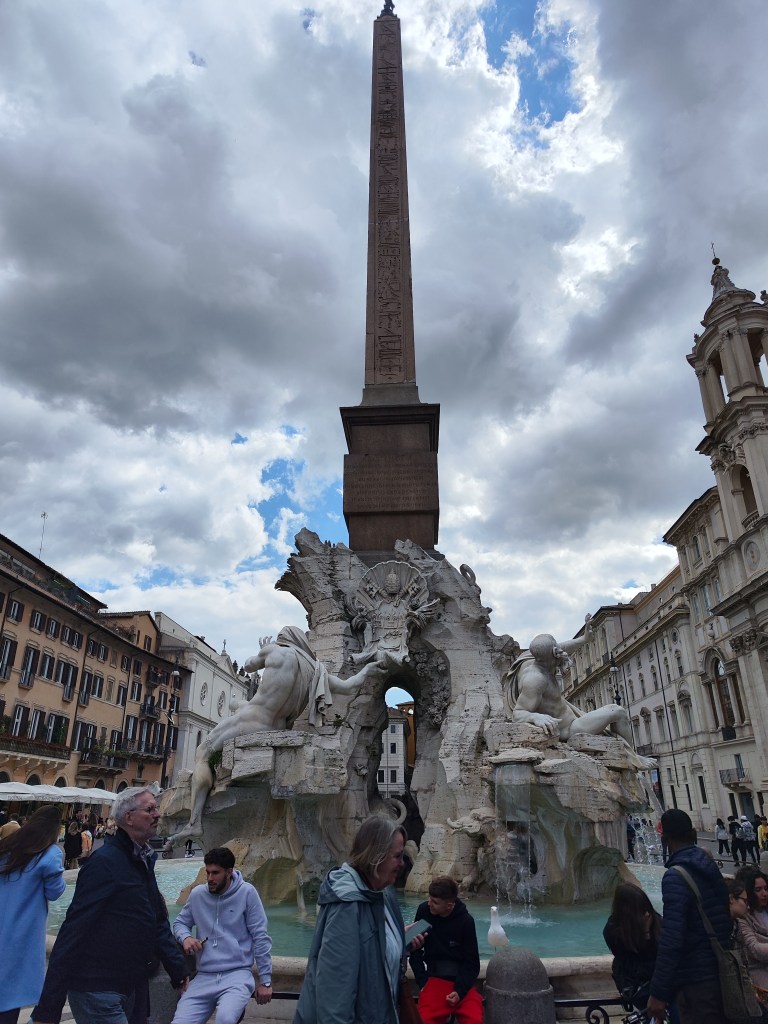
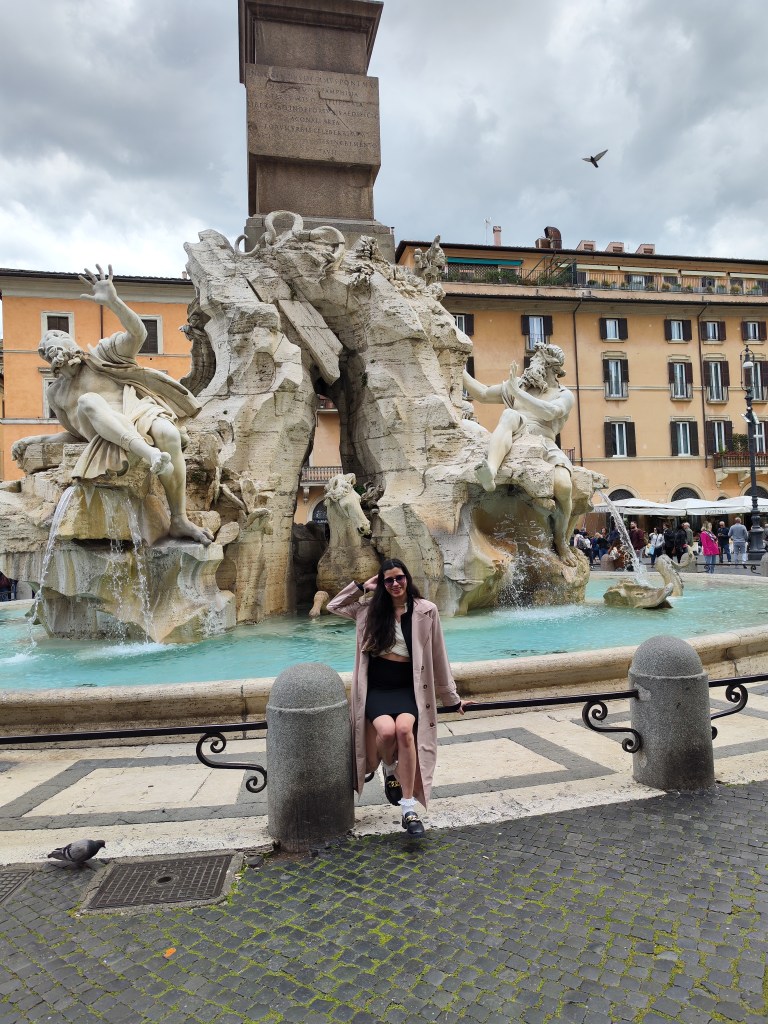
Before getting to the Hotel, we stopped at Piazza Navona, which is one of the famous Piazza, and then Piazza Spagna, where we took the metro to the hotel.

See you tomorrow, for the second part!
#france #let'shelpaprincess #mountains #paris #part of my origins #portugal #travel #wine adventure architecture art author Blog & Travelling bloganuary bloganuary-2024-02 Buleria dailyprompt dailyprompt-1805 dailyprompt-2026 Dancinggiglio England Flamenco health Holamundo italy martinete motivation Mountains nature notebooks Part of my origins poem poetry Science seguiriya taranto The guitar is like a woman Traditions travel travelling wedding woman writing

Happy New Year and Feliz dia de Reyes.
2025 was wild — a year of learning, unlearning, and reinventing myself more times than I can count.May this new year gather the very best of who you are: adventures that change you, journeys that open you, passions that set you on fire, dance, writing, drawing, and everything that still waits to be discovered. Dancing…


Athens
Unlike Santorini, Athens has an excellent public transport system, reliable, affordable, and incredibly useful for getting around the city. We arrived late on the 6th of November, so our real exploring began the following day. Before diving into the highlights, here are a couple of things worth knowing: On the way to the first museum,…

Santorini in 3 days
We recently visited Santorini for the first time and fell in love with every moment. Before diving into what makes this island so special, I’d like to share a few tips. That being said, we stayed for 3 and a half days. Here’s what we explored: We stayed at a beautiful place called Blue Eyes…


 Dancing Giglio