

Today I will talk about what Castañuelas are.
- Different applications of castanets
- Classic music
- Boleras
- Movies
- Nowadays
- Kind of castanets
- What castanets sound better?
Castanets, or sticks, are percussion musical instruments, made up of two pieces of wood joined by a cord. They were already known by the Phoenicians three thousand years ago.
In a traditional way, the castanet is attached to the thumb with the cord that joins its two halves, which are suspended between the palm of the hand and the fingers. To make it sound, both halves collide with the movement of the fingers and a turn of the wrist. They also exist in the form of two castanets attached at their ends to a handle that must be shaken or collided.
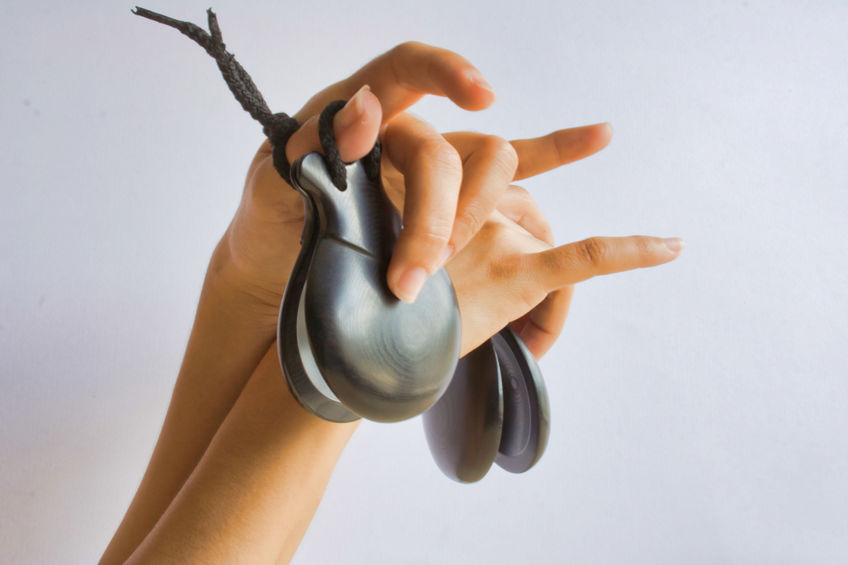
The tones of the pairs are different. The shortest is called male and the tallest female. The high castanet is placed in the right hand and the low castanet in the left hand. If you do not know how to differentiate the sound, you can distinguish it because the right castanet has a notch in the ear (upper part).
Different applications of castanets
Classic music

The Spanish guitarist and composer Santiago de Murcia, from the Baroque era, composing variations for castanets in his jácaras, which were satirical intervals. Variations are a compositional technique in which a theme is repeated with changes throughout a piece. He also composed fandangos for guitar and castanets, around 1730.
Around 1798, Luigi Boccherini, an Italian composer and cellist established in Spain, created a work that includes castanets, just as they sound clearly in one of the movements of the quintet for crossbows originally performed by the author before his patron, the infante Luis de Bourbon and Farnese, son of Philip V of Spain.
Wagner, in 1845, briefly included castanets in the Venusberg music of his opera Tannhauser.
In the 20th century, master Joaquín Rodrigo composed two pieces for castanets, for Lucero Tena. Dos Danzas Españolas, for castanets and orchestra, premiered in 1966 at the Pérez Galdós Theater in Las Palmas de Gran Canaria.
Boleras

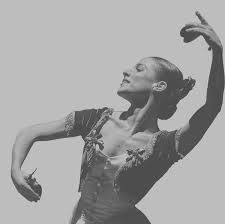
The bolero school of dance has been distinguished by the use of castanets and the movement of arms. In the mid-nineteenth century, the best bolero dancers triumphed in Spain and travelled to Paris. According to José Blas Vega, a researcher of flamenco art, one of these dancers was portrayed in a daguerreotype around the year 1850. It seems to be the French dancer Marie Guy-Stéphan, who performed at the Teatro del Circo, in Madrid, between 1843 and 1851. In Spain, he learned the bolero dance and competed with the best Spanish dancers.
Movies

After the initial stage of silent cinema (1895-1929), the sound of castanets could be heard in the 30s of the 20th century. Carmen Amaya, the most universal flamenco dancer, appeared playing the castanets in a memorable sequence from the 1935 film La hija de Juan Simón. , Carmen Amaya played the role of a malevolent dancer, who crosses the path of the protagonist Angelillo.
In 1936, Carmen Amaya was the protagonist of the Spanish feature film María de la O; dancing with castanets in one of the featured sequences, immediately before hearing the famous couplet: María de la O, what a miserable gypsy you are having everything.
In the Cuban short film El embrujo del fandango, from 1939, Carmen Amaya danced with great energy. Wearing a bullfighter-style outfit, he began to tap his feet briskly and play the castanets. In the end, a label indicated that it was a Spanish film shot in Cuba. In 1945, he repeated his performance of the fandango spell, with another suit of lights, in the film Los amores de un torero, in Mexico. At one point in the dance, Carmen Amaya approaches the camera with her arms raised, in the style of a banderillero, but with castanets.
Nowadays
Castanets are used for both flamenco and traditional Spanish folklore dances. In many Latin American countries, they are also used in their folklore.
There are local variants of castanets in Asturias, Galicia, Cantabria (Tarrañuilas), Aragón, Ibiza (Balearic Islands) and in La Gomera and El Hierro (Canary Islands), receiving in these last two cases the name of chácaras. In the Region of Murcia, the Valencian Community, in the province of Almería and some areas of Castilla-La Mancha, castanets are called “postizas” (“postisses” in Valencian) and are used for folk dances such as the parranda and the jota, among others.
José de Udaeta (1919-2009) was an internationally known Spanish soloist, as well as his disciple José Luis Landry. Other notable names are Lucero Tena, Emma Maleras, Carmen de Vicente, Inma González, Consol Grau Melet, Montserrat Carles, Belén Cabanes, Teresa Laiz, Mar Bezana, Amparo de Triana, Gaby Herzog and Nina Corti.
Kind of castanets
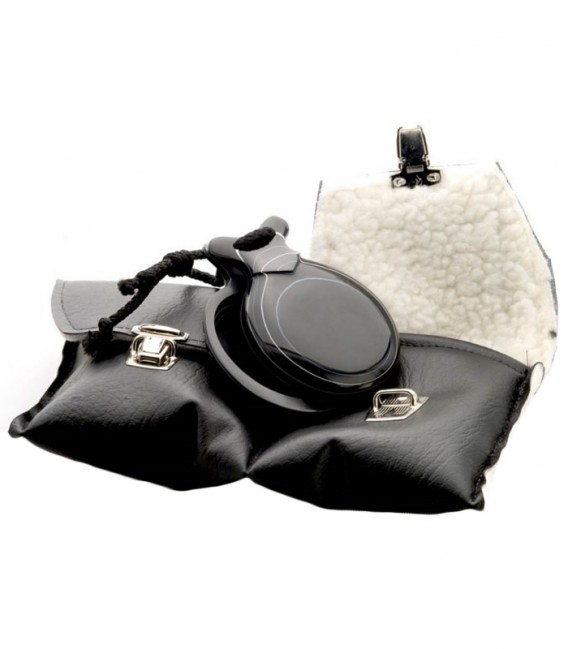
- Hand castanets: are the most common in flamenco and the most popularly known. One castanet is played with the left hand and another with the right. They usually have a decorative element called a peak on the bridge.
- Basic castanets: They are a type of castanets commonly used by symphony orchestras. They are placed on a table, subject to a spring system that allows them to remain in a horizontal position and be struck by hand.
- Mango castanets: These castanets have, as their name suggests, an elongated handle where the two pieces of the castanet are held simultaneously, in such a way that by shaking the handle they can touch each other.
What castanets sound better?
Castanets can sound different depending on a series of factors such as the materials with which they are made, size, type of tuning and the way they are played.
- Double box castanets: They provide an extra resonance, since their interior design amplifies the sound of the instrument, making the touch more intense and pure.
- Rosewood castanets: This wood is the most used when making them. The sound produced will be that of the classic castanets used in traditional music.
- Bubinga castanets: This wood is used to create different instruments due to its high acoustic level. For this reason, they offer a powerful and superior tonality sound.
- Fiber castanets: They are made by hand with sheets of pressed paper and dipped in resin. They have a medium sound and are very versatile.
Let me know in the comments if you want to learn the techniques about how to play the castanets and where you can acquire them!
 Dancing Giglio