
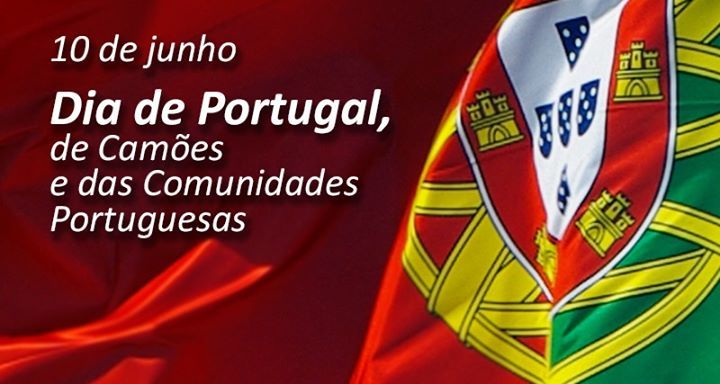
The Day of Portugal, Camões and the Portuguese Communities celebrates the date of June 10, 1580, the date of Camões’ death, which is also the day dedicated to the Angel Custodio of Portugal. This is also the day of the Portuguese language, citizens and the Armed Forces.
The 10th of June began to be particularly exalted with the Estado Novo, the regime established in Portugal in 1933 under the direction of António de Oliveira Salazar. The generalization of these commemorations was largely due to media coverage.
Until the 25th of April 1974, the 10th of June was known as the Day of Camões, Portugal and the Race, the latter epithet created by Salazar at the inauguration of the Estádio Nacional do Jamor in 1944. From 1963 onwards, the 10th of June became a tribute to the Portuguese Armed Forces, an exaltation of war and colonial power. With a different philosophy, the Third Republic made it the Day of Portugal, Camões and the Portuguese Communities in 1978. Since 2013, the autonomous community of Extremadura has Spain also celebrated this day.
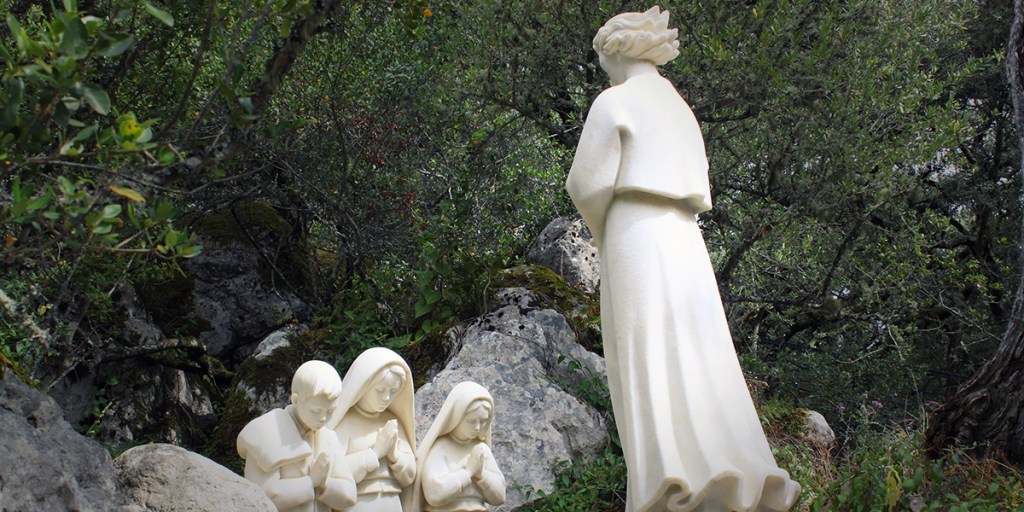
Today’s also the Day of the Guardian Angel of Portugal.
At the request of King Manuel I of Portugal, Pope Julius II instituted in 1504 the feast of the “ Angel Custos of the Kingdom ” whose cult would already be ancient in Portugal. The request was made to Pope Leo X and he authorized it to be carried out on the third Sunday of July. His devotion almost disappeared after the 20th century. XVII, but it would be restored later, in 1952, when ordered to be inserted in the Portuguese Liturgical Calendar by Pope Pius XII, to commemorate the Day of Portugal on the 10th of June.
Celebration
In Portugal
The commemorations of the Day of Portugal, Camões and also of the Portuguese Communities are celebrated throughout the country, but only the Official Commemorations are presided over by the President of the Republic and many other great individuals such as the President of the Assembly of the Republic, the Prime Minister, Ministers, Ambassadors and other personalities. The commemorations involve various military ceremonies, exhibitions, concerts, processions and parades, in addition to a decoration ceremony carried out by the President of the Republic.
Since 1977 dozens of cities have hosted the celebrations, eight of which are not district capitals. Every year, the President of the Portuguese Republic elects a city to host the official celebrations. In 2016, the official celebrations took place for the first time in two cities at the same time: Lisbon and Paris, in what was the first election of the host city by Marcelo Rebelo de Sousa.as President of the Republic. It was also the first time that the official celebrations took place in a city outside the country. In 2017 in Brazil, in the United States in 2018 and in Cape Verde in 2019. In 2020, due to the covid-19 pandemic, Marcelo Rebelo de Sousa cancelled the celebrations of the 10th of June that were planned for the Autonomous Region of Madeira and Africa do Sul and chose to hold a small ceremony in Lisbon.
UK
In London, England, Portuguese-British people celebrate the holiday annually as part of Portugal Day, UK events. In 2009, the festivities were held on 21 June in Streatham Common Park, London. In 2010 and 2011, the festivities were celebrated on 13 June and 12 June respectively at Kennington Park in southeast London, in the area known as Little Portugal.
The 2012 observance was held on June 10 at Kennington Park. Staff and athletes representing Portugal at the 2012 Summer Olympics were based in Little Portugal near Kennington Park and participated in Portugal Day 2012 at Kennington Park.
In 2013 the event was held on Sunday, June 9, 2013, at Kennington Park, as in previous years.
In 2015 the event was held on Sunday 14th of June in Streatham Common Park, London.

Spain
In the autonomous community of Estremadura, mainly in the cities of Badajoz and Olivença, Portugal’s Day is also celebrated with various ceremonies, activities and musical concerts that bring together thousands of people, including Portuguese, Portuguese-Spanish emigrants and supporters of Portugal. This is a region that has had great relations with Portugal for many centuries, mainly with the neighbouring region of Alentejo, in which the Elvas-Badajoz Eurocity is located.

Other countries
The Day of Portugal, Camões and the Portuguese Communities, is celebrated all over the world. As Portugal is a country that has already owned colonies on 5 continents, this day is celebrated by the millions of Portuguese descendants around the world and also by the approximately 5 million Portuguese emigrants who live outside Portugal.
Portugal Day is celebrated in several cities in Brazil such as Rio de Janeiro and São Paulo. As this is a country that was once a colony of Portugal, where many millions of Portuguese descendants live and today many thousands of Portuguese people, Portugal Day is celebrated throughout Brazil.
Honoring Camões
The holiday celebrates Luís de Camões, an iconic poet and national hero of Portugal. Camões, who lived during the 16th century, documented many of the adventures of the nation’s great explorers and achievements in his epic poem, The Lusiads (Os Lusíadas). 2022 also marks the 450-year anniversary of the publishing of The Lusiads.
Camões’s date of birth is unknown, so instead, the holiday is celebrated on the date of his death. The icon is a symbol of patriotism in Portugal with numerous folk tales and legends attached to his name.
The poem focuses mainly on the 15th-century Portuguese explorations, which brought fame and fortune to the country. The poem, considered one of the finest and most important works in Portuguese literature, became a symbol of the great feats of the Portuguese Empire.
Camões was an adventurer who lost one eye fighting in Ceuta, wrote the poem while travelling, and survived a shipwreck in Cochinchina (a region of present-day Vietnam). According to popular folklore, Camões saved his epic poem by swimming with one arm while keeping the other arm above water. Since his date of birth is unknown, his date of death is celebrated as Portugal’s National Day.
Although Camões became a symbol of Portugal’s nationalism, his death coincided with the Portuguese succession crisis of 1580 that eventually resulted in Philip II of Spain claiming the Portuguese throne. Portugal was then ruled by three generations of Spanish kings during the Iberian Union (1580–1640). On 1 December 1640, the country regained its independence once again by expelling the Spanish during the Portuguese Restoration War and making John of Bragança, King John IV of Portugal.
During the authoritarian Estado Novo regime in the 20th century, Camões was used as a symbol for the Portuguese nation. In 1944, at the dedication ceremony of the National Stadium in Oeiras (near Lisbon), Prime Minister António de Oliveira Salazar referred to 10 June as Dia da Raça (Day of the Portuguese Race). The notion of a Portuguese “race” served his nationalist purposes.
Portugal Day celebrations were officially suspended during the Carnation Revolution in 1974. Celebrations resumed after 1974 and were expanded to include the Comunidades Portuguesas, Portuguese emigrants and their descendants living in communities all around the world.

Bom dia a todos!🌍🌎
 Dancing Giglio