
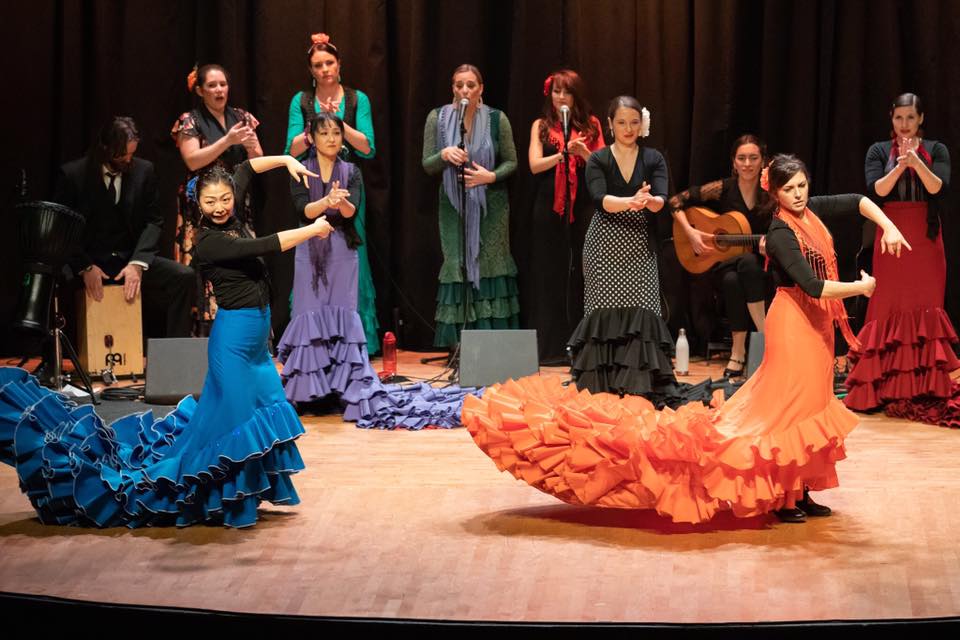
The bambera, bamba or cantes del columpio, are a flamenco adaptation of a melody from Andalusian folklore that is sung in certain celebrations in which it was customary to install swings for the boys to rock the girls (or the aunts to the children) while they sang these verses.
Origin
The origin of the bambera is due to the Niña de los Peines in compás de fandangos, reworked in 1970 by Fosforito, accompanied by Paco de Lucía, who imposed the defining rhythm on the twelve-beat compás of the soleá (somewhat accelerated). Morente, on his album Lorca (1998), does this cante por tangos.
Compas
La bamba has four eight-syllable verses, or the first and third seven-syllable and the second and fourth five-syllable. The first two lines are generally repeated at the end of the copla, or else it forms a fifth line repeating only the second.
Since the contribution of Paco de Lucía, the air of the bulería por soleá will be imposed on the original ternary accompaniment, being the original in the air of the Huelva fandangos, typical of the first natural or personal fandangos.
The bambera is in flamenco mode, however, at the end of each third, the singer and guitar perform cadences in the minor mode. We must not forget that the flamenco mode and the minor have many elements in common and that it depends on the cadences to find ourselves before a passage in minor or in the flamenco mode. However, there are also bamberas, some in a major key -for example, everything that Camarón sings in “La leyenda del tiempo” is bamberas-, as many as there are different folk songs that are decided into flamenco. They are generally accompanied in the key of Mi flamenco (from above).
 Dancing Giglio